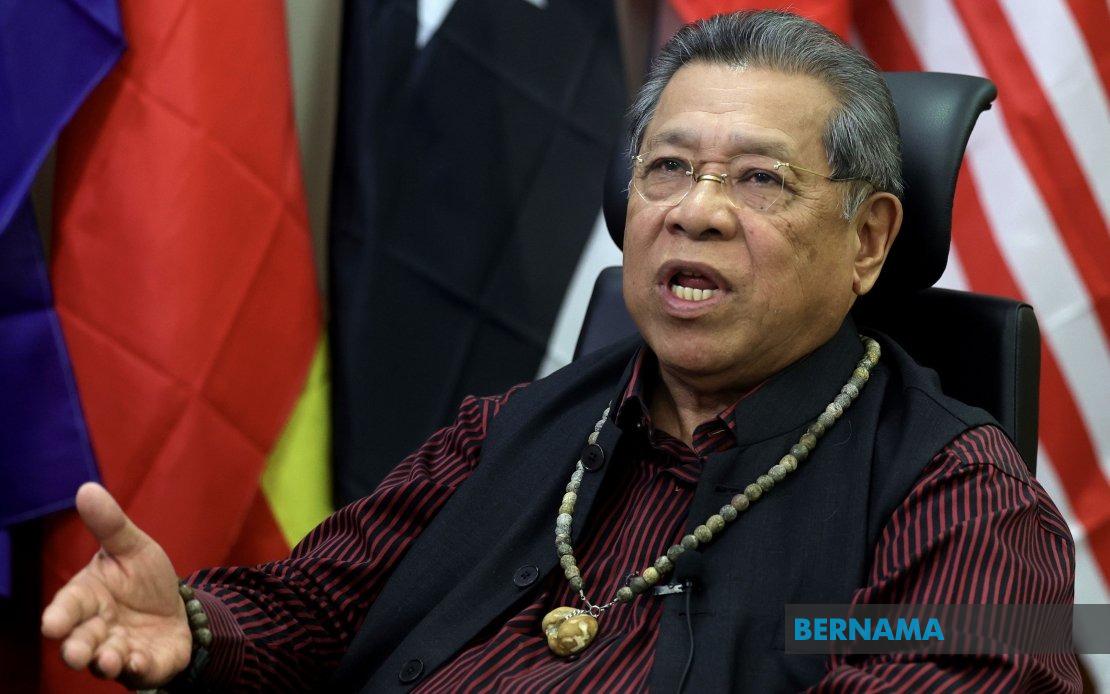
The substantial increase in federal allocations to Sabah signals a renewed commitment to accelerating development across the East Malaysian state, according to United Sabah National Organisation (USNO) president Tan Sri Pandikar Amin Mulia. Speaking at the 2026 PKR National Congress in Melaka, Pandikar Amin highlighted how the enhanced funding will unlock a wave of infrastructure and social projects designed to improve living standards for Sabahans while bolstering Malaysia's overall economic trajectory.
Prime Minister Datuk Seri Anwar Ibrahim unveiled the scale of the funding boost during his presidential policy address at the congress, held at the Melaka International Trade Centre (MITC) in Ayer Keroh. The federal allocations to Sabah have increased by 35 per cent over the current government's term, climbing from RM13 billion in 2022 to RM17.6 billion in 2026. This represents one of the most significant financial commitments the state has received in recent years, reflecting a strategic pivot towards addressing long-standing development gaps in the region.
For Sabah, which has historically occupied a secondary position in national budget priorities, this reallocation carries profound implications. The RM4.6 billion increase provides substantial headroom for tackling infrastructure deficits, from road networks and port facilities to healthcare and education infrastructure. Beyond immediate construction activity, such funding typically generates employment opportunities and stimulates local economies through the supply chains supporting major projects.
Pandikar Amin's endorsement of the funding increase carries particular weight given USNO's positioning within Sabah's political landscape. His assertion that the development benefits will extend beyond state boundaries reflects a broader recognition that Sabah's advancement contributes to regional stability and Malaysia's competitiveness. East Malaysia has long argued for greater investment parity with Peninsular states, and this funding trajectory suggests the federal government is responding to those concerns.
The Prime Minister directly addressed criticism that his administration neglects certain states, a persistent claim in Malaysian political discourse. Anwar's defence emphasised that resource allocation reflects differentiated priorities rather than favouritism, with each state receiving funds calibrated to specific development needs and circumstances. This nuanced approach acknowledges that uniform funding models fail to account for geographic, demographic, and infrastructure variations across Malaysia's diverse landscape.
Sabah's strategic importance extends beyond domestic considerations. As Malaysia's largest state by area and home to crucial maritime resources, the state's development trajectory influences broader Southeast Asian dynamics. Enhanced federal investment in infrastructure modernisation positions Sabah to strengthen its regional connectivity, particularly through improved port and transportation networks that facilitate trade with regional partners and attract foreign investment.
Pandikar Amin's confidence in Prime Minister Anwar's continued leadership reflects calculations within Sabah's political establishment regarding which federal partnerships deliver tangible benefits. The timing of such public support during a major party congress signals alignment between USNO's interests and the current administration's direction on fiscal matters, though political coalitions in Malaysia remain fluid and subject to shifting calculations.
The funding increase must be contextualised within Malaysia's broader fiscal constraints. Government revenue limitations mean increased allocations to one state necessarily involve trade-offs elsewhere. How these budgetary decisions play out across other states will shape perceptions of fairness and could influence political dynamics ahead of future elections. States receiving unchanged or reduced allocations may voice discontent, potentially complicating the government's coalition management.
Implementation challenges loom large despite the impressive funding figures. Sabah has experienced bottlenecks in project execution stemming from capacity limitations, procurement complexities, and coordination difficulties between federal and state authorities. Converting budget allocations into completed projects requires robust planning, skilled personnel, and efficient administrative systems. The state's historical absorptive capacity for large allocations remains uncertain, raising questions about whether all committed funds will translate into timely project completion.
Economic multiplier effects depend heavily on how allocated resources are deployed. If funds concentrate in capital-intensive megaprojects with limited local labour requirements, broader Sabahan communities may experience minimal direct benefits. Conversely, well-designed programmes targeting small business development, skills training, and local supply chain participation could generate more inclusive growth patterns and deeper poverty reduction.
The political economy of this funding announcement merits examination. Increased allocations during a major government congress may partly reflect the political calendar, with administrations typically highlighting achievements when party machinery is mobilised. Maintaining funding momentum through subsequent budget cycles will determine whether this represents sustained policy commitment or tactical political positioning.
Looking forward, Sabah's development trajectory will significantly influence national narratives about inclusive growth and equitable federalism. If enhanced federal funding translates into visible improvements in living standards, connectivity, and economic opportunity, it reinforces arguments for continued investment and strengthens the government's development credentials. Conversely, if implementation falters or benefits prove uneven, disillusionment could undermine political support within the state and raise uncomfortable questions about government effectiveness in resource deployment.

