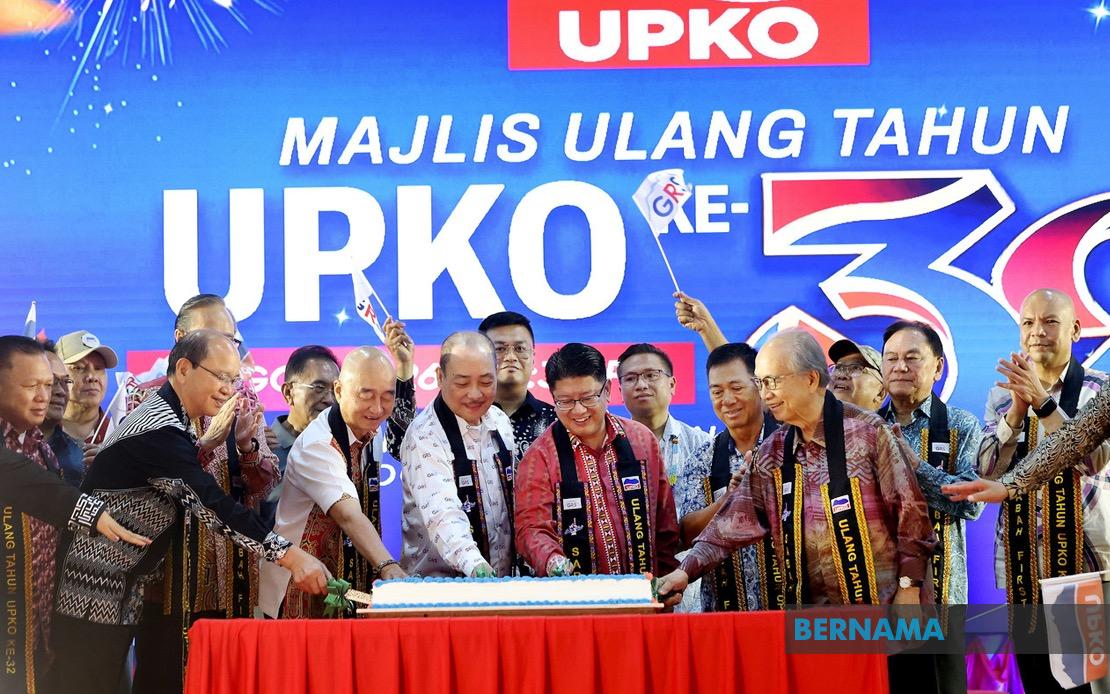
Sabah's Chief Minister Datuk Seri Hajiji Noor has committed to ensuring that every ringgit the state receives from the Federal Government flows directly back into the pockets and lives of Sabahans. Speaking at the 32nd anniversary celebration of the United Progressive Kinabalu Organisation (UPKO) and the opening of its 17th Triennial Delegates Conference in Kota Kinabalu, Hajiji outlined how Sabah plans to deploy federal allocations across a spectrum of development initiatives, household assistance schemes, and social welfare programmes.
At the heart of this pledge is Prime Minister Datuk Seri Anwar Ibrahim's decision to enhance the interim special grant payment to Sabah to RM1.5 billion annually. The Sabah state government had already received RM600 million of this allocation in June, marking a significant increase from previous disbursement levels. Hajiji framed this enhancement as a recognition of Sabah's development needs and positioned it as a turning point for accelerating infrastructure delivery across the resource-rich eastern Malaysian state.
The Chief Minister detailed how these federal resources would be deployed across multiple fronts. A primary focus involves expanding the network of paved roads and constructing concrete bridges, addressing long-standing connectivity challenges that have constrained economic activity in rural and semi-urban areas. Simultaneously, Sabah intends to strengthen utilities infrastructure, particularly water and electricity supply systems that remain inconsistent in many outlying districts. These investments reflect the fundamental bottlenecks that have historically limited Sabah's economic potential and hindered equitable development across its vast terrain.
Beyond traditional infrastructure, Hajiji highlighted two signature welfare programmes that would absorb significant portions of the enhanced allocation. The Rumah Mesra Sabah Maju Jaya (SMJ) housing initiative represents the state's effort to address affordable housing shortages that have displaced lower-income families and urban workers. The Sentuhan Kasih Rakyat (SYUKUR) programme, meanwhile, targets direct assistance to vulnerable populations. These initiatives reflect a pivot towards social spending that acknowledges rising cost-of-living pressures facing ordinary Sabahans in a climate of global inflation.
What distinguishes Hajiji's approach is the framing of federal transfers not as windfall revenues to be absorbed into state coffers, but as trust funds held on behalf of the people. This rhetorical positioning carries significance in Sabah's political landscape, where resource-rich states have historically grappled with perceptions of federal neglect and unfair wealth distribution. By explicitly committing to recirculate federal money through visible, on-the-ground projects, the Chief Minister seeks to rebuild public confidence in government responsiveness to grassroots needs.
Sabah's own revenue generation capacity remains crucial to understanding the context of these federal transfers. The state government has maintained annual internal revenue collection at approximately RM7 billion since 2022, a figure that Hajiji disclosed is expected to climb to RM8 billion in the current year. This trajectory suggests a state attempting to reduce financial dependency on Kuala Lumpur while simultaneously leveraging federal support strategically. The combination of improved internal collections and enhanced federal allocations positions Sabah, in theory, to accelerate long-deferred development.
The Chief Minister also positioned Sabah as an emerging economic powerhouse despite navigating turbulent global and domestic conditions. This characterisation underscores how the state views itself within Malaysia's broader development hierarchy. By emphasising economic resilience and investment attractiveness, Hajiji attempts to signal to both domestic and international investors that Sabah possesses the financial stability and political commitment necessary for long-term growth initiatives. This narrative is particularly important given Sabah's historical image as economically peripheral within Malaysia.
The timing of these commitments, announced at a UPKO gathering, carries political undertones worth examining. UPKO, representing the indigenous Sabah electorate, has long advocated for greater resource allocation to the state. By making these pledges at a UPKO forum, Hajiji reinforces connections with a key constituent base while signalling that the state government remains attentive to regional political priorities and demands for equitable development.
For Malaysian policymakers and Southeast Asian observers, Sabah's experience offers instructive lessons about federal-state fiscal relations in a federal system. The enhanced special grant represents a recalibration of intergovernmental transfers, acknowledging that resource-rich peripheral states require sustained investment to unlock their economic potential. Whether Sabah's delivery on infrastructure and welfare commitments matches rhetoric will significantly influence public perceptions of state governance and federal partnerships.
The practical challenge ahead involves project implementation at the scale and pace that citizen expectations now demand. RM1.5 billion, while substantial, must be distributed across roads, bridges, water systems, electricity, housing, and direct assistance across a geographically dispersed population spread across 73,619 square kilometres. Execution capacity, procurement transparency, and equitable distribution across constituencies will ultimately determine whether this federal allocation translates into tangible improvement in Sabahans' living standards or merely fills budgetary allocations.

