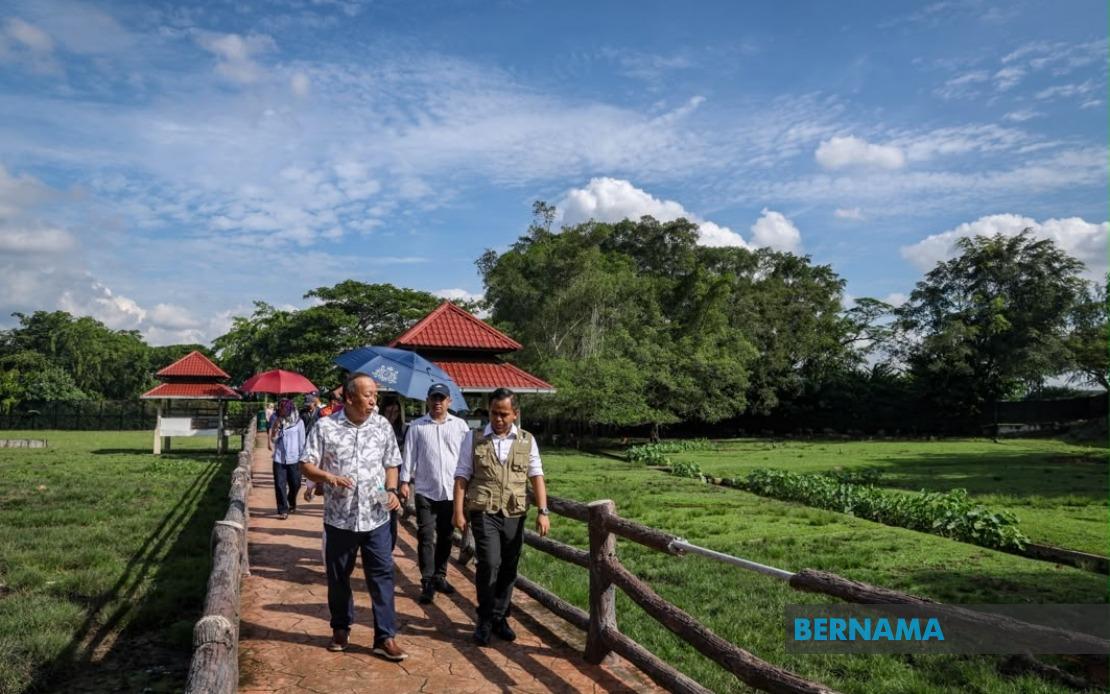
The Sabah branch of UMNO has committed to mobilising its full organisational capacity to bolster the Barisan Nasional's efforts during the Johor state election campaign, drawing on existing networks across the peninsula state. Datuk Jafry Ariffin, who heads the Sabah UMNO liaison committee, disclosed the party's involvement shortly after visiting the Johor Zoo in Johor Bahru on June 18, emphasising that the movement has been expressly tasked with strengthening BN's presence in specific constituencies where Sabahan migrant communities represent a meaningful voting bloc.
The strategic focus of Sabah UMNO's campaign operations centres on the Pasir Gudang parliamentary constituency, with particular emphasis on two state assembly seats: Permas and Johor Jaya. Administrative data compiled by the party reveals that approximately 3,000 voters hailing from Sabah have established residency in Permas and registered to vote there, whilst a separate contingent of around 2,000 Sabahan voters are based in Johor Jaya. This concentration of registered voters from a single state presents both a demographic opportunity and a strategic campaign consideration for BN, which has historically relied on cross-state organisational cooperation to secure victory in closely contested electoral battles.
Ariffin stressed that Sabah UMNO's involvement in these constituencies is far from novel, noting that the party had similarly been assigned responsibility for campaign coordination in Permas and Johor Jaya during the 2022 Johor state election cycle. The continuity of this assignment suggests a deliberate strategy by BN leadership to leverage established relationships and institutional knowledge built through previous electoral cycles. The experience gained from those earlier efforts, Ariffin indicated, would serve as a foundation for the current campaign, allowing the party to refine its messaging and outreach tactics on the basis of demonstrated results and voter feedback from four years prior.
As Sabah's Minister of Tourism, Culture and Environment, Ariffin occupies a position of considerable influence within both his home state's political hierarchy and the broader UMNO framework. His dual responsibilities underscore the significance that the party accords to the Johor election, reflecting the broader recognition within BN that state-level contests remain crucial platforms for consolidating the coalition's electoral dominance. The deployment of ministerial-level figures to coordinate campaign logistics indicates the priority assigned to securing victory in Johor, one of the peninsula's most economically significant and politically consequential states.
The groundwork for the intensified campaign effort has already commenced on a modest scale, Ariffin revealed, with Sabah UMNO beginning preliminary mobilisation activities designed to establish infrastructure and build momentum ahead of the formal campaign period. However, the party anticipates that its campaign machinery will shift into a substantially higher gear following nomination day, scheduled for June 27 by the Election Commission. This phased approach allows organisers to refine messaging frameworks and identify volunteer networks before the formal campaign window opens, ensuring that the party's communication to voters is both comprehensive and strategically targeted during the official election period.
The timing of the Johor election reflects broader political dynamics within Malaysian federalism. The state assembly dissolution on June 1 preceded the establishment of June 27 as nomination day and July 11 as the polling date, creating a compressed timeline that places considerable pressure on all political parties to maximise their organisational efficiency. For a cross-state operation like Sabah UMNO's support mechanism, this condensed schedule necessitates pre-positioned resources and pre-established coordination protocols to ensure seamless campaign execution.
The composition of the Johor State Legislative Assembly provides important context for understanding the stakes involved in this election. Prior to dissolution, the chamber comprised 56 seats distributed among competing coalitions. Barisan Nasional held commanding dominance with 40 seats, whilst Pakatan Harapan occupied 12 positions. Perikatan Nasional maintained a modest presence with three seats, and the reform-oriented MUDA held a single seat. The substantial majority held by BN—representing approximately 71 percent of the assembly—illustrates the coalition's entrenched position in Johor politics, though the compression of electoral timelines and the mobilisation efforts now underway suggest that coalition leadership recognises the necessity of consolidating these gains and preventing erosion of voter support.
The involvement of Sabah UMNO in the campaign reflects a long-standing practice within Malaysia's federal structure whereby parties and state branches coordinate across regional boundaries during significant electoral contests. Migration patterns within Malaysia have created voting populations that retain strong connections to their states of origin whilst residing and exercising franchise in other states. These communities often respond positively to campaign messaging delivered by fellow state members who share linguistic, cultural, and communal backgrounds. The targeting of Sabahan voters in Permas and Johor Jaya by Sabah UMNO representatives leverages exactly these shared identities and trust relationships.
For Malaysian political observers and regional analysts, the campaign mechanics evident in Sabah UMNO's mobilisation underscore the continued relevance of ethnic and regional networking within the broader architecture of coalition politics. Despite decades of modernisation and urbanisation, political parties across the peninsula continue to recognise the electoral value of organising along lines of origin and community identity. This approach has proven sufficiently durable that even in contemporary Malaysian politics, cross-state party cooperation organised around shared voter demographics remains a standard feature of campaign strategy.
The broader implications of this coordinated campaign effort extend beyond the immediate contest for the 56 Johor assembly seats. A successful outcome for BN in Johor reinforces the coalition's dominance in peninsular politics and signals continued organisational coherence and capability at a period when internal strains and rival coalitions have occasionally presented challenges to BN's hegemonic positioning. Conversely, setbacks in Johor could reverberate through subsequent electoral contests, influencing voter perceptions of BN's viability and potentially emboldening opposition coalitions to anticipate broader gains in future state-level and federal elections.
The deployment of Sabah UMNO's machinery thus represents more than tactical campaign coordination; it reflects strategic choices about resource allocation, coalition management, and the persistent salience of federal-state political networks in Malaysian electoral competition. As the campaign intensifies following nomination day on June 27, these cross-state mechanisms will provide a testing ground for assessing the continued effectiveness of traditional coalition coordination strategies in contemporary Malaysian politics.