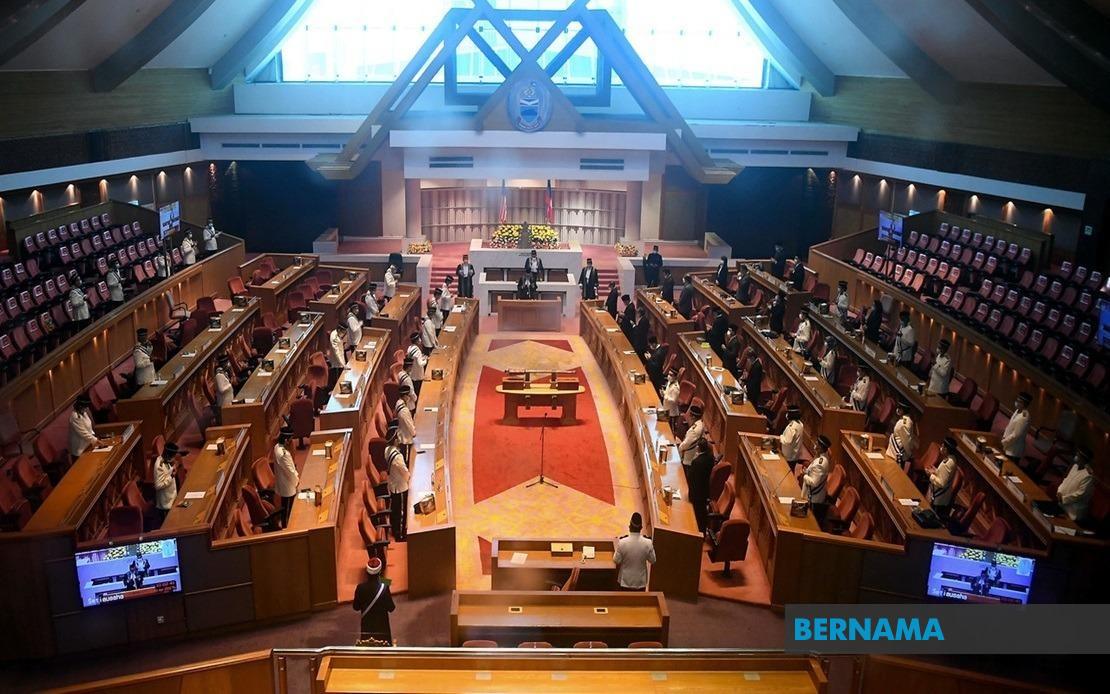
The Sabah Water Department is pursuing an ambitious agenda to dramatically curtail the amount of water lost through leakage and theft, with state authorities aiming to cut non-revenue water from nearly 60 per cent to 45 per cent within the next six years. The scale of the current problem was outlined in the state legislative assembly when Deputy Minister Datuk Limus Jury disclosed that non-revenue water losses last year had reached 59.6 per cent—a figure that represents hundreds of millions of litres of treated water escaping the distribution system before reaching paying consumers or serving public use.
Understanding the concept of non-revenue water is essential for appreciating the challenge Sabah faces. Non-revenue water encompasses all water that is produced and treated but never generates income for the utility company, either because it leaks from ageing pipes, flows through pipes with faulty meters, or is piped to consumers who have illegally tapped into the network. In Sabah's case, the 59.6 per cent figure means that nearly three out of every five litres of water entering the distribution system are unaccounted for and cannot be billed. This translates into both financial losses for the water operator and wasted resources in a region where water security remains a concern for future planning.
To reverse this trajectory, the Sabah Water Department has crafted a multi-pronged strategy that addresses the various pathways through which water escapes the system. These initiatives encompass coordinated operational practices designed to identify and eliminate unlawful connections that bypass the metering system entirely, a particular problem in informal settlements and areas where regulatory oversight is limited. The department has also prioritised the systematic replacement of major pipeline segments that have deteriorated beyond acceptable standards, recognising that older infrastructure in tropical climates is particularly vulnerable to corrosion and structural failure.
One critical element of the plan involves upgrading the metering infrastructure that allows the department to accurately measure consumption and detect anomalies. Consumer-side meters older than seven years are being replaced to ensure accurate readings, as deteriorating metres often underestimate actual usage and represent lost billing opportunities. The department is simultaneously working to manage water pressure across the network, a technique that reduces stress on aging pipes and slows the rate at which water escapes through micro-fractures and small leaks that would otherwise go undetected for extended periods.
The technological and operational response includes deployment of sophisticated leak detection and repair systems that identify problems before they become catastrophic. By adopting proactive rather than reactive approaches to maintenance, the department aims to minimise the window of time during which water is being lost from the system. This represents a fundamental shift from the traditional approach of waiting for consumers to report visible leaks, which by definition means significant volumes have already been lost.
The rollout of these initiatives across Sabah is being structured through two parallel funding mechanisms. Under the 13th Malaysia Plan, the Federal Government is bankrolling comprehensive non-revenue water programmes that will touch 18 districts throughout the state, ensuring that improvements are not concentrated only in Sabah's wealthier urban centres. The state government is committing its own resources to cover an additional 12 districts, demonstrating commitment to achieving equitable coverage across all populated areas. This dual-funding approach underscores recognition that reducing non-revenue water is both a federal priority and a state imperative.
Three districts have been selected for intensive attention through the NRW Rehabilitation, Monitoring and Maintenance Active Leakage Control Project, reflecting where the potential for rapid improvement is greatest and where population density justifies concentrated investment. Kota Kinabalu, the state capital and economic hub, represents the pilot phase. The initiative there commenced in September 2022 and is expected to conclude this September, with an ambitious target of reducing non-revenue water by 10 million litres daily. For context, such a reduction would be equivalent to eliminating the daily water consumption of tens of thousands of households, underscoring the scale of improvement that targeted intervention can achieve.
The projects underway in Tawau and Lahad Datu, launched in February 2024, operate on a longer timeline extending through February 2027, acknowledging that comprehensive rehabilitation of water infrastructure in these larger service areas requires sustained effort. Tawau's rehabilitation programme aims to recover 14 million litres daily, while Lahad Datu targets recovery of 10 million litres daily. Collectively, these three districts alone are expected to recover 34 million litres of water daily that currently cannot be billed or accounted for.
For Malaysian stakeholders, the significance of Sabah's water loss reduction targets extends beyond the state itself. As water scarcity becomes an increasingly pressing issue across Southeast Asia, and as urbanisation places mounting pressure on water infrastructure throughout Malaysia, Sabah's approach offers lessons for other state governments grappling with similar challenges. The combination of capital investment in physical infrastructure, technological deployment for monitoring and control, and systematic programmes to eliminate illegal consumption represents a comprehensive framework that could be adapted and deployed elsewhere.
The financial implications are substantial as well. Every million litres of water recovered from the non-revenue category translates directly into either increased billing revenue or reduced costs for water production and treatment. As Sabah's state water operator improves its loss profile, the resources liberated can be redirected toward extending services to underserved populations, upgrading treatment facilities to meet quality standards, or simply improving the financial sustainability of the water utility itself. In many developing regions, water utilities operate at chronic deficits precisely because non-revenue water is so high that they cannot generate sufficient revenue to cover operating and maintenance costs, creating a vicious cycle of deteriorating service quality.
The timeline to 2030 provides a realistic but demanding framework for progress. Reducing non-revenue water from 59.6 per cent to 45 per cent represents a 24.6 percentage point improvement over six years, or an annual improvement rate of approximately 4 percentage points. While this pace is ambitious by historical standards for utilities in developing economies, international experience shows it is achievable when programmes are sustained, funded adequately, and managed with technical competence. Many utilities worldwide have demonstrated that reducing non-revenue water from levels above 50 per cent to the 25 to 35 per cent range is feasible within a decade when the political will and financial resources align.
Success will ultimately depend on whether the Sabah Water Department can maintain momentum across all 30 districts simultaneously while scaling up approaches that prove effective in the three priority districts. The convergence of federal and state funding, combined with technical support and enforcement mechanisms to combat illegal connections, creates conditions favourable for progress. However, tropical climates present inherent challenges—high temperatures accelerate pipe corrosion, heavy seasonal rains can cause ground shifting that damages underground infrastructure, and rapid urban sprawl in some areas makes systematic asset management difficult. Sabah's water authorities appear cognisant of these obstacles and have structured their programmes to accommodate local conditions rather than importing templates developed for different operating environments.

