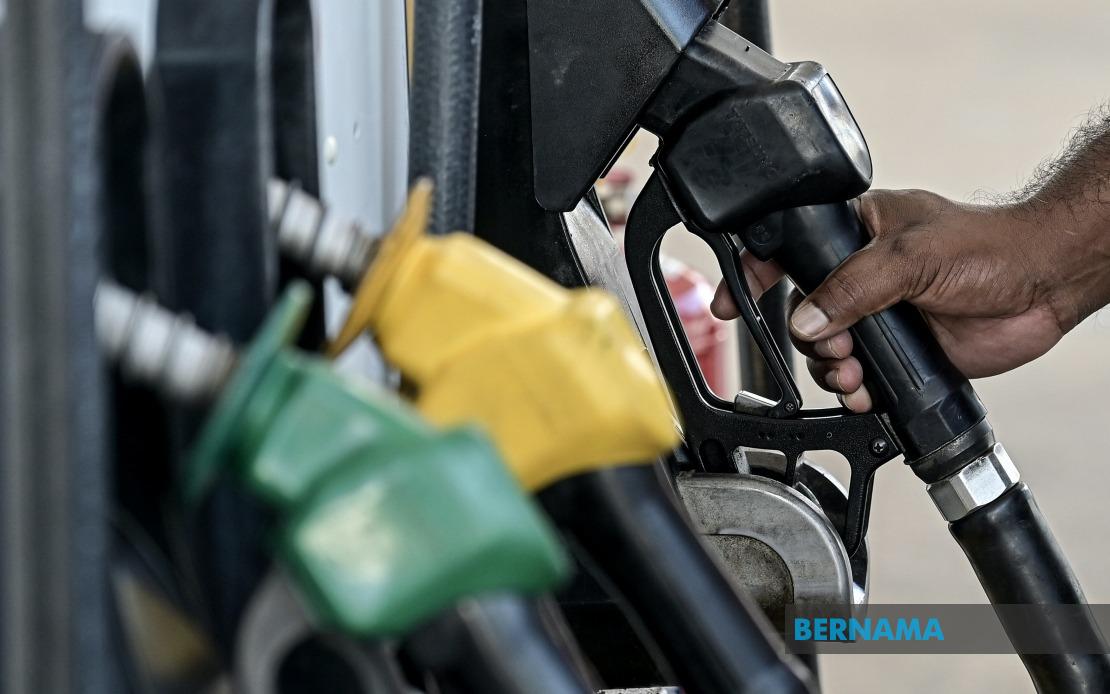
Sabah is working closely with the Finance Ministry and other federal agencies to iron out operational difficulties with the newly expanded targeted diesel subsidy programme, Chief Minister Datuk Seri Hajiji Haji Noor announced in Kota Kinabalu on July 15. The collaborative effort represents an acknowledgement that the scheme's rollout to the state on July 1 has created practical challenges affecting multiple industry sectors and stakeholders who depend on fuel pricing structures for their operations.
The state government's proactive engagement signals recognition that subsidy mechanisms, while socially necessary, require careful calibration when implemented across diverse regional economies. Sabah's economy carries distinct characteristics from peninsular Malaysia, with heavier reliance on agriculture, fishing, and resource extraction industries where fuel costs directly impact competitiveness and profitability. The targeted approach—designed to balance fiscal responsibility with protecting vulnerable populations—needs adjustment to account for these regional variations.
Datuk Seri Hajiji indicated that a comprehensive follow-up meeting is scheduled for July 17, to be chaired by State Secretary Datuk Zainudin Aman. This gathering will bring together state government officials, Finance Ministry representatives, and relevant federal agencies to systematically examine the concerns that have emerged during the initial implementation phase. The structured approach reflects the complexity involved in administering a nationwide subsidy programme with local nuances.
The targeted diesel subsidy implementation has already occupied significant attention within Sabah's governing apparatus. During a State Cabinet session on July 13, the programme featured prominently on the agenda, indicating that concerns have been escalated through formal government channels. This suggests the issues are neither trivial nor confined to a single sector, but rather systemic enough to warrant cabinet-level discussion and resolution.
Chief Minister Datuk Seri Hajiji emphasised that the state government treats all stakeholder feedback as valuable input for policy refinement. This consultative stance contrasts with top-down implementation approaches and acknowledges that those operating within the system often identify problems that policymakers may not anticipate. By instructing relevant agencies to conduct thorough socio-economic impact assessments, the government is attempting to understand how the subsidy changes reverberate through supply chains, employment, and consumer costs across different communities.
The broader context here involves the central government's shift toward targeted rather than universal subsidies. Universal fuel subsidies, while politically popular, strain federal finances and disproportionately benefit wealthier segments who consume more fuel. Targeted approaches theoretically direct assistance to those who need it most, but their implementation requires sophisticated identification systems, transparent administration, and mechanisms that don't inadvertently create perverse incentives or administrative burdens.
For Sabah specifically, the July 1 expansion means the state transitions from whatever previous arrangement existed to a nationwide framework designed in Putrajaya. This transition period naturally generates friction as businesses, transporters, fishermen, and farmers adjust their cost calculations and operational assumptions. Some may have been accustomed to certain fuel pricing structures that the new targeted system alters, necessitating business model adjustments that take time to implement.
The Finance Ministry's involvement underscores that any refinements must be financially sustainable and consistent with national fiscal policy objectives. MOF officials will likely assess whether recommended changes to implementation mechanisms can be accommodated within budgetary constraints without undermining the targeted subsidy programme's original purpose. This inter-agency negotiation represents the practical reality of federalism, where state-level needs must be balanced against national-level policy coherence and fiscal discipline.
Looking ahead, the July 17 meeting outcomes may produce procedural adjustments, clarifications on eligibility criteria, modifications to the distribution system, or transitional support measures for sectors facing genuine hardship. Malaysia's experience with previous subsidy reforms demonstrates that initial rollout problems are often resolved through such consultative processes, though political patience has limits. The government will need to demonstrate tangible progress relatively quickly to maintain stakeholder confidence in the targeted subsidy mechanism.
For other states watching Sabah's experience, the collaborative approach being demonstrated here offers a template for managing subsidy policy implementation challenges. The willingness to acknowledge difficulties and engage in structured problem-solving, rather than simply defending initial design decisions, suggests pragmatism in fiscal governance. However, success will ultimately depend on whether the proposed solutions genuinely address underlying concerns or merely constitute appearances of responsiveness without substantive change.
The targeted diesel subsidy programme remains part of the federal government's broader effort to manage energy subsidies more efficiently while maintaining social safety nets. Sabah's engagement with the Finance Ministry to refine implementation mechanisms reflects the ongoing tension between fiscal sustainability and economic protection—a balance that requires continuous adjustment as ground realities reveal unintended consequences and implementation gaps that even careful planning cannot fully anticipate.

