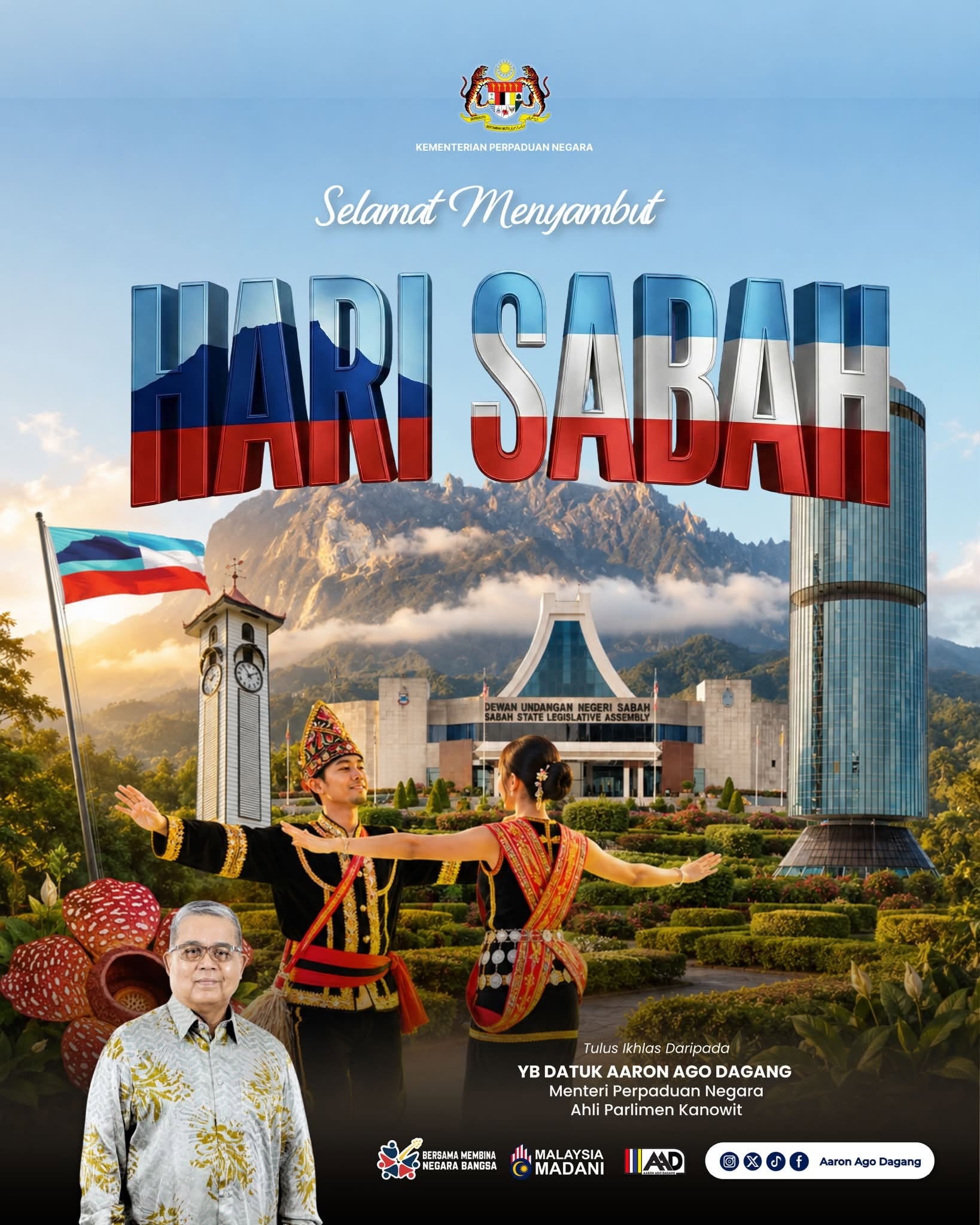
Sabah's extraordinary ethnic composition stands as one of the most compelling examples of Malaysia's multicultural success, according to National Unity Minister Datuk Aaron Ago Dagang, who underscored the state's pivotal role in the nation's social fabric during Sabah Day commemorations on August 31. The minister's remarks cast the state's intricate demographic landscape not as a challenge to governance but as a wellspring of resilience and shared identity, positioning diversity as a unifying rather than dividing force across the region.
The Sabah of today is home to 35 distinct ethnic communities and 217 sub-ethnic groupings, each maintaining its own linguistic traditions, ceremonial practices, distinctive clothing, musical heritage and ancestral customs. This extraordinary plurality encompasses the Kadazan, Dusun, Bajau, Murut, Rungus, Bisaya, Lotud and Lundayeh peoples, among numerous others whose accumulated contributions have crystallised into the modern state's character. The layering of these communities across Sabah's geography and history creates a living archive of indigenous and immigrant cultures that few regions globally can match in complexity or breadth.
For Malaysia as a federation built on constitutional principles of ethnic accommodation and religious tolerance, Sabah represents a microcosm of the larger national project. The state's ability to sustain inter-community coexistence across 35 separate ethnic identities demonstrates practical pathways for plurality management that extend beyond theoretical frameworks. Where linguistic differences might sever other societies, where religious distinctions could harden into conflict, and where territorial histories could generate resentment, Sabah's communities have negotiated shared civic space through mutual recognition and cultural respect. This achievement carries particular significance as Malaysia navigates contemporary pressures around social cohesion and national identity.
Minister Ago Dagang's intervention reframes diversity from a demographic statistic into a strategic asset requiring active stewardship. His assertion that harmony emerges not despite difference but through deliberate understanding, acceptance and reciprocal respect suggests an ideological position: that multicultural stability is not automatic but demands conscious cultivation across generations. For Malaysian policymakers monitoring communal tensions in urban centres and rural areas alike, Sabah's experience offers empirical validation that diversity need not corrode social fabric when institutional and community mechanisms support intercultural dialogue.
The historical foundation anchoring Sabah's contemporary identity runs deep into the colonial period and immediate post-independence era. August 31 commemorates not merely another state anniversary but a node in Malaysia's formation story, marking the transition from North Borneo's status under the British North Borneo Company, through Japanese occupation and subsequent British administration, towards self-governance in 1963. The state's formal accession to the Malaysian Federation followed within weeks on September 16, 1963, embedding Sabah's political destiny within the larger federation while retaining constitutionally protected autonomy over specified matters. This particular historical pathway shaped Sabah's contemporary consciousness in ways distinct from peninsular Malaysia's trajectory.
The minister's acknowledgment of past sacrifices and contributions signals an understanding that contemporary multicultural success rests upon institutional memory. The figures and generations who invested labour, intellectual effort and personal sacrifice in Sabah's development created the conditions permitting current stability. Forgetting these contributions risks disconnecting present communities from the historical struggles that produced their current peace. For younger Sabahans, particularly those born after 1963, the minister's evocation of historical debt functions as an appeal to custodial responsibility—the present generation inherits not just territory and governance structures but obligation to honour and preserve what earlier generations negotiated.
Yet the minister's remarks transcend nostalgic commemoration, pivoting toward future development imperatives. His exhortation that the current generation of Sabahans must propel the state forward across education, economic opportunity, technological capacity and infrastructure development while simultaneously protecting historical memory and cultural identity articulates a dual mandate. This is neither simple preservation of tradition nor unqualified modernisation, but rather an integration challenge: how to harness Sabah's plural cultural inheritance as a foundation for competitive economic performance and institutional excellence. For Southeast Asian states competing globally while managing internal diversity, this formulation carries instructive weight.
The 2024 formal declaration of August 31 as Sabah Day by the state government represents administrative institutionalisation of identity commemoration. By anchoring celebration to a specific date, the government creates recurring opportunity for public discourse around state belonging, historical consciousness and contemporary challenges. Such formal designation also signals to younger generations and newer residents that Sabah's diversity and historical experience merit sustained attention rather than casual acknowledgment. The rhythmic return of Sabah Day functions as a calendar marker for renewal of commitment to principles of intercommunal respect that the minister articulated.
For Malaysia's broader national conversation, Sabah's experience provides counter-evidence to narratives suggesting that ethnic and religious plurality inevitably generate conflict or prevent development. The state's demonstrated capacity to sustain 35 ethnic communities in productive coexistence challenges deterministic arguments about multicultural societies' inherent instability. This carries particular relevance as Malaysian political discourse increasingly scrutinises communal relations and as some regional actors elsewhere advocate for ethnic separation or religious partition as solutions to diversity-related governance challenges. Sabah suggests alternative models remain possible.
The minister's emphasis on mutual understanding rather than assimilation or hierarchical ethnic ordering also reflects contemporary thinking about plural societies. Unlike earlier frameworks that posited dominant communities absorbing minorities, or majoritarian models that privileged single ethnic or religious identities, the minister's formulation suggests lateral rather than vertical relations among communities. Each retains distinctive cultural expression while occupying equivalent civic status. This egalitarian model of pluralism, though sometimes strained in practice across Malaysia, remains the constitutional aspiration and the ideological foundation upon which the federation rests.
For regional observers across Southeast Asia managing their own diversity challenges, whether in Indonesia, the Philippines or Thailand, Sabah's institutional arrangements and communal practices offer studied examples of approaches that can work. The state's particular constitutional position within Malaysia, combining federal membership with protected autonomy, creates space for distinctive governance of intercommunal affairs. The demonstrated capacity of Sabah's societies to maintain separate cultural identities while participating in shared civic institutions provides evidence that unified nationhood need not require cultural homogenisation.
Looking forward, the challenge for Sabah and Malaysia involves sustaining the conditions that permit such diversity to function as strength. Economic inequality between communities, migration pressures, religious revivalism, and competing visions of national identity all pose potential threats to the equilibrium the minister described. Maintaining harmony across 35 ethnic groups requires not merely passive tolerance but active institutional commitment—equitable development, inclusive decision-making, and education that builds appreciation for plurality. The minister's invocation of both historical responsibility and future development suggests awareness that Sabah's multicultural success is neither automatic nor irreversible but demands deliberate ongoing effort.

