The Sabah state government has taken the significant step of suing multinational audit firm Ernst & Young PLT for over RM2 billion, a legal action that state officials argue demonstrates the administration's resolve to enforce rigorous financial oversight and accountability across its institutions. The lawsuit, filed in the Kuala Lumpur High Court on August 7, involves the Sabah state government, Chief Minister Datuk Seri Hajiji Noor, the Sabah Development Bank Berhad (SDB), and SDB Corporation Sdn Bhd as plaintiffs, all seeking remedies for what they contend are serious professional failures during auditing engagements spanning more than a decade.
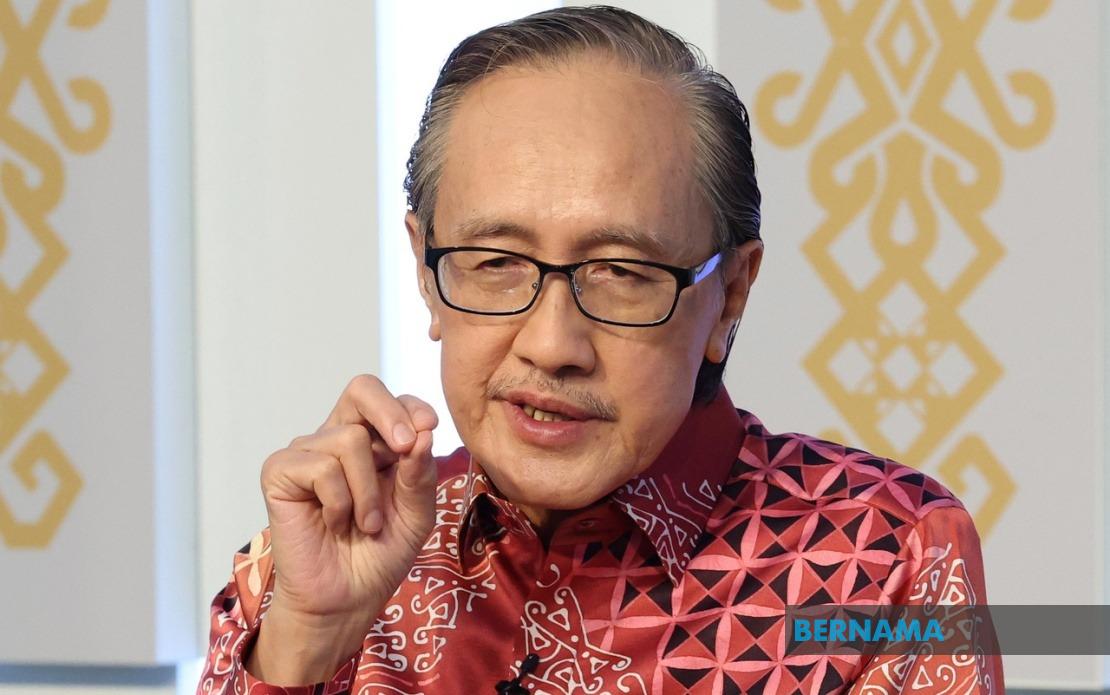
Deputy Chief Minister II Datuk Seri Masidi Manjun, who also serves as State Finance Minister, framed the litigation as emblematic of Sabah's determination to maintain transparent and proper governance standards. Speaking at a press conference held in conjunction with preparations for the 2026 state-level National Day and Sabah Day celebrations in Kota Kinabalu, Masidi stressed that the state government had nothing to conceal and was prepared to submit its case to the courts for judicial determination. His remarks suggest a deliberate strategy to position financial accountability not merely as a legal obligation but as a cornerstone principle of the administration's broader governance agenda.
The crux of the plaintiffs' complaint centres on what they characterise as Ernst & Young's failure to exercise appropriate professional care during its statutory audit work on SDB's financial statements covering the financial years 2011 through 2022. According to the statement of claim, this alleged breach of duty meant that the true and accurate financial position of the state-owned development bank was not uncovered with the speed and clarity that proper auditing practices should have delivered. The implications of such a lapse would be substantial, potentially affecting the state government's ability to make informed decisions about resource allocation and financial planning during a critical period of the bank's operations.
For Malaysian observers, the lawsuit carries broader significance within the context of ongoing debates about accountability in state-owned enterprises and the quality of external audit oversight across government-linked institutions. The SDB, which was established as an instrument of state development policy, holds considerable importance in Sabah's economic architecture. Any deficiencies in how its finances were monitored and reported would reverberate through state planning and could undermine public confidence in the governance structures meant to protect taxpayer interests. The fact that the state government is now pursing legal action suggests that internal reviews or audit committees may have identified material gaps or errors that warrant external professional accountability.
Masidi's explicit mention that the state has pursued creditors uniformly, irrespective of their identity, appears designed to counter any perception that the legal action targets Ernst & Young arbitrarily or selectively. This language hints at a broader financial reconciliation process underway within SDB, one in which multiple parties may face consequences for their roles in what the state views as inadequate financial management or oversight. By emphasising equal treatment of all creditors and service providers, the deputy chief minister seeks to present the government's approach as principled and impartial rather than politically motivated.
The RM2 billion figure represents a substantial claim and reflects the magnitude of potential losses or unquantified liabilities that the state government alleges should have been detected through proper audit scrutiny. In the context of Sabah's public finances, such an amount would constitute a significant portion of resources that could otherwise support development initiatives, education, healthcare, or infrastructure. The pursuit of recovery through the courts indicates that state officials believe Ernst & Young's professional failures caused demonstrable financial harm that warrants compensation.
From a regulatory and professional standards perspective, the case touches on questions about the adequacy of oversight mechanisms for audit firms operating in Malaysia. Audit failures at this scale, if substantiated, raise concerns about whether existing professional and legal frameworks sufficiently incentivise rigorous work and deter negligence. The outcome of the Sabah litigation could influence how other government entities and commercial organisations approach their audit relationships and hold external auditors accountable for substandard work.
Masidi's emphasis on allowing the court process to unfold suggests the state government recognises the importance of judicial determination in establishing liability and appropriate remedies. Rather than seeking immediate settlement or out-of-court resolution, the decision to proceed with formal litigation indicates confidence in the evidence and a commitment to setting a precedent that professional service providers cannot escape accountability through informal arrangements. This posture also aligns with the broader narrative of institutional strengthening that the Sabah administration has been promoting.
The timing of the lawsuit's disclosure and the subsequent public commentary reflect a communication strategy aimed at associating the government with strong governance credentials at a moment when preparing for state-level festivities. By prominently discussing the legal action during National Day and Sabah Day preparations, state officials weave accountability into the narrative of state identity and civic pride. This framing suggests that proper financial stewardship is presented not as a technical bureaucratic matter but as a fundamental aspect of serving the people of Sabah with dignity and responsibility.
For businesses, professional firms, and investors operating in Sabah and across Malaysia more broadly, the case underscores that contractual relationships with government entities may subject service providers to heightened scrutiny and potential litigation risk if performance falls short of expectations. The case also demonstrates that state governments, particularly when reviewing institutional histories or undertaking governance reforms, may pursue legal remedies against established professional firms to recover losses identified in retrospective audits or investigations. This development could influence how audit firms price their engagements with government clients and structure their risk management protocols.
The broader implications extend to governance culture across Malaysia's states. If Sabah's legal action results in a court determination that holds the audit firm liable, it may embolden other state administrations to pursue similar claims where they identify audit deficiencies. Conversely, if the court rules in Ernst & Young's favour, it could clarify the legal boundaries of auditor liability and the standards to which audit firms must operate in Malaysia's institutional context. Either outcome will contribute to evolving jurisprudence on professional accountability in Malaysia's public sector.
As the lawsuit proceeds through the courts, the case will likely attract attention from governance advocates, professional audit associations, and government finance officials throughout Southeast Asia. Sabah's willingness to pursue such a prominent claim against a major international audit firm signals a shift toward more assertive enforcement of accountability standards, suggesting that state governments increasingly view legal action as a legitimate tool for protecting public resources and enforcing professional standards, rather than relying solely on regulatory bodies or professional disciplinary mechanisms.

