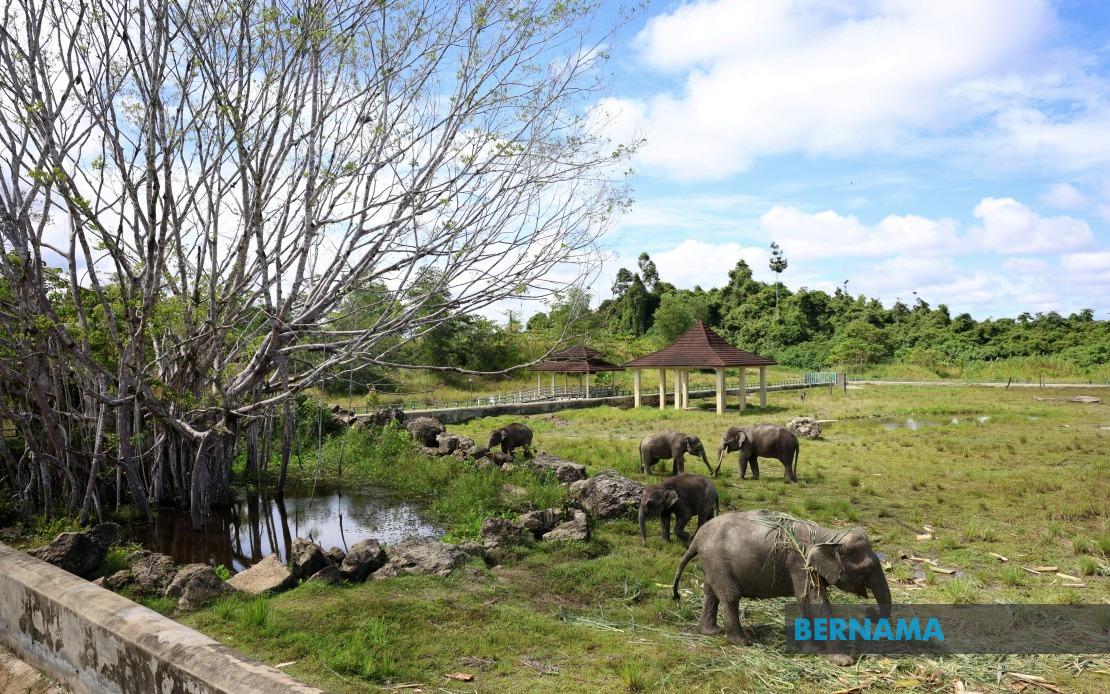
Sabah's government is seriously considering a bold new approach to one of Borneo's most persistent environmental challenges: the rising tide of conflicts between elephants, wild boars, primates and rural communities. Speaking in the State Legislative Assembly in Kota Kinabalu on July 21, Sabah Assistant Minister of Tourism, Culture and Environment Datuk Dr Andi Md Shamsureezal outlined plans for a trial elephant sanctuary in Tawau that could serve as a blueprint for resolving wildlife-human tensions across multiple districts if it delivers measurable results.
The sanctuary proposal emerged from concerns raised by Datuk Seri Mohd Shafie Apdal, who suggested that the state designate protected wildlife areas that would simultaneously function as tourist attractions. This dual-purpose approach reflects a growing recognition across Southeast Asia that conservation and economic development need not be mutually exclusive; indeed, well-managed sanctuaries can generate revenue while reducing the incentive for land conversion and habitat destruction. The Tawau model represents an opportunity for Sabah to demonstrate this principle at scale, particularly given the district's significant elephant populations and ongoing agricultural pressures.
Datuk Dr Andi's cautious optimism is significant. Rather than rushing to implement the sanctuary concept statewide, the government is conducting a thorough evaluation with the Sabah Wildlife Department and key stakeholders. This methodical approach acknowledges that wildlife management solutions cannot be imposed uniformly across different geographical and socioeconomic contexts. What works in Tawau's specific landscape and community setting may require modification in other districts facing different species compositions, topographies and livelihood structures. The deliberate pace of rollout also signals political awareness that such initiatives require careful community engagement and buy-in from farmers and indigenous groups who bear the immediate costs of wildlife presence.
The underlying rationale for pursuing this long-term strategy stems from a hard-won recognition that traditional reactive approaches have consistently failed. Datuk Dr Andi explicitly rejected capture-and-relocation as a viable solution, a position supported by growing scientific evidence that simply moving problem animals merely transfers the conflict to new areas without addressing what drives animals to raid crops and settlements in the first place. Decades of elephant translocation across Southeast Asia have demonstrated this futility; relocated elephants often return to their original ranges or cause problems in recipient areas, while the underlying habitat loss and human encroachment continue unchecked.
Instead, Sabah's framework combines immediate tactical interventions with longer-term ecological strategies tailored to each species. The government has established elephant ranger teams that actively involve local communities in conflict zones, transforming villagers from passive victims into active participants in management efforts. This community-centred approach has proven more sustainable than top-down conservation models because it builds local ownership and ensures that traditional knowledge complements scientific management. Equally important, it provides alternative income and employment for communities historically reliant on subsistence farming in vulnerable areas.
The deployment of satellite collars on selected elephants exemplifies how technology can support coexistence. By tracking animal movements and patterns, these devices enable early warning systems that alert at-risk communities to approaching herds, allowing farmers to protect crops and livestock before damage occurs. This preventive capacity reduces both economic losses and the likelihood of retaliatory killings, creating a more benign cycle where communities view elephants as manageable rather than existential threats. Across the region, such early warning networks have significantly reduced human fatalities and improved tolerance for wildlife in areas previously marked by deep antagonism.
The government is also tackling wildlife-related public health concerns through controlled population management of monkeys in select areas, targeting the reduction of zoonotic disease transmission risks that affect both human and animal health. This reflects contemporary conservation thinking that recognises wildlife management must address legitimate human welfare considerations, not just species preservation in isolation. Similarly, wild boar control measures proceed according to legal frameworks and risk assessments rather than indiscriminate culling, ensuring that intervention remains proportionate and evidence-based.
For Malaysian readers and policymakers beyond Sabah, this strategic shift carries broader implications. Malaysia's peninsular states, Sarawak and Sabah all grapple with escalating human-wildlife conflicts driven by habitat fragmentation and population growth. The Tawau sanctuary model, if successful, could inform national wildlife policy and provide a template for other regions facing similar pressures. Success would also strengthen Sabah's credentials as a conservation leader within ASEAN, potentially attracting international funding and expertise for wildlife management initiatives.
The timeline for evaluating the Tawau pilot remains unclear, but the preliminary nature of current discussions suggests implementation will unfold across months rather than weeks. This extended observation period is appropriate given the complexity of measuring success. Genuine impact requires assessing not only reductions in crop damage and human injuries, but also changes in community attitudes, species population dynamics, sanctuary economic performance and ecosystem health indicators. Only once these multifaceted outcomes demonstrate improvement can policymakers confidently advocate for expansion.
What makes this initiative particularly noteworthy is its departure from the fortress conservation model that has dominated Southeast Asian wildlife protection for decades. Rather than simply declaring protected areas off-limits to humans, Sabah appears to be embracing an inclusive model where wildlife habitat and human livelihoods coexist within shared landscapes. This philosophic shift, if realised in practice, could help reverse the zero-sum thinking that has historically pitted conservation against development. As human populations continue expanding across Borneo and pressure on wildlife intensifies, such adaptive and community-grounded approaches may prove essential for ensuring that both elephants and the communities living alongside them survive and flourish.

