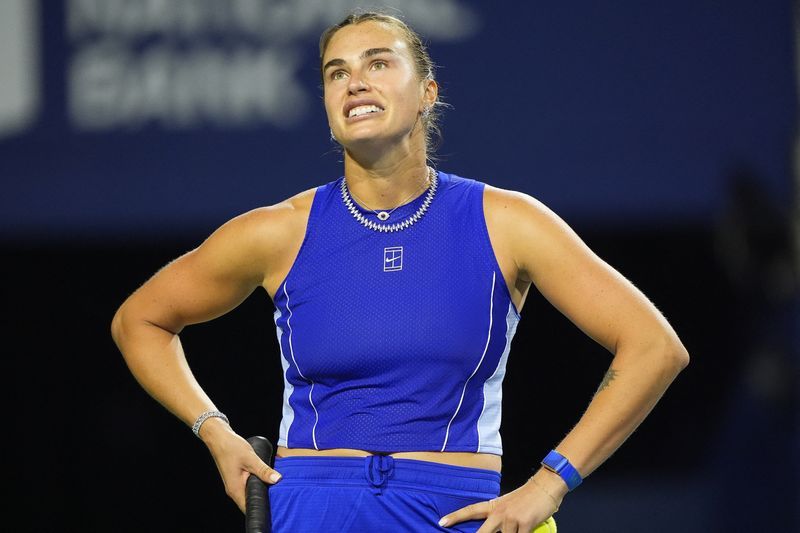
Aryna Sabalenka's bid to build momentum ahead of the U.S. Open encountered a significant stumbling block on Saturday when the world number one fell to Russia's Ekaterina Alexandrova in the fourth round of the Canadian Open in Toronto. The 16th-seeded Alexandrova delivered an impressive performance to capture a 7-6(3) 4-6 6-4 victory in a gruelling encounter that extended beyond two hours, securing her passage to the quarter-finals and inflicting a rare setback on the tournament favourite.
The result represents a notable blemish on Sabalenka's record in the lead-up to the season's final Grand Slam event, where she arrives as the defending champion following her triumph last year. As a four-time Grand Slam winner, the Belarusian has consistently demonstrated the ability to perform under pressure in major competitions, yet her loss in Toronto underscores the competitive depth present in women's professional tennis and the challenges even the world's top-ranked player faces when preparing for the year's most demanding tournaments.
The match unfolded as a competitive affair characterised by momentum shifts and tactical adjustments. Sabalenka opened aggressively, securing an early break in the opening set, but Alexandrova responded with characteristic resilience and forced the set into a tiebreak, which she controlled decisively to claim the first frame. This early success appeared to settle the Russian player, who had entered the encounter as a significant underdog against tennis's most dominant force.
Sabalenka showcased her championship mettle by reasserting her dominance in the second set, breaking Alexandrova's serve to establish a commanding 4-3 position before holding her own serve to level the match at one set apiece. The trajectory suggested the world number one would find her rhythm and proceed to victory, as has been the pattern throughout much of the season, when her power and consistency have overwhelmed most opponents on the WTA circuit.
Yet the decider proved decisive in determining the outcome, with Alexandrova maintaining her composure as Sabalenka's unforced error count escalated. The critical juncture arrived when Sabalenka served to remain in the match with the score at 4-5 in the final set. Although the top seed managed to save two match points through aggressive tennis and her opponent's waivering execution, a double fault on the third opportunity surrendered the match and handed Alexandrova an unlikely victory that will resonate throughout the professional tennis community.
Alexandrova's composure under extreme pressure was evident in her post-match reflection, where she articulated a game plan focused entirely on point-by-point execution rather than allowing awareness of the scoreline to influence her decision-making. Her comments reveal the psychological fortitude required to overcome a higher-ranked opponent in high-stakes tennis and suggest her performance extended beyond mere technical excellence to encompass the mental resilience necessary to prevail in extended matches against elite-level competition.
The Russian player's acknowledgment that she believed her opportunity had slipped away after Sabalenka equalised in the second set demonstrates how quickly momentum can oscillate in professional tennis and how critical the third set proved in determining ultimate success. By maintaining focus and continuing to execute her aggressive shot-making strategy despite the psychological pressure of facing the world's best player, Alexandrova proved that ranking points and seeding do not guarantee victory in individual matches, a lesson that resonates throughout professional sports.
Alexandrova's reward for her breakthrough performance is a quarter-final encounter against Ukraine's Elina Svitolina, who demonstrated her own commanding form by dismantling American eighth seed Amanda Anisimova with a decisive 6-2 6-4 scoreline. Svitolina's victory represented a similarly impressive performance against a higher-ranked opponent, suggesting the women's tournament in Toronto is producing competitive matches that transcend seeding projections and conventional expectations about which players should advance through tournament stages.
For Sabalenka, the loss necessitates rapid psychological recovery and tactical reassessment as she prepares for the U.S. Open, where she will face fierce competition from rivals who may view the Canadian Open result as evidence that the world number one remains vulnerable to opponents who employ aggressive strategies and maintain composure under extreme pressure. The defeat also underscores the importance of consistent momentum in Grand Slam preparation, as players typically benefit from multiple tournament victories as confidence builders before major championships. The weeks immediately following this setback will prove critical for Sabalenka to restore her winning rhythm and psychological edge heading into Flushing Meadows.
This result carries broader implications for the U.S. Open narrative, as it elevates questions about whether the championship's anticipated favourite possesses the current form and confidence necessary to successfully defend her title against a field featuring numerous players capable of producing world-class performances on any given day.

