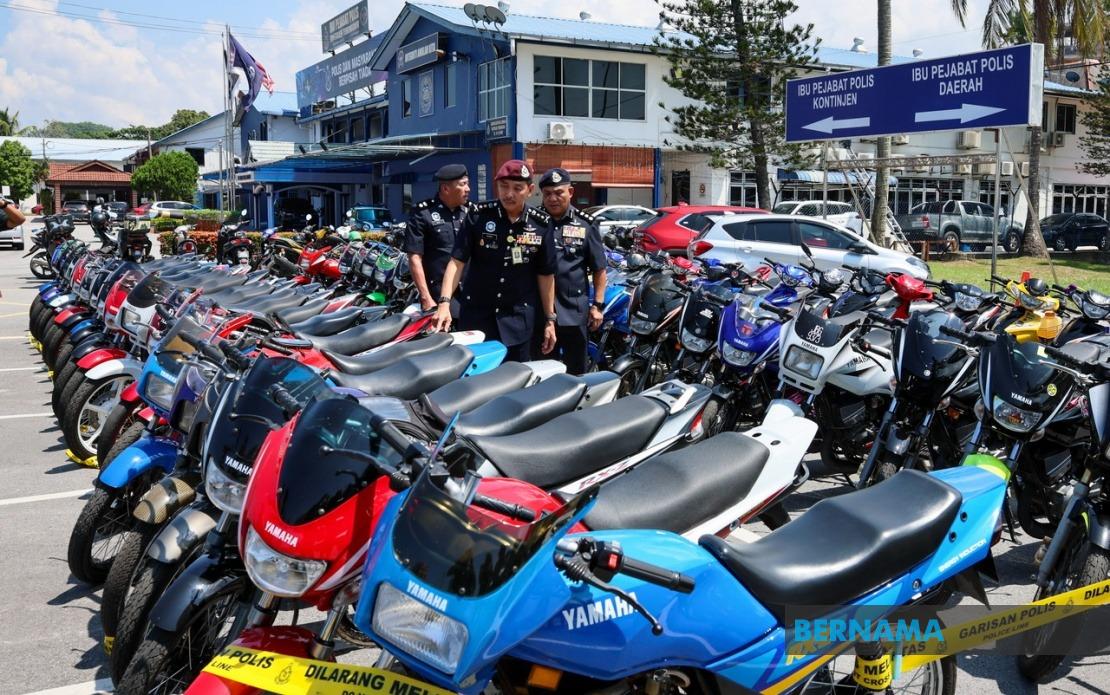
Road safety advocates are raising fresh alarms over the mounting dangers surrounding Malaysia's RXZ Members programme, the nation's largest annual motorcycle gathering, following a particularly deadly iteration of the event last month. Shahrim Tamrin, a former board member of the Malaysian Institute of Road Safety Research (MIROS), has urged government agencies, enforcement authorities and event organisers to implement a formal, evidence-based risk management framework rather than relying on traditional traffic enforcement approaches to control the massive assembly of bikers.
The catalyst for Tamrin's intervention came after the RXZ Members 8.0 edition, held at the Gong Badak Motor Racing Circuit in Kuala Nerus on July 30 and August 1, recorded eleven fatalities across a four-day window that extended through August 3. Official data released by Bukit Aman Traffic Investigation and Enforcement Department director Datuk Seri Muhammed Hasbullah Ali documented a total of 46 road accidents involving motorcyclists during this period, with the fatalities representing nearly 24 percent of all incidents and five additional serious crashes accounting for just under 11 percent of the tally. The remaining 30 minor accidents completed a statistical portrait of an event increasingly plagued by safety failures at every severity level.
What distinguishes Tamrin's assessment from routine post-incident commentary is his identification of a troubling longitudinal pattern. The death toll from RXZ Members events has accelerated sharply, rising from two fatalities in 2024 to five in 2025 and then more than doubling to eleven in 2026. This trajectory, Tamrin argues, transcends the realm of random misfortune or individual rider error, instead pointing to systemic inadequacies in how an event of this magnitude is being administered. The programme has evolved dramatically since its inception in 2017, transforming into a behemoth that drew more than 200,000 participants during its most recent staging, making it arguably Southeast Asia's most significant motorcycle gathering and certainly the largest Malaysia has hosted.
Tamrin's proposed framework addresses the operational architecture that large-scale events demand. He recommends that authorities and organisers jointly develop detailed participant projections, meticulously map primary entry and exit corridors to prevent bottlenecks and chaotic dispersal, establish designated rest facilities positioned at strategic intervals, pre-position ambulance units at high-risk zones, establish a dedicated emergency command centre capable of coordinating multiple agencies in real-time, and develop comprehensive communications protocols to disseminate critical information to participants throughout the event. Preceding all of this, a rigorous pre-event risk assessment should identify hazards specific to the RXZ gathering, distinguishing it from conventional traffic management scenarios.
The structural problem underlying current approaches stems from a fundamental categorisation error. Road safety officials and organisers have largely treated the RXZ Members programme as an unusually large traffic movement requiring enhanced enforcement—more checkpoints, additional patrols, stricter speed monitoring. Tamrin contends this conventional paradigm is inadequate when confronting an event that attracts hundreds of thousands of participants. Such gatherings demand instead the sophisticated planning architecture typically reserved for major sporting events, music festivals or religious congregations, where anticipating human behaviour, managing logistics, coordinating medical response and controlling crowd dynamics become paramount concerns that transcend traditional policing.
The proposal for a post-event safety audit represents an equally crucial innovation in Tamrin's framework. Rather than allowing institutional memory to fade following tragedy, he advocates for systematic analysis of accident data disaggregated by location, time of occurrence, precipitating factors, rider demographics and mechanical factors affecting the involved motorcycles. This audit, released publicly before the next RXZ Members edition, would create an evidence foundation for targeted improvements rather than ad-hoc reactions triggered by the latest fatality clusters. Such transparency also creates accountability pressure on organisers and authorities to demonstrate meaningful progress rather than merely expressing concern.
A secondary but significant dimension of Tamrin's intervention addresses the particular vulnerability of the Yamaha RXZ motorcycle itself. These machines, manufactured primarily during the 1990s and early 2000s, now constitute a unique demographic phenomenon in Malaysian motoring. Vehicles that are 20 to 35 years old predominate among RXZ programme participants, many having passed through multiple owners, undergone modifications and restoration work that has complicated or corrupted their registration documentation. The Road Transport Department (JPJ) faces the delicate task of facilitating the continued legal use of mechanically sound classics whilst preventing genuinely dangerous machines from circulating. Tamrin proposes a pathway whereby restored or modified RXZ motorcycles could be re-registered following inspection by the Computerised Vehicle Inspection Centre (Puspakom), contingent upon either restoration to original specifications or enforcement of prohibition against unsafe variants.
This registration challenge intertwines with broader environmental concerns surrounding the RXZ Members programme. Residents in the Kuala Terengganu region have lodged complaints regarding excessive noise and smoke pollution generated by large concentrations of modified motorcycles, many equipped with aftermarket exhausts designed for acoustic impact rather than compliance. Tamrin advocates for enforcement of noise and emission standards to address these community grievances, balancing the enthusiast gathering against the legitimate interests of local populations who must endure the event's externalities. Such enforcement, coordinated through JPJ and appropriate agencies, would simultaneously improve road safety by removing excessively modified machines from participation.
Tamrin also emphasises the potential of training programmes targeting the RXZ community itself. Working collaboratively with motorcycle clubs and programme organisers, police and JPJ could develop marshalling and group leadership training focused on safe convoy movement and participant behaviour during the gathering. This approach recognises that the RXZ audience comprises organised groups with internal leadership structures, and that harnessing this self-organisation for safety purposes represents an underutilised resource. Marshals trained in convoy protocols, hazard awareness and emergency procedures could significantly enhance participant discipline and reduce spontaneous dangerous behaviour during the event.
The final element of Tamrin's proposal involves adopting travel advisory systems comparable to those deployed during Malaysian festive seasons on major expressways. Providing real-time information regarding peak travel periods, congestion points, alternative routing options and recommended rest stops would enable more distributed traffic flows and reduce dangerous concentration effects. Such advisories, disseminated through multiple channels including mobile applications, social media and roadside signage, would transform the RXZ Members event from an unmanaged flood of traffic into a coordinated movement with distributed departure times and routing patterns.
For Malaysian policymakers and enforcement authorities, Tamrin's intervention presents an uncomfortable reality: the RXZ Members programme has outgrown conventional safety management paradigms, and the rising death toll reflects institutional failure rather than unavoidable risk inherent to large motorcycle gatherings. The escalating fatality trend across three consecutive years demands not incremental adjustments to existing enforcement postures but rather fundamental reconceptualisation of how such events are planned, managed and evaluated. The 11 deaths recorded in 2026, set against 200,000 participants, underscore the urgency of implementing evidence-based frameworks before the next edition, scheduled to occur in coming years. Without such systemic reform, the RXZ Members programme risks evolving into an annual tragedy of predictable and preventable proportions, a outcome that comprehensive risk management protocols could substantially mitigate.

