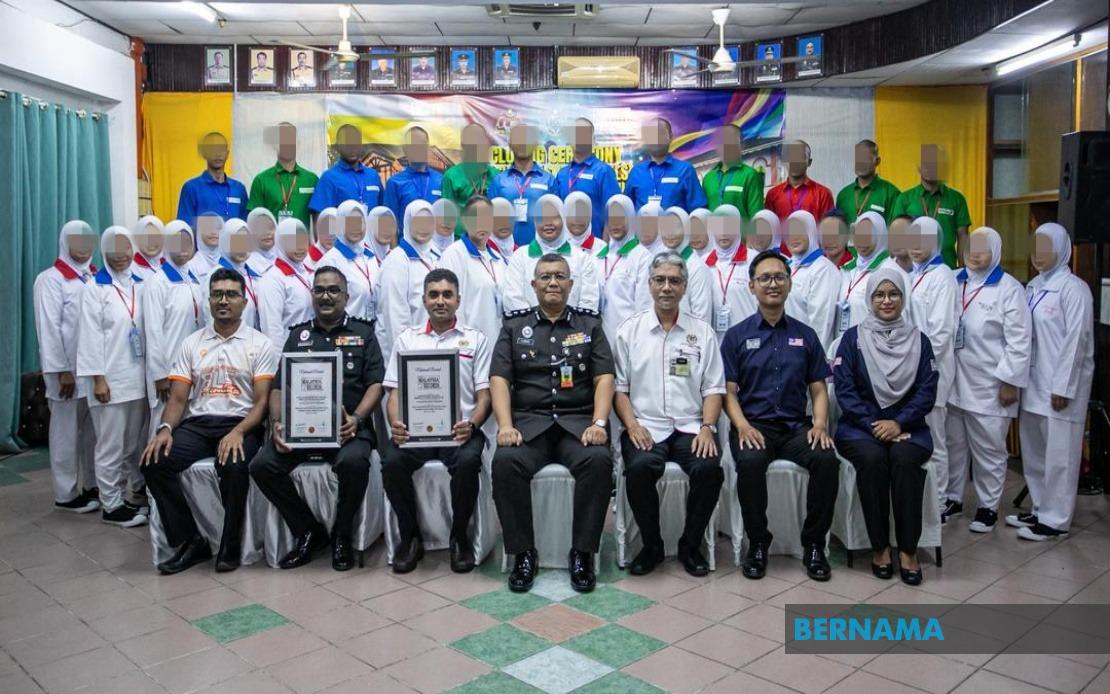
Home Minister Datuk Seri Saifuddin Nasution Ismail has commended the Malaysian Prisons Department for a remarkable achievement in rehabilitation programming, with particular recognition directed towards the Batu Gajah Correctional Centre. The facility has secured a Malaysia Book of Records entry following the successful delivery of Basic Life Support (BLS) and Automated External Defibrillator (AED) training to a cohort of 42 inmates. This accomplishment represents a significant milestone in the department's evolving approach to prison management and inmate rehabilitation across the country.
The minister's public acknowledgement, shared through social media, underscores a fundamental philosophical shift within the country's correctional system. Rather than viewing penal institutions purely as punitive facilities designed to confine offenders, the pronouncement emphasises the contemporary understanding that prisons serve a broader rehabilitative function. This perspective aligns with modern criminology and correctional best practices that recognise the importance of equipping detainees with tangible skills and values that facilitate their eventual reintegration into society. The Batu Gajah initiative exemplifies this transformative approach in action.
The BLS and AED training programme carries particular significance given Malaysia's healthcare landscape and the universal applicability of life-saving emergency response skills. By certifying inmates in these competencies, the Batu Gajah Correctional Centre has ensured that participating detainees acquire qualifications that remain valid and valued across multiple sectors and geographies. These credentials transcend the prison walls, creating genuine employment prospects and social utility upon release. The recognition by Malaysia Book of Records validates not merely the scale of the initiative but its pioneering nature within the correctional context.
According to Saifuddin, the training programme instils far more than technical medical knowledge. Participants gain exposure to humanitarian values, discipline, personal responsibility, and self-confidence—qualities essential for successful community reintegration. This holistic developmental approach acknowledges that rehabilitation encompasses psychological and ethical dimensions alongside practical skill acquisition. Inmates completing such programmes demonstrate increased awareness of their capacity to contribute meaningfully to others' wellbeing, fundamentally altering their self-perception and aspirations for post-release life.
The minister articulated the Malaysian Prisons Department's core operational philosophy as fundamentally reformative rather than exclusively punitive. This distinction carries implications for resource allocation, programming priorities, and staff training within the correctional system. Institutions adopting rehabilitation-centric approaches typically report lower recidivism rates and greater public safety outcomes compared to purely custodial models. The Batu Gajah achievement thus serves as evidence supporting continued investment in similar evidence-based programmes across Malaysia's broader prison network.
The ultimate objective, as framed by the minister, extends beyond the immediate training beneficiaries. The Prisons Department aims to ensure that every inmate completing their sentence returns to the community equipped with marketable skills, internalised values, and restored self-belief. This outcome-focused perspective recognises that successful rehabilitation directly benefits not only individual formerly incarcerated persons but their families, communities, and the nation's social stability and economic productivity. Inmates who obtain meaningful employment and social integration post-release contribute tax revenue, support dependents, and reduce demand for public security resources.
Malaysia's correctional system, like many across Southeast Asia, faces considerable challenges including overcrowding, resource constraints, and varying rehabilitation capacity across facilities. The Batu Gajah Correctional Centre's BLS and AED initiative demonstrates that within existing operational contexts, creative programming can yield measurable impacts. The ability to achieve Malaysia Book of Records recognition with 42 participants suggests scalability potential—similar programmes could potentially be implemented across other facilities with comparable inmate populations and available training resources.
The recognition by Malaysia Book of Records provides institutional validation and public visibility that may catalyse broader support for rehabilitation initiatives. Record-setting achievements generate media attention and positive public discourse, potentially shifting community perceptions of correctional facilities from purely punitive institutions towards centres of genuine rehabilitation and human development. This reframing proves especially valuable in a society where public confidence in the prison system's rehabilitative capacity has historically remained limited.
For policymakers and correctional administrators across Malaysia and the broader Southeast Asian region, the Batu Gajah model offers a replicable template combining practical life-saving skills training with character development objectives. The programme's success in achieving formal recognition suggests that correctional institutions need not operate as warehousing facilities but can function as transformative environments. The relatively modest resource investment required to deliver BLS and AED training, contrasted against the significant personal and social returns, presents compelling cost-benefit economics.
Saifuddin's public endorsement carries weight extending beyond ministerial approval. As Home Minister, his statements shape departmental policy direction and resource prioritisation. His explicit advocacy for rehabilitation-focused programming signals to correctional leadership that such initiatives receive executive support and will likely influence strategic planning discussions across the department. This institutional backing proves crucial for sustaining programmes and expanding their reach throughout Malaysia's prison system.
The recognition also holds implications for inmates themselves, particularly regarding social reintegration prospects. Possession of formally recognised BLS and AED certification provides tangible credentials for job applications, distinguishing programme participants within competitive employment markets. Healthcare facilities, security companies, sports organisations, and educational institutions increasingly require staff with emergency response capabilities. Inmates armed with such qualifications face materially improved employment prospects compared to those exiting the system without validated credentials.
Moving forward, the Batu Gajah Correctional Centre's achievement establishes a benchmark that other facilities can aspire to replicate and potentially exceed. Competitive dynamics might encourage different institutions to develop innovative rehabilitation programmes capable of achieving similar recognition. This constructive competition could drive continuous improvement across Malaysia's correctional landscape. The Prisons Department's endorsement of such initiatives signals openness to creative programming that balances security, custody, and rehabilitation objectives.
Ultimately, the recognition awarded to the Batu Gajah Correctional Centre represents more than a bureaucratic honour. It embodies a tangible commitment to viewing incarceration as an opportunity for human transformation rather than merely punitive containment. As Malaysia continues developing its correctional system, achievements like this provide evidence that rehabilitation-centred approaches yield measurable positive outcomes, justifying sustained investment and expansion of such programming throughout the country's prison network.

