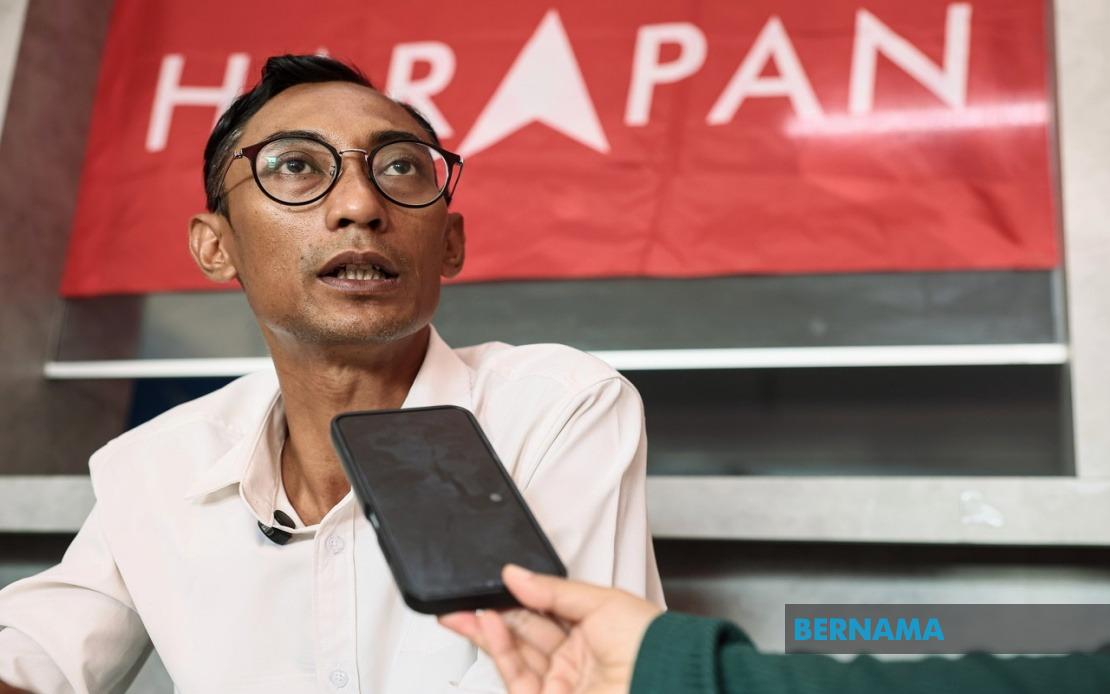
In a strategic pivot focused on federal-state alignment, Pakatan Harapan's Saiful Nizam Samat has positioned his Endau campaign around the principle that greater synergy with Putrajaya's policymaking machinery will unlock accelerated development for the constituency. Speaking in Mersing ahead of the July 11 Johor state election, the candidate articulated a vision distinct from traditional developmental promises, instead emphasizing how a PH representative could serve as a more effective conduit between local aspirations and federal resource allocation. This positioning reflects a broader recognition that state-level representatives increasingly function as intermediaries in extracting central government support, a dynamic particularly consequential in constituencies competing for infrastructure investment and economic programmes.
Saiful Nizam's reasoning for contesting Endau rather than pursuing more urbanized constituencies like Iskandar Puteri or Kota Iskandar reveals calculated strategic thinking about competitive advantage and constituency-specific narratives. By choosing to anchor his campaign in a relatively less developed area, he essentially reframed the electoral proposition around institutional access rather than competing on incumbent performance records. This approach sidesteps direct comparison with Barisan Nasional's track record of service delivery in the seat, instead offering voters a qualitatively different value proposition centred on political influence at the federal level. The strategic gambit assumes that constituents increasingly value pipeline access to federal decision-making over localized patronage networks.
The "Suara Endau ke Putrajaya" (Endau's Voice to Putrajaya) campaign framing also carries symbolic weight beyond its literal meaning. It implicitly suggests that existing representation has left the constituency's concerns inadequately heard in national policy forums, positioning the incumbent Alwiyah Talib—a two-term BN representative—as part of an institutionally silenced periphery. For Pakatan Harapan, this narrative strategy allows the opposition party to contest not merely on service delivery or governance competence, but on the foundational question of political voice and representation architecture. This rhetorical strategy has particular resonance in constituencies where development indices lag state or national averages, transforming electoral competition into a dialogue about structural democratic participation.
Campaign execution across multiple platforms reflects modernized electoral strategies tailored to Endau's demographic composition. The integration of conventional ground operations with digital outreach mechanisms suggests recognition that voter engagement cannot rely on single-channel communication, particularly when mobilizing diverse age cohorts simultaneously. The development of a specially composed theme song with accessibility-conscious musicality targets young voters who may otherwise disengage from traditional campaign formats, while simultaneous emphasis on direct community visits to Orang Asli settlements demonstrates awareness that geographically dispersed and ethnically specific communities require targeted engagement approaches. This multi-modal strategy essentially treats Endau not as a homogeneous electoral unit but as an aggregate of distinct communities with differentiated communication preferences.
The electoral mathematics of Endau's four-cornered contest introduce additional complexity to the PH strategy. Beyond the primary challenge of displacing two-term incumbent Alwiyah Talib, Saiful Nizam must contend with Perikatan Nasional's Hasnul Hakimi Hussien and Parti Orang Asli Malaysia's Jati Awang, whose candidacies may fragment anti-incumbent or protest voting across multiple alternatives. The presence of ASLI's candidate specifically in a constituency with significant Orang Asli populations introduces an ethnicity-based competitive dimension that could splinter PH's traditional support base among these communities. Saiful Nizam's strategic emphasis on visiting Orang Asli settlements suggests explicit recognition of this vulnerability and an effort to preempt ASLI's consolidation of community-specific grievances into electoral mobilization.
The incumbent Alwiyah Talib's dual terms suggest established organizational networks and demonstrated ability to mobilize BN's institutional machinery effectively in the constituency. However, her performance as incumbent paradoxically creates the opening that Saiful Nizam's campaign exploits. By framing the contest around federal connectivity rather than state-level administrative capacity, PH effectively redefines the evaluation criteria by which voters assess representation quality. This reframing strategy proves particularly potent when local constituents perceive that sitting representatives have failed to translate their state assembly positions into substantial federal resource flows. Alwiyah's two consecutive electoral victories may thus represent institutional strength that becomes strategically vulnerable when the contest framework shifts from localized governance to national political architecture.
Geographic considerations shape campaign dynamics substantially. The explicit appeal to diaspora voters—specifically those working in Singapore, the Klang Valley, and other regions—represents a departure from traditional constituency-bound electoral focus, instead constructing Endau as a dispersed community whose political interests transcend administrative boundaries. This rhetorical move acknowledges contemporary Malaysian migration patterns while simultaneously attempting to mobilize voting constituencies whose interests may differ from permanent residents. The emphasis on polls scheduled for Saturday, July 11, with early voting on July 7, creates temporal urgency designed to overcome logistical barriers that diaspora voters typically confront. For constituencies with significant out-migration, this strategy can prove electorally decisive.
Saiful Nizam's expressed optimism about campaign momentum during the first week, coupled with reported positive responses across generational cohorts, indicates perceived traction in early canvassing phases. However, early campaign enthusiasm requires translation into actual electoral mobilization during the final stretch before Saturday's polling. The combination of conventional and digital approaches, thematic music, and targeted settlement visits represents comprehensive campaign architecture designed to maintain momentum while addressing constituency-specific communication requirements. Whether such multi-platform integration generates sufficient differentiation from BN's incumbent advantage and PN's protest-vote positioning remains contingent on execution quality and actual voter receptivity to PH's federal connectivity messaging.
The Johor state election's broader political context infuses the Endau contest with significance beyond local constituency politics. State-level outcomes carry implications for Pakatan Harapan's national positioning, particularly given recent electoral volatility across Malaysian states. The July 11 polling occurs within a period of heightened national political sensitivity regarding coalition stability and government formation viability. Endau's result thus operates simultaneously as localized representation choice and data point in assessing broader PH electoral prospects. For voters attracted to Saiful Nizam's federal connectivity messaging, the decision to support a PH candidate carries implications extending beyond Endau's specific developmental needs, encompassing calculations about national government composition and policy direction. This layered electoral significance shapes how both campaigns mobilize constituencies and which issues receive emphasis during final campaign days.

