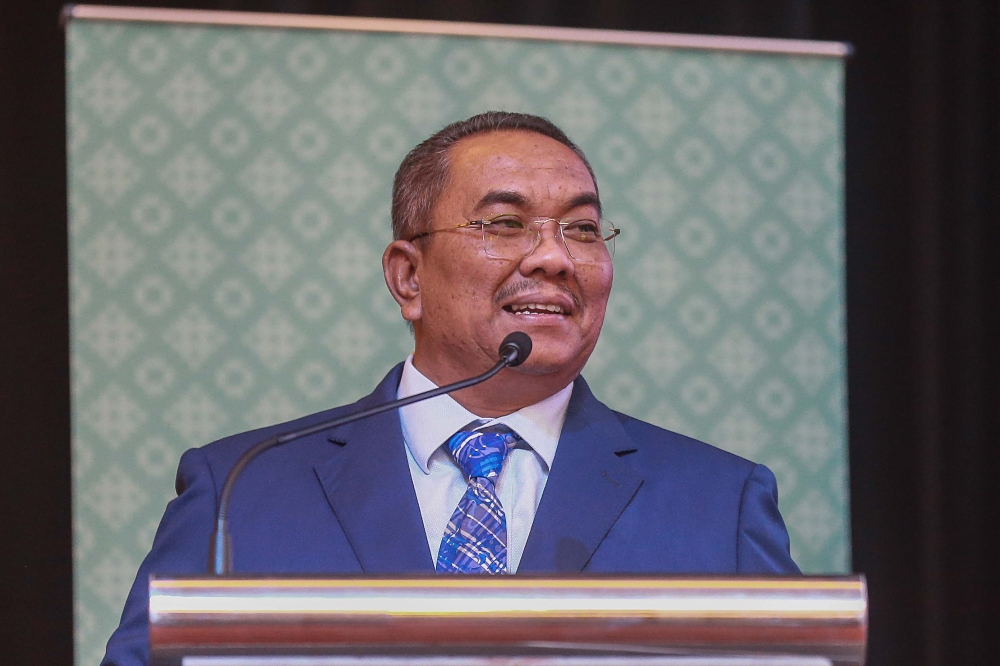
Kedah Menteri Besar Datuk Seri Muhammad Sanusi Md Nor has issued a stern warning that he will pursue legal remedies against those responsible for twisting his words and misrepresenting his political positions in public discourse. Speaking in Alor Setar, Sanusi made clear his intention to file defamation suits and lodge formal police complaints against parties engaged in what he characterises as a deliberate campaign to distort his remarks for political advantage.
The warning underscores growing tensions within Malaysia's political landscape, where statements by senior officials are increasingly subject to rapid dissemination and reinterpretation across social media platforms and alternative news outlets. Sanusi's threat reflects a broader pattern of Malaysian politicians employing legal instruments to defend their public reputations in an era where misinformation and selective quotation can spread faster than official clarifications.
Political speech in Malaysia operates within a complex legal framework that combines constitutional protections with defamation law, the Communications and Multimedia Act, and sedition provisions. Senior state officials like Sanusi occupy a particularly vulnerable position, as their pronouncements are scrutinised by both supportive and opposing political coalitions seeking ammunition for partisan advantage. The Menteri Besar's willingness to invoke legal mechanisms signals his frustration with what he perceives as orchestrated efforts to undermine his administration through systematic misrepresentation.
The nature of the alleged distortions remains central to evaluating the legitimacy of Sanusi's concerns. In Malaysian political discourse, the line between fair criticism and deliberate misquotation often blurs considerably. Political opponents frequently extract statements from their original context, amplify controversial phrases, and construct narratives that diverge substantially from speakers' intended meanings. For state leaders managing complex governance portfolios, such manipulation can genuinely impede policy communication and public understanding.
Kedah's political dynamics have grown increasingly competitive following recent electoral shifts across the country. As a state under PAS leadership operating within the broader Perikatan Nasional framework, Kedah has become a focal point for inter-coalition rivalries and contestation over narrative control. Sanusi's threat of legal action may therefore be understood partly as a defensive measure protecting administrative credibility against determined political opponents seeking to embarrass the state government.
From a broader Malaysian governance perspective, such threats raise important questions about the relationship between legal protections and free political expression. While public officials legitimately require recourse against defamation, excessive litigation can potentially create chilling effects on legitimate criticism and political debate. Opposition figures and civil society observers sometimes express concerns that legal threats, even when justified, may discourage robust scrutiny of government actions and statements.
The police report avenue Sanusi mentions represents another dimension of this enforcement strategy. Malaysia's police force maintains capacity to investigate complaints under various statutes, though political sensitivity often influences their approach to cases involving senior officials. Filing police reports effectively mobilises state apparatus to investigate allegations of misconduct, though critics argue such mechanisms can occasionally serve political rather than purely legal interests.
Social media platforms have fundamentally transformed how Malaysian political speech circulates and gets interpreted. A statement made at an official event can be captured, edited, and recontextualised within hours, reaching audiences vastly larger than those physically present. Sanusi's concerns likely reflect genuine frustration with this dynamic, wherein careful nuance becomes lost in viral fragments and algorithmic amplification of sensational content. For senior officials accustomed to more controlled communication environments, such dispersed and uncontrollable speech dissemination presents novel challenges.
The warning also reflects calculations about deterrence and reputational management. By publicly announcing his intention to pursue legal action, Sanusi signals to political opponents that misrepresentation carries consequences. Whether such threats actually modify behaviour remains uncertain, but the mere announcement itself constitutes a form of political communication designed to establish boundaries around acceptable discourse about the Menteri Besar's statements.
Median-term implications for Malaysian politics hinge partly on whether this approach becomes endemic across political leadership or remains a selective response to perceived egregious distortion. Widespread litigation by officials against critics and political opponents could substantially alter the texture of Malaysian political debate, potentially favouring better-resourced actors capable of sustaining legal campaigns.
For ordinary Malaysians observing such confrontations, Sanusi's approach embodies a broader pattern whereby political accountability increasingly flows through courts rather than exclusively through electoral and legislative mechanisms. This juridification of politics reflects both the maturation of Malaysian legal institutions and potential anxieties about resolving political disputes through traditional democratic channels. Whether such reliance on legal remedies ultimately strengthens or weakens Malaysian democracy remains an ongoing question, particularly as multiple actors across the political spectrum adopt similar strategies.

