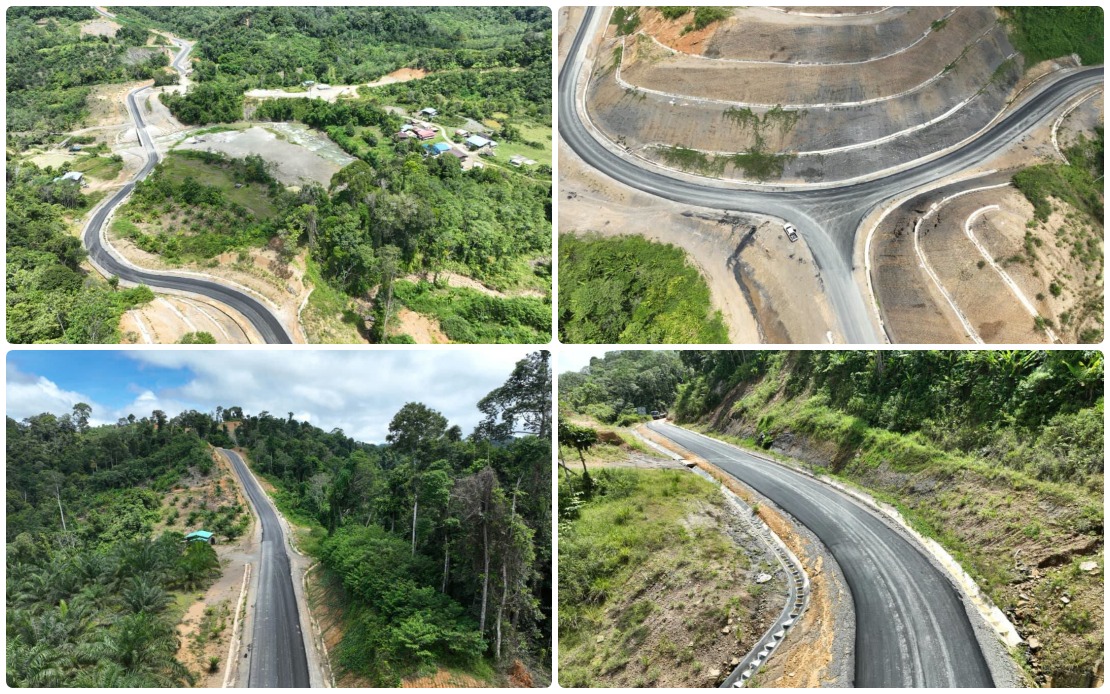
The long-awaited completion of the Sapulut-Salong-Pagalungan-Pensiangan road project represents a watershed moment for Sabah's interior regions, with the paved route now stretching all the way into Pensiangan town itself. The achievement marks the culmination of years of infrastructure investment aimed at transforming one of East Malaysia's most isolated parliamentary constituencies, fundamentally altering the relationship between these rural communities and the wider regional economy.
Datak Seri Arthur Joseph Kurup, the Minister of Natural Resources and Environmental Sustainability and Member of Parliament for Pensiangan, has positioned this road completion as central to his broader development agenda for the constituency. During a recent inspection visit, Kurup observed tangible changes in the landscape—what was once dominated by river transport now sees increasing vehicular traffic, with cars parked throughout Pensiangan town as improved road conditions encourage greater mobility and commerce. The shift from boats to automobiles serves as a visible indicator of infrastructure transformation and its cascading effects on daily life.
The most striking improvement lies in connectivity metrics. Previously, the journey from Keningau to Pensiangan town consumed more than six hours, a journey fraught with risks during poor weather conditions when travellers faced genuine danger of becoming stranded. The completed road has halved this duration to just three hours, fundamentally restructuring the time-geography of the region and making regular travel practical for professionals such as teachers, doctors, and nurses who previously faced substantial hardship in accessing these communities. For a region where professional staffing has historically been challenging, this reduction in travel friction carries genuine workforce implications.
The road project forms the cornerstone of an ambitious master development plan extending beyond mere connectivity. Kurup has articulated a vision for economic transformation that leverages improved infrastructure to unlock local potential. Phase Four of the initiative aims to extend the road network to the Kalimantan border, creating a cross-border economic corridor with potential implications for tourism, trade, and regional integration. Such border infrastructure development reflects broader Southeast Asian trends toward facilitating transnational commerce and movement, positioning Pensiangan within a larger development framework.
Complementing the main road artery, several supporting infrastructure projects have either been completed or are progressing. The Sinaron-Linayukan road in Tongod has finished, while the Rancangan Belia Tiulon-Simbuan route is under active construction. Port infrastructure at Pangkalan Salong is being upgraded to enhance boat and jetty facilities, recognizing that water transport remains integral to certain communities and trade patterns in this geographically complex region. Agricultural infrastructure has similarly received attention, with a coffee processing factory under construction and market facilities at Pagalungan Tamu and Salong Agrobazaar already operational.
Digital connectivity has not been overlooked in this development strategy. Telephone and internet upgrades throughout the district address a critical contemporary barrier to rural development, enabling residents to participate in digital commerce, access services remotely, and maintain connections to external markets and information networks. The completion of an agricultural collection centre reflects recognition that primary production will remain central to local economies, but that value can be enhanced through better aggregation, processing, and market access infrastructure.
Planned future developments indicate ambitions extending beyond current achievements. An immigration and customs complex at the Kalimantan border is progressing through approval processes, suggesting official recognition of cross-border trade potential and the need for formal institutional frameworks to manage movement and commerce. The construction of Sabah's first Sixth Form Centre at Sekolah Menengah Kebangsaan Nabawan addresses educational infrastructure gaps, potentially enabling rural youth to pursue higher secondary education without leaving the district—a factor that may influence demographic retention and human capital development.
For Malaysian policymakers and regional observers, the Pensiangan project illustrates a deliberate approach to rural development that emphasizes infrastructure connectivity as a foundation for broader economic and social transformation. Rather than approaching interior development through ad-hoc interventions, this master plan coordinates multiple infrastructure streams—roads, telecommunications, agricultural processing, educational facilities, and border infrastructure—into a coherent framework. Such integrated approaches offer potential lessons for other Malaysian states and Southeast Asian nations wrestling with interior development challenges.
The project's success in catalysing demographic reversal merits particular attention. Kurup's observation that young people are returning to their villages to develop land and generate local economic activity suggests that infrastructure investment is functioning not merely as convenience but as a genuine enabler of livelihood opportunity. This counter-narrative to rural-urban migration, where improved conditions make rural residence viable for younger generations, carries significant implications for demographic sustainability and local economic resilience in interior regions.
However, infrastructure completion alone cannot guarantee sustained economic development. The road and supporting facilities create necessary conditions for commerce and professional service delivery, but realizing the economic potential outlined in Kurup's master plan will require complementary investments in human capital, agricultural modernization, market development, and institutional capacity. The success or failure of subsequent phases, particularly the Kalimantan border corridor, will depend heavily on how effectively local communities can convert improved connectivity into actual economic gains.
Regional context further enriches the significance of this project. As Malaysia positions itself within broader ASEAN economic integration frameworks, infrastructure connecting interior regions to international borders becomes strategically valuable. The Kalimantan corridor represents not merely local development but potential participation in trans-border value chains, assuming appropriate trade agreements and institutional arrangements emerge. For Southeast Asian integration advocates, Pensiangan's evolving infrastructure may exemplify how interior regions can transcend geographic peripherality through strategic connectivity investments.
The road's completion also reflects changing expectations regarding government service delivery in Malaysian rural constituencies. Constituents increasingly expect not isolated infrastructure projects but coherent development frameworks addressing multiple dimensions of rural life simultaneously. Kurup's emphasis on coordinating road infrastructure with telecommunications, agricultural facilities, educational institutions, and border infrastructure demonstrates this contemporary conception of development as multidimensional and interconnected rather than sectoral and isolated.

