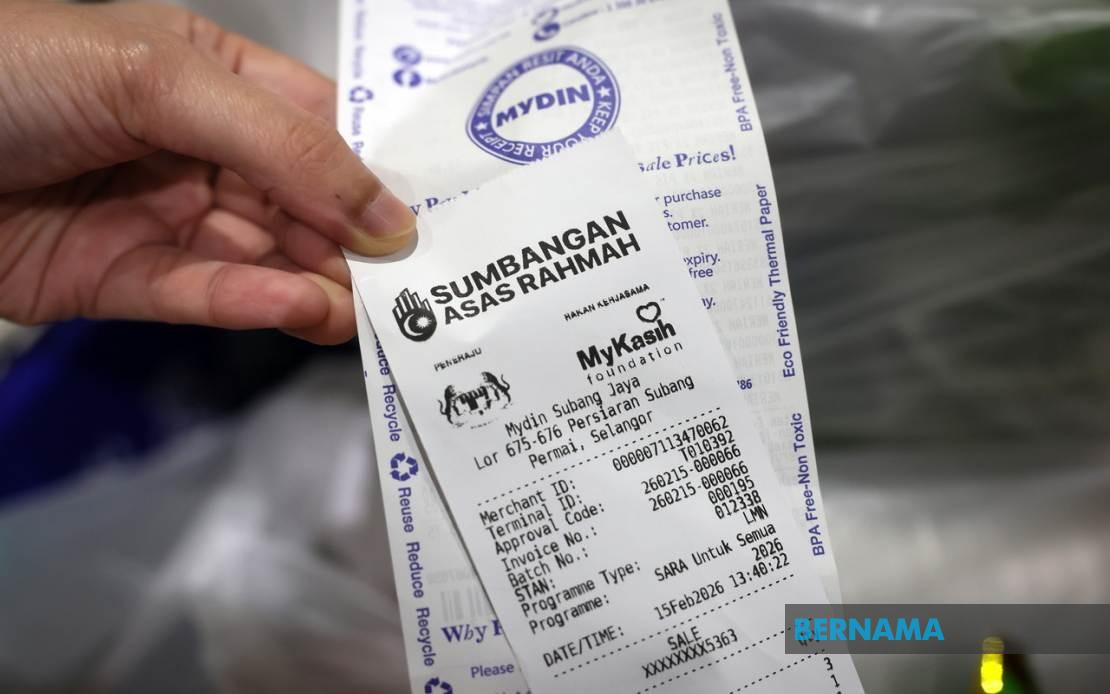
The Sumbangan Asas Rahmah (SARA) programme is demonstrating strong uptake among its target beneficiaries, with the Ministry of Finance confirming that nearly nine million monthly recipients of Sumbangan Tunai Rahmah (STR) have utilised the scheme at a rate of 99 per cent. As of the latest reporting period, transactions through the programme have reached RM3.45 billion for the year, underscoring both the programme's accessibility and the pressing financial needs of Malaysia's lower and middle-income households seeking relief from rising living costs.
The government's commitment to expanding the social safety net is evidenced by a significant budget reallocation, with SARA and STR allocations rising from RM10 billion in 2024 to RM15 billion in 2026. This upward trajectory reflects policymakers' recognition that cost-of-living pressures continue to weigh on vulnerable households and that targeted cash transfers remain a cornerstone of Malaysia's approach to poverty alleviation and social support. The incremental expansion signals long-term institutional commitment to maintaining these programmes as economic conditions evolve.
Beyond the headline figures, the Ministry of Finance highlighted the broader economic implications of the SARA scheme. Under the complementary SARA Untuk Semua initiative, approximately 22 million people—representing 87 per cent of all intended recipients—have generated over RM1.77 billion in local market transactions. This multiplier effect is central to the government's rationale for the programme: direct cash transfers not only provide immediate relief to beneficiaries but circulate money through small merchants, neighbourhood shops, and local supply chains, stimulating demand in communities that might otherwise lack disposable income.
The cashless design of SARA represents a technological intervention in traditional welfare delivery. Recipients access benefits through MyKad credits redeemable exclusively at registered SARA Rakan Niaga outlets, enabling the government to maintain oversight of how funds are deployed. This architecture addresses longstanding concerns about aid fungibility—the risk that cash transfers might be diverted to non-essential consumption—by restricting purchases to 15 essential categories including basic food staples, personal hygiene products, household cleaning supplies, and medicines. The constraint reflects policymakers' intent to ensure resources flow toward genuine need rather than discretionary spending.
From an administrative perspective, the cashless mechanism offers government agencies unprecedented visibility into programme implementation and impact. By tracking transactions at the point of sale, officials can identify coverage gaps, monitor spending patterns, and adjust policy in response to real-world usage data. This feedback loop represents a shift toward evidence-based social policy, where programmes are continuously refined based on granular information rather than abstract assumptions about recipient behaviour. For Malaysia, where regional disparities in development and service delivery remain pronounced, such tracking capacity is particularly valuable for directing resources to underserved areas.
The 99 per cent utilisation rate itself warrants careful interpretation. In the context of Malaysian social programmes, such high uptake suggests that the scheme addresses a genuine and widespread demand among its target population. Families are actively seeking out outlets, understanding their eligibility, and spending credits on qualifying items. This stands in contrast to some government programmes that suffer from administrative friction, poor awareness, or eligibility criteria that inadvertently exclude those most in need. The high engagement rate indicates that SARA has successfully overcome such barriers, at least in its initial implementation phase.
Parliamentary scrutiny of the programme, initiated by Datuk Aminolhuda Hassan (PH-Sri Gading), reflects broader legislative interest in ensuring that social spending delivers measurable outcomes. By requiring the Ministry of Finance to articulate key performance indicators—utilisation rates, transaction volumes, and coverage metrics—parliamentarians are establishing a framework of accountability around programmes that represent substantial public expenditure. This parliamentary engagement is particularly important in Malaysia's multi-layered federal system, where programme effectiveness can vary significantly across states and localities depending on implementation capacity and merchant participation.
The expansion to RM15 billion by 2026 must be contextualised within Malaysia's broader fiscal environment. Public debt servicing, infrastructure investment, and other budgetary commitments constrain the government's ability to indefinitely expand transfer programmes. The planned increase therefore represents a deliberate policy choice to prioritise social transfers over competing priorities, suggesting that addressing cost-of-living concerns remains a dominant political and policy preoccupation. For households in the B40 income bracket, this sustained commitment to resource allocation offers a measure of predictability in household budgeting and financial planning.
The SARA scheme also reflects Malaysia's ongoing experimentation with targeted versus universal welfare approaches. While the programme restricts eligibility to specific income bands, the complementary SARA Untuk Semua initiative attempts to broaden participation, creating a tiered structure that balances fiscal constraint with inclusivity. This hybrid model acknowledges that poverty and cost-of-living stress extend beyond strictly defined low-income thresholds, affecting wider swaths of the working population who lack adequate savings or asset buffers to weather economic shocks. The 22 million people engaged through SARA Untuk Semua represent a substantially larger constituency than the nine million primary STR recipients, suggesting that perceived need far exceeds formal programme targeting.
Looking forward, the sustainability of SARA depends on maintaining adequate merchant participation and preventing scheme fatigue among retailers, particularly in rural and lower-density areas where participating outlets remain sparse. Expansion of the merchant network and improvements to point-of-sale infrastructure will be essential if utilisation rates are to remain near current levels as the beneficiary base potentially broadens. Similarly, the government must remain attentive to inflation in the cost of essential goods—if prices for SARA-eligible items outpace credit value adjustments, the purchasing power of recipients will erode despite unchanged nominal allocations.
The programme also holds implications for Malaysia's labour market and social mobility. To the extent that SARA reduces household financial stress, it may enable recipients to invest in education, skill development, or entrepreneurship rather than allocating all resources to immediate consumption. Conversely, if assistance becomes a permanent fixture rather than a transitional support mechanism, dependency risks and potential labour supply disincentives merit ongoing evaluation. Malaysian policymakers will need to monitor whether assistance programmes correlate with changes in employment participation, wage growth, or upward mobility among beneficiary households.
Regionally, Malaysia's SARA model offers a case study in digitalised welfare delivery that other Southeast Asian economies are beginning to observe. As countries across the region grapple with informality, inequality, and cost-of-living pressures, the Malaysian approach—combining targeted cash transfers with digital verification and merchant restrictions—demonstrates one pathway for scaling social support while maintaining fiscal discipline. The programme's reported success may influence policy conversations in neighbouring countries wrestling with similar demographic and economic challenges, positioning Malaysia's administrative innovations as a potential export of policy expertise.
The Ministry of Finance's emphasis on tracking programme effectiveness and the government's signal of continued budget expansion suggest that SARA is likely to remain a central pillar of Malaysia's social policy architecture in the medium term. However, the true measure of success extends beyond transaction volumes and utilisation rates to encompass whether recipients experience genuine improvement in living standards, financial resilience, and economic opportunity. Sustained parliamentary oversight and transparent reporting of both successes and shortcomings will be essential to maintaining public confidence in these programmes and ensuring that public resources ultimately translate into improved welfare outcomes for Malaysia's most vulnerable households.

