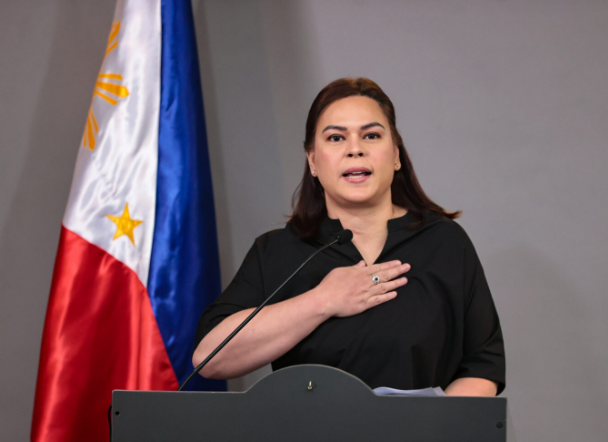
Vice President Sara Duterte has cast a large gathering of religious devotees on Epifanio de los Santos Avenue as evidence of deepening public disillusionment with President Ferdinand Marcos Jr.'s government, intensifying her attacks on the administration amid her own impeachment proceedings. Speaking on Tuesday, June 30, the vice president framed thousands of Iglesia ni Cristo (INC) members who assembled along the iconic thoroughfare as representatives of a broader sentiment of frustration that she says has been building since early 2024. Her intervention transforms what the INC framed as a protest against selective justice—specifically the filing of a plunder complaint against Senator Rodante Marcoleta—into a referendum on executive performance more broadly.
Duterte's characterization of the rally extends beyond the INC's immediate grievances to encompass what she portrays as systemic failures in governance. She has accused the Marcos administration of being fundamentally defined by ineffective policymaking and an inability to grapple with the country's most pressing challenges. This framing allows her to position herself as a voice for constituencies experiencing tangible hardship rather than as a political rival merely engaged in factional combat. By anchoring her critique in the lived experiences of ordinary Filipinos, she attempts to elevate the dispute from partisan politics to a question of basic administrative competence.
The economic dimensions of her complaint merit particular attention for Malaysian and Southeast Asian observers watching Philippine political dynamics. Duterte has highlighted the administration's perceived indifference to surging commodity prices, employment precarity, and the mounting cost of essential goods and services. These grievances resonate across the broader region, where multiple countries have grappled with inflationary pressures and wage stagnation in recent years. The vice president's willingness to weaponize economic discontent reflects a calculation that bread-and-butter issues remain the most potent political vulnerabilities for any sitting government.
Beyond economic management, Duterte has levelled charges that strike at the heart of democratic governance. She contends that the administration has responded to criticism by attempting to suppress rather than engage with dissenting voices, whether those voices belong to anti-corruption campaigners, policy critics, or opposition figures raising allegations concerning the presidency. This accusation transforms the political conflict from a dispute over economic policy into one touching fundamental questions about the health of Philippine democratic institutions. Duterte suggests that the administration's approach represents not merely bad policy but a threat to the constitutional order itself.
Duterte's language about an "oppressive political environment" and governance defined by "intimidation" warrants scrutiny, particularly given her own impeachment by the House of Representatives. The charges she faces include alleged threats against Marcos and his wife, unexplained wealth accumulation, and misuse of confidential funds—allegations that speak to governance standards and abuse of executive power. This context creates a complex dynamic in which both the vice president and the administration can plausibly claim to be defending institutional integrity against the other's transgressions. The Senate Impeachment Court's scheduled commencement of her trial on July 6 will test whether these competing narratives of democratic integrity can coexist in public consciousness.
The INC's participation in the Edsa gathering adds another dimension to Duterte's political strategy. As one of the Philippines' most organized and disciplined religious movements, the INC can mobilize large numbers of adherents for public demonstrations, making it an attractive coalition partner for any political force seeking to demonstrate popular support. The church's invocation of selective justice and legal distortion, framed around the Marcoleta plunder complaint, provided Duterte with a ready-made vehicle for broader anti-administration sentiment. Whether the INC's institutional interests align with Duterte's long-term political objectives remains an open question, but their alignment on this particular occasion has amplified her message.
Duterte's decision to intervene in the Edsa moment reflects her assessment that public frustration with the administration has reached a threshold where it can be channelled into political advantage. She frames the administration's character flaws and leadership failures as having created structural conditions for democratic backsliding. This diagnosis implies that the solution lies not merely in policy adjustment but in fundamental change in executive leadership. For Southeast Asian observers, this dynamic illustrates how economic grievances, democratic concerns, and personal political rivalries can become deeply intertwined in contemporary Philippine politics.
The timing of Duterte's statement carries tactical significance given her impending trial. By maintaining a prominent public voice and positioning herself as a defender of democratic principles and economic justice, she seeks to sustain political relevance and potentially influence public opinion that could affect her Senate trial outcome. Her characterization of criticism-suppression as a defining feature of the Marcos administration attempts to reframe her own impeachment as a persecution motivated by Marcos's intolerance of dissent rather than as a legitimate response to alleged misconduct. This narrative strategy will likely feature prominently in her trial defence.
Malaysian readers observing these developments should note the structural parallels with regional governance challenges. Many Southeast Asian nations have experienced tensions between elected executives claiming to speak for the people and legislatures or courts attempting to enforce accountability mechanisms. The question of whether impeachment proceedings represent legitimate constitutional oversight or political persecution often depends on one's vantage point. Duterte's insistence that the administration has created an environment hostile to dissent, combined with her own legal jeopardy, illustrates how these tensions play out in real political time.
The broader implications for Philippine governance are significant. If Duterte successfully mobilizes public sentiment around narratives of economic mismanagement and democratic suppression, she may constrain the administration's remaining years in office and shape the environment for the 2028 presidential succession. Conversely, if her impeachment trial results in conviction, her political capital would diminish substantially despite her current visibility. The interaction between economic conditions, democratic perceptions, and institutional processes will determine which trajectory prevails.

