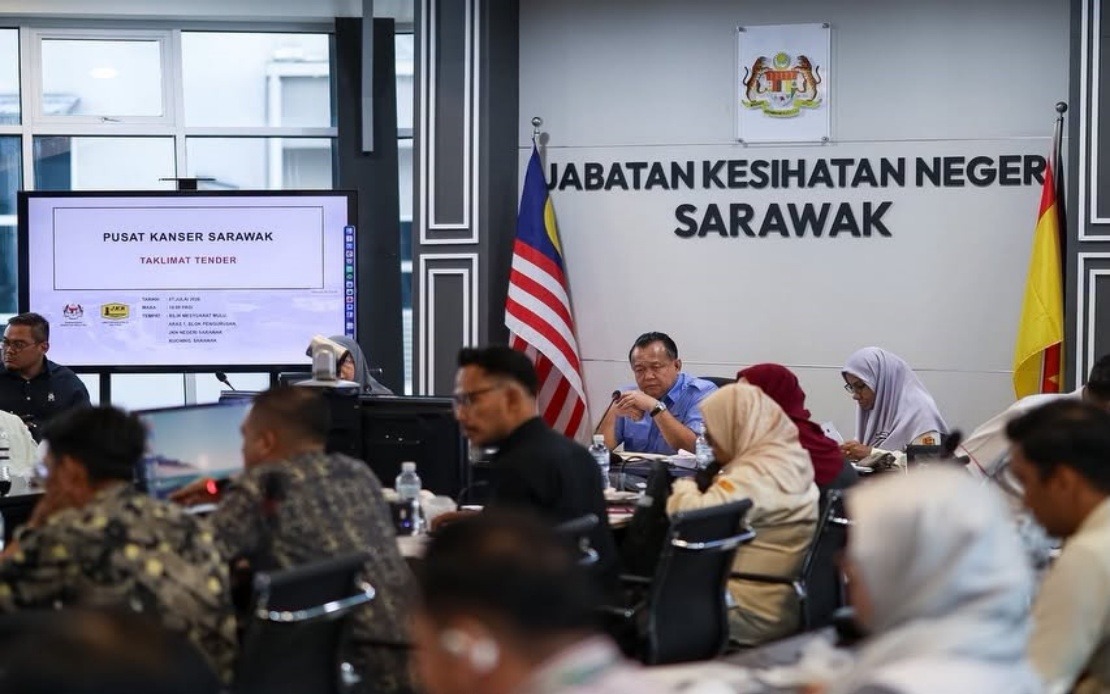
The long-awaited Sarawak Cancer Centre project has moved into its critical tender phase, with construction expected to commence in January 2027 once the Letter of Acceptance is awarded to the successful contractor. Works Minister Datuk Seri Alexander Nanta Linggi provided the timeline during a site visit to Kota Samarahan, signalling that the ambitious healthcare infrastructure initiative is progressing through its planned stages after years of planning and preparation.
The project currently sits at the design-and-build tender stage, a procurement approach that combines architectural and engineering design with construction responsibilities under a single contractor. Ten companies have successfully navigated the rigorous pre-qualification process and attended a detailed briefing to understand the full scope of works required. This selective approach ensures that only experienced, financially stable contractors with proven capabilities in complex healthcare projects proceed to the proposal stage, reducing execution risks and potential delays.
Contractors are being allocated approximately three months to develop comprehensive proposals that address the technical, logistical, and financial aspects of the project. This timeframe allows construction firms sufficient opportunity to assemble specialist teams, conduct detailed site assessments, and formulate realistic implementation strategies. Following the submission deadline, the evaluation process will assess each proposal against predetermined criteria including technical merit, timeline feasibility, cost-effectiveness, and quality assurance measures. Once evaluation is complete, the Works Ministry anticipates issuing the Letter of Acceptance in early January 2027, clearing the path for design finalisation and construction mobilisation.
The winning contractor will be granted 60 months, or five years, to complete both design and construction phases, a duration that reflects the complexity and scale of this healthcare facility. Following handover, a two-year Defects Liability Period will be implemented, during which the contractor remains responsible for rectifying any structural or functional defects that emerge. This extended warranty period ensures the facility operates reliably from day one, protecting both the investment and the patients and staff who will depend on its services.
The facility design must satisfy comprehensive requirements established by the Health Ministry while incorporating contemporary architectural and operational standards for cancer treatment centres. This balance between regulatory compliance and modern functionality is essential for a specialist medical facility that will serve patients from across Sarawak and potentially neighbouring states. The integration of latest clinical protocols, diagnostic imaging capabilities, and treatment technologies will be embedded into the building's infrastructure, requiring close coordination between healthcare planners and construction professionals throughout the design phase.
Situated adjacent to the existing Sarawak Heart Centre on a 10.9-hectare site in Kota Samarahan, the cancer centre will represent a significant expansion of Sarawak's specialised medical facilities. The 310-bed capacity is designed to accommodate both outpatient consultations and inpatient treatment, recognising that cancer care encompasses diverse patient needs from initial diagnosis and chemotherapy to surgical interventions and palliative services. This dual-service model will enhance accessibility for patients across the state who currently must travel to Peninsular Malaysia for advanced oncology care.
The projected cost exceeds RM1 billion, reflecting the substantial investment required for a modern, fully equipped cancer treatment facility. The Sarawak government has allocated RM1 billion from its state budget to finance the project, with arrangements in place for subsequent reimbursement through an agreed financial mechanism. This funding commitment demonstrates the state government's prioritisation of healthcare infrastructure and recognition that cancer treatment capacity is a critical gap in East Malaysian healthcare provision. For context, similar regional cancer centres in developed healthcare systems typically operate in this cost bracket when accounting for specialised equipment, technology infrastructure, and training facilities.
The timing of this project reflects growing pressure across Southeast Asia to develop regional cancer treatment capacity. Malaysia has seen rising cancer incidence rates, and Sarawak's geographic remoteness from major medical hubs in Klang Valley creates particular disadvantages for patients requiring specialist oncology services. By establishing a dedicated cancer centre in Sarawak, the state government aims to reduce treatment delays, improve survival outcomes, and reduce the financial and emotional burden on families who currently must relocate temporarily for extended treatment courses. The project also represents investment in medical infrastructure that can attract healthcare professionals and support Sarawak's aspirations to develop itself as a regional medical hub.
The tender process itself reflects Malaysia's evolving approach to complex healthcare infrastructure procurement. The design-and-build model, while shifting some design responsibility to contractors, can accelerate delivery timelines and enhance cost certainty compared to traditional design-bid-build approaches. However, this approach requires meticulous specification of functional requirements and quality standards upfront, ensuring that contractors cannot compromise clinical functionality in pursuit of cost savings. The Health Ministry's involvement in establishing design requirements is therefore critical to the project's ultimate success.
Once operational, the Sarawak Cancer Centre will integrate with existing healthcare networks across the state and region. Coordination with the adjacent Sarawak Heart Centre will create opportunities for combined patient management, shared diagnostic facilities, and integrated research initiatives. The facility will also support medical training and research programs, potentially attracting visiting specialists and fostering development of local oncology expertise. These secondary benefits can amplify the return on the significant public investment being committed to this project.

