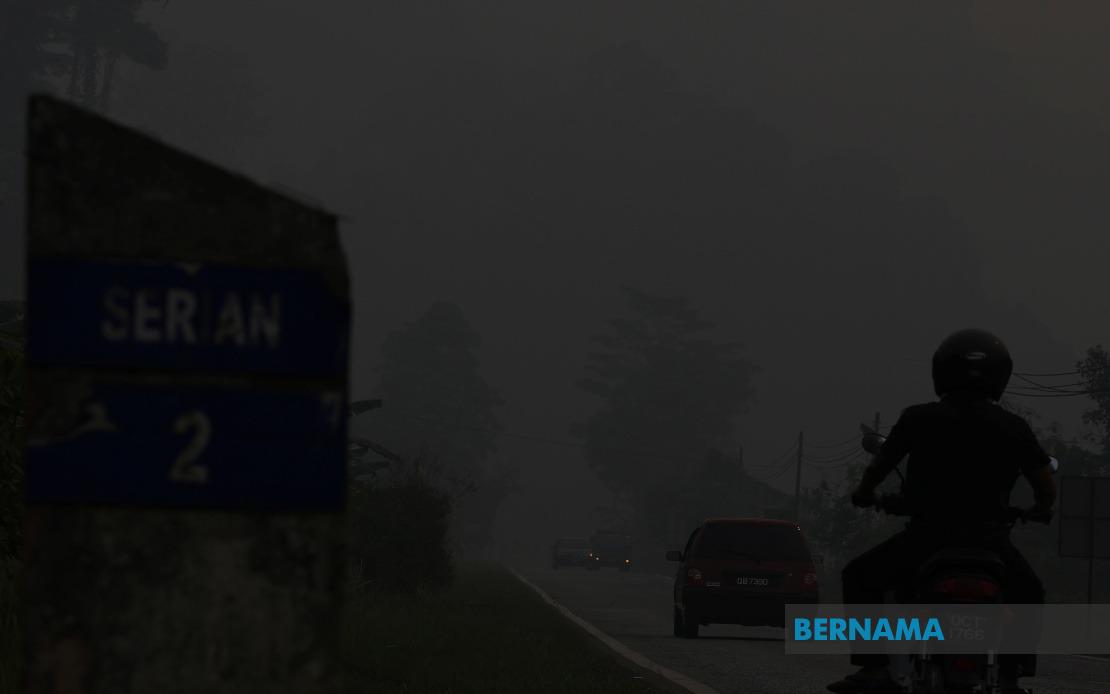
The Sarawak Disaster Management Committee (SDMC) has called on all event organisers—whether conducting official, private or community functions—to carefully evaluate current haze conditions and Air Pollutant Index (API) readings when making decisions about their activities. This guidance comes as air quality across multiple Sarawak districts deteriorated sharply, prompting the state authority to issue timely advisories to help minimise public health risks during the ongoing atmospheric crisis.
Datuk Amar Douglas Uggah Embas, who chairs the SDMC and serves as Sarawak Deputy Premier, emphasised that while organisers retain responsibility for these decisions, they should exercise sound judgment grounded in protecting community wellbeing. The committee has not issued blanket mandates suspending all outdoor events, leaving flexibility for individual organisers to chart their own course based on real-time conditions and their specific circumstances. This approach recognises that different activities carry varying exposure risks and that organisers are best positioned to evaluate their own situations.
The SDMC has established API 200 as a critical threshold for reconsidering outdoor events, particularly those involving physical exertion. When air quality reaches this level, organisers face heightened responsibility to reassess whether proceeding remains prudent, especially when children, elderly people or those with existing health vulnerabilities participate. The committee encourages creative adaptations rather than outright cancellations—shifting programs indoors, redesigning activities to reduce physical intensity, or deferring events until air quality improves are all viable alternatives worth exploring.
Several Sarawak districts experienced severe air pollution on the day the SDMC issued its statement. The Serian District Police Headquarters monitoring station recorded the highest API reading at 412, classified as hazardous. Samarahan followed with a reading of 332, while Kuching recorded 304, both in the unhealthy range. These readings represented a sharp deterioration from earlier in the day, highlighting how rapidly air quality can degrade during haze episodes and underscoring why continuous monitoring matters.
Beyond the most severely affected areas, numerous other districts registered unhealthy air quality levels. Sarikei recorded 197, Sibu 190, Bintulu 183, Mukah 176, Samalaju 175, Kapit 161, Miri 159 and the Miri Industrial Training Institute at 156. The widespread geographic distribution of elevated readings demonstrates that haze impacts extended across much of the state, not merely concentrated in one region, meaning event organisers statewide needed to factor air quality into their planning.
The SDMC continues collaborating with both state and federal agencies to track air quality trends and deploy protective measures in graduated stages aligned with established disaster management protocols. This cooperative approach ensures coordinated responses and prevents conflicting directives from different government bodies. Regular monitoring through the Department of Environment's Air Pollutant Index Management System (APIMS) portal provides organisers and the public with real-time data to inform decisions.
The committee outlined more severe consequences for extreme pollution levels. Should API readings exceed 500, the applicable disaster management framework authorises closure of government and private sector offices and workplaces, subject to exemptions for essential services. Such drastic action would require a formal Disaster Emergency declaration from the National Disaster Management Committee (NADMA), Malaysia's federal coordinating body. This escalation pathway reflects the recognition that severe haze poses such acute public health risks that normal economic and social operations cannot safely continue.
For Malaysian event organisers and community leaders in Sarawak, the SDMC's guidance underscores the need for adaptive planning during haze season. Rather than rigid adherence to predetermined schedules, flexibility and responsiveness to environmental conditions serve public health better. Organisers should regularly check the APIMS portal, understand what different API ranges mean for their specific activities, and pre-arrange contingency plans—backup indoor venues, alternative dates, or revised programs—before crises force last-minute scrambling.
The broader context matters for the region. Southeast Asia experiences recurring transboundary haze, particularly during dry seasons, affecting Malaysia, Singapore, Indonesia and Brunei. Sarawak's experience reflects patterns replicated elsewhere in the region. The SDMC's measured approach—setting clear thresholds, empowering organisers while providing guidance, and maintaining coordination—offers a practical model for balancing economic and social continuity with legitimate public health protection during environmental crises that require collective responsibility.

