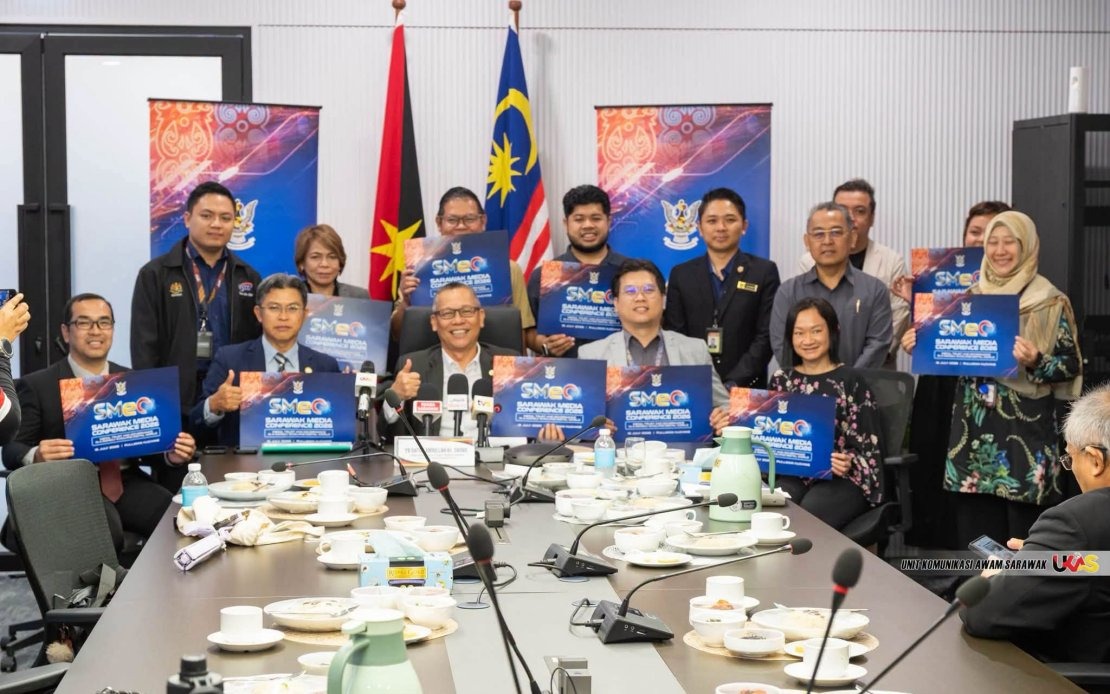
The Sarawak Media Conference 2026 is poised to become a significant gathering for regional media and communications professionals, with organisers anticipating approximately 800 attendees from diverse sectors including journalism, academia, policy circles, and the broader communications industry. Scheduled as a major event in Sarawak's media calendar, the conference represents a deliberate effort by the state government to create a forum where pressing contemporary challenges facing the industry can be examined and addressed in depth.
Organised by the Sarawak Government through its Public Communications Unit, the conference carries substantial official backing and will be formally opened by Sarawak Premier Tan Sri Abang Johari Tun Openg. The chosen theme, "Media, Trust and Governance in a Rapidly Evolving Digital World," reflects anxieties and opportunities that have come to define the global media landscape in recent years. These concerns resonate particularly strongly across Southeast Asia, where countries grapple simultaneously with expanding digital access, misinformation challenges, and ongoing questions about press freedom and editorial independence.
According to Datuk Abdullah Saidol, Deputy Minister in the Sarawak Premier's Department overseeing corporate affairs, information and communications matters, the conference will centre discussions on two interconnected priorities: restoring and maintaining public confidence in media institutions, and establishing governance frameworks adequate for contemporary digital realities. These dual objectives reflect a recognition that trust erosion and governance gaps often develop in tandem, particularly when technological change outpaces institutional adaptation. For Malaysian readers, this focus carries relevance beyond Sarawak, as similar challenges confront national media outlets and regional players navigating audience fragmentation and algorithmic content distribution.
The agenda will extend beyond traditional journalism concerns to encompass emerging technological frontiers, notably artificial intelligence. As AI systems increasingly influence content creation, curation, and distribution, media organisations across Malaysia and the region face mounting pressure to establish ethical guidelines and transparency standards. The conference's explicit commitment to exploring both opportunities and risks associated with AI reflects mature acknowledgment that technological tools are neither inherently beneficial nor harmful—their impact depends substantially on how they are deployed and governed. This nuanced approach stands in contrast to more polarised debates that sometimes dominate public discourse.
The event's speaker roster demonstrates the organisers' ambition to draw on expertise spanning commercial innovation, regulatory perspectives, and professional standards. SOL Digital founder Lunnie Gan brings insights from digital-native media ventures, while Malaysian Media Council deputy chairman Premesh Chandran represents established industry governance bodies. This mix of perspectives—entrepreneurial, institutional, and regulatory—should generate productive dialogue about how different stakeholders perceive current challenges and envision sustainable solutions. The inclusion of academics alongside practitioners and policymakers follows best practice for conferences seeking to ground industry discussions in research-informed analysis.
Beyond the main conference programme, the event will incorporate ceremony and recognition. A special dinner honouring National Journalists' Day at the state level will be attended by Deputy Prime Minister Datuk Seri Fadillah Yusof, underscoring the event's significance within Malaysia's political calendar. The presentation of the Sarawak Premier's Special Appreciation Awards across five distinct categories—recognising editors, journalists, stringers, photographers, videographers, radio broadcasters, and social media influencers—signals official acknowledgment of how journalism has diversified beyond traditional boundaries. The inclusion of social media influencers alongside conventional journalists reflects contemporary reality: information flows and public discourse increasingly involve creators who operate outside traditional newsroom structures.
This expanded definition of who constitutes the media landscape warrants closer examination. The inclusion of social media influencers in award categories suggests official recognition that influence over public opinion and information consumption no longer concentrates exclusively within traditional media institutions. For Malaysian policymakers and media professionals, this development carries implications for how regulatory frameworks, professional standards, and accountability mechanisms should evolve. Many Southeast Asian countries remain uncertain about appropriate governance approaches for influencer-driven content, particularly regarding political communication, product promotion, and misinformation risks.
The conference's timing and location merit consideration as well. Holding this substantial gathering in Sarawak, rather than in Malaysia's federal territories, reflects the state government's commitment to positioning itself as a media and communications hub. For a state where media infrastructure and academic institutions have historically concentrated resources in peninsular Malaysia, hosting an 800-person international standard conference demonstrates ambition to participate more centrally in regional professional discourse. This decentralisation of major conferences can benefit the broader Malaysian media ecosystem by distributing opportunities and expertise development across the federation.
The explicit thematic focus on trust presents perhaps the most philosophically significant element. Media trust—the audience confidence that journalism serves public interest rather than narrow commercial or political agendas—has become a defining challenge globally. In Malaysia and across Southeast Asia, trust deficits stem from multiple sources: partisan media ownership patterns, historical government-media tensions, competition from misinformation and disinformation operations, and audience fragmentation along ideological and demographic lines. A conference examining these trust foundations in depth, rather than treating them as peripheral concerns, suggests sophisticated understanding among organisers that media reform cannot succeed without addressing legitimacy questions.
For Malaysian and regional communications professionals, this conference offers valuable networking and learning opportunities. The breadth of participating constituencies—from journalists to policymakers to students—creates possibilities for cross-sector dialogue that rarely occurs in daily professional practice. Students attending may particularly benefit from exposure to senior practitioners and policymakers grappling with contemporary challenges they will inherit. Similarly, policymakers engaging directly with journalism practitioners can develop more grounded understanding of operational realities that formal policy papers often overlook.
The conference ultimately reflects a broader regional conversation about media's future. As digital transformation accelerates, platform algorithms reshape information flows, artificial intelligence enters content production, and audience behaviour fragments across countless channels, traditional media institutions worldwide face existential questions about relevance, sustainability, and public purpose. By gathering 800 participants to examine these issues systematically, Sarawak's government has created space for the kind of deliberative dialogue essential for developing thoughtful responses. Whether such gatherings translate into concrete institutional change, policy reform, or professional practice improvement remains to be seen, but the commitment to convening diverse expertise around shared challenges represents an important starting point.

