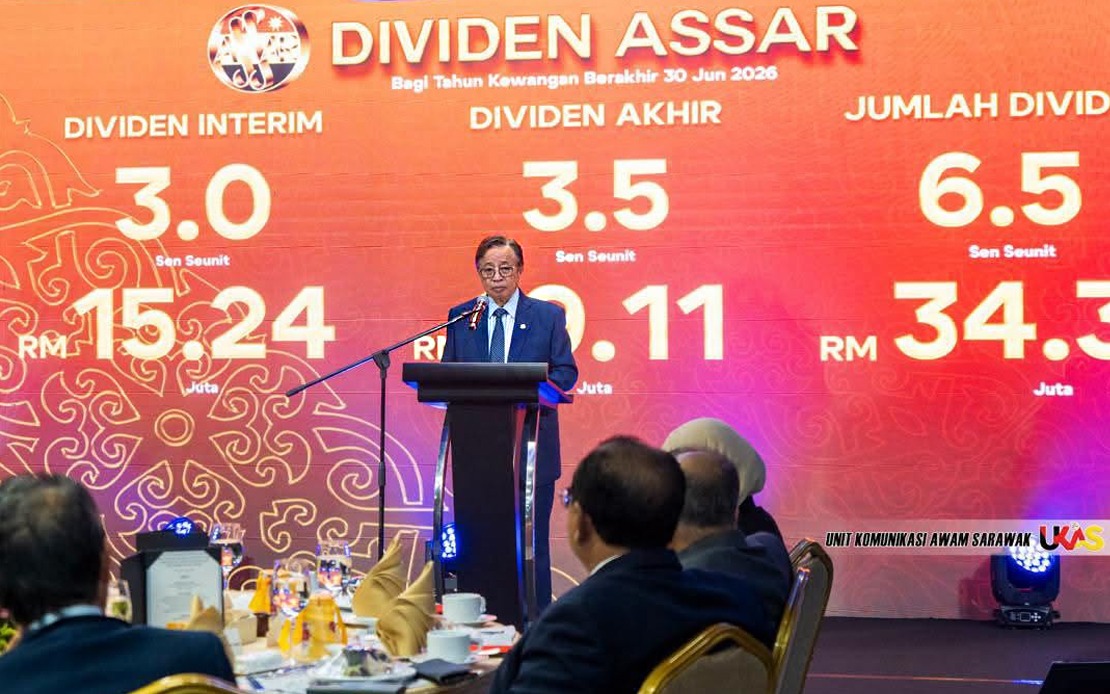
The Sarawak state government is examining the possibility of broadening access to its flagship Amanah Saham Sarawak (ASSAR) investment scheme to encompass non-Bumiputera residents through the creation of a parallel fund structure. Tan Sri Abang Johari Tun Openg, the Sarawak Premier, revealed the proposal during remarks made at the ASSAR Dividend Announcement ceremony for the financial year ending June 30, 2026, held in Kuching on July 13. The initiative, tentatively referred to as ASSAR 2, would mirror aspects of the investment model operated by Permodalan Nasional Berhad (PNB), Malaysia's largest state-owned fund manager.
Currently, ASSAR operates exclusively for Bumiputera investors, reflecting longstanding constitutional protections and affirmative action policies that have shaped Malaysia's economic framework since independence. By establishing a complementary vehicle, the state government aims to democratize wealth-creation opportunities and ensure that non-Bumiputera communities gain meaningful access to participate in Sarawak's expanding economy. Abang Johari emphasized that the board of directors and management of ASSAR would scrutinize the feasibility of this proposal, examining both the structural requirements and regulatory implications before any formal commitment.
The move signals a strategic pivot toward inclusivity in economic policy, distinguishing Sarawak's approach from some other Malaysian states that have maintained stricter Bumiputera-only frameworks. By creating dual pathways for investment, the government seeks to attract capital from a wider demographic base while maintaining the protection afforded to indigenous shareholders through the original ASSAR structure. This bifurcated model would allow the state to accumulate greater financial resources while signalling openness to multiethnic participation in state-backed prosperity initiatives.
The rationale underlying this proposal extends beyond mere financial engineering. Sarawak's economy has displayed robust growth momentum in recent years, driven by diversification across sectors including petroleum, agriculture, manufacturing, and renewable energy. Widening the investor base through ASSAR 2 would enable the state to harness savings from non-Bumiputera residents and channel those funds into economic development projects that benefit the entire population. This inclusive approach aligns with Abang Johari's stated commitment to ensuring that more Sarawakians, irrespective of ethnicity, derive tangible advantage from the state's prosperity.
The PNB model cited by the Premier as a reference point demonstrates how a national fund manager successfully operates multiple investment vehicles catering to different investor profiles while maintaining professional management standards and competitive returns. PNB's experience suggests that separation between Bumiputera-exclusive and open-market schemes can coexist without compromising the integrity or performance of either channel. PNB's ability to generate substantial shareholder value across its various funds provides empirical evidence that the Sarawak government's proposed approach is operationally viable.
From a Malaysian perspective, this development carries broader implications for federal-state relations and the evolving discourse surrounding affirmative action policies. Sarawak's consideration of a non-Bumiputera investment mechanism, whilst preserving Bumiputera protections, exemplifies pragmatic federalism where states calibrate policies according to local circumstances and political considerations. The decision also reflects changing demographics and socioeconomic expectations in Sarawak, where non-indigenous populations have become increasingly integrated into the state's economic and social fabric.
The proposal also addresses a perennial challenge facing state governments: mobilizing domestic savings and directing capital toward productive investment rather than allowing it to flow toward neighboring jurisdictions or overseas markets. By creating an attractive savings vehicle that welcomes non-Bumiputera participation, Sarawak could retain capital that might otherwise escape the state economy. This retention effect would amplify the multiplier impact of state investment and potentially generate employment and economic stimulus across sectors reliant on working capital and infrastructure development.
Implementing ASSAR 2 would require careful legislative and regulatory groundwork. The Sarawak government would need to amend existing regulations governing ASSAR, establish clear governance structures for the new fund, and determine whether ASSAR 2 would operate under separate management or be integrated into the existing ASSAR administrative apparatus. Questions surrounding dividend policy, investment strategy, and redemption terms would need resolution to ensure that ASSAR 2 offers competitive returns and maintains investor confidence in the face of alternatives offered by private financial institutions and federal-level investment vehicles.
The timeline for this proposal remains undefined, with Abang Johari indicating only that the ASSAR board and management would conduct the necessary feasibility assessment. Given the complexity of implementing a new investment vehicle and the need to secure stakeholder consensus, formal approval and launch could take several quarters or longer. Nevertheless, the public announcement signals serious intent by the Sarawak government to move forward with deliberations, suggesting that administrative machinery is already mobilizing to examine technical, legal, and financial dimensions of the initiative.
From an investor standpoint, ASSAR 2 could open new savings pathways for non-Bumiputera Sarawakians seeking long-term wealth accumulation with the backing of state-level stewardship. Existing ASSAR shareholders might also benefit indirectly if the new fund's establishment generates operational efficiencies or allows the original ASSAR structure to expand its investment universe through cross-fund synergies. Competition between the two funds could also drive improvements in management performance and investor service standards.
Looking forward, the success of ASSAR 2 could establish a template for other state governments considering similar inclusive investment mechanisms. If the Sarawak model proves successful, other states might replicate the approach, leading to a gradual shift in how state investment vehicles balance Bumiputera-specific objectives with broader-based economic participation. This evolution would represent a natural adaptation of Malaysia's affirmative action framework to contemporary economic realities and demographic changes.

