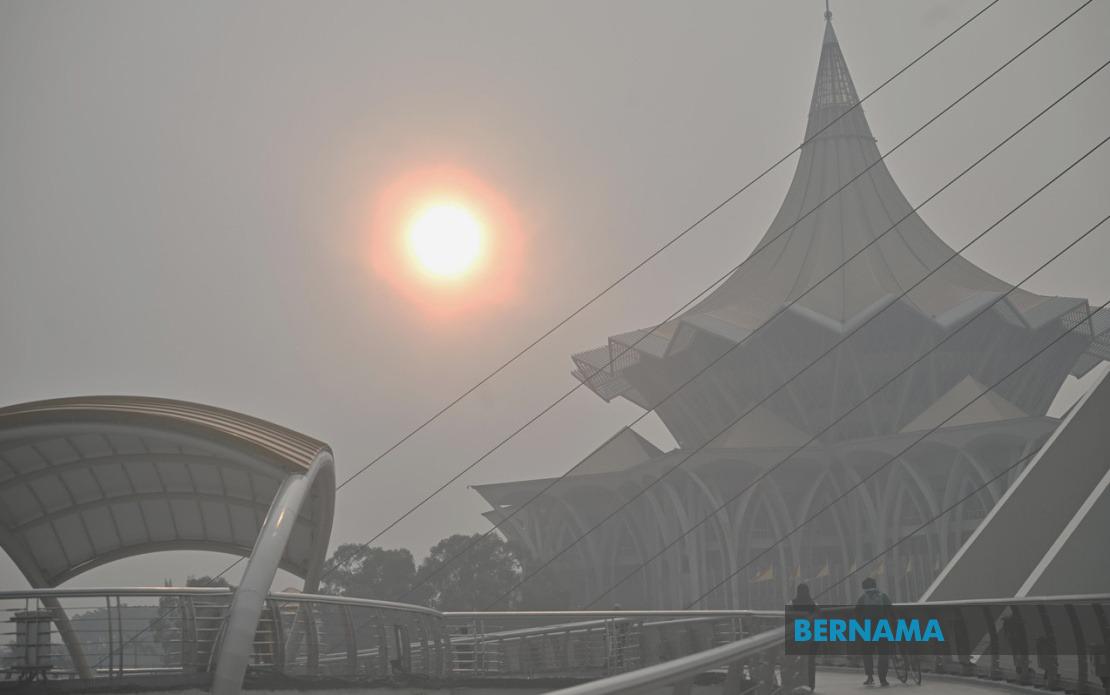
More than half a million students across Sarawak have been sent home as authorities grapple with the escalating impacts of prolonged hot and dry weather sweeping through the state. The Sarawak Education Department announced the temporary shutdown of 591 schools from August 20 affecting two days of learning, encompassing 509 primary schools with 107,590 enrolled pupils and 82 secondary institutions educating 89,733 students. The measure underscores mounting anxieties about environmental and public health challenges that have begun disrupting routine educational activities across the eastern Malaysian state.
The geographical scope of the closures reveals how widely the adverse weather has spread across Sarawak's administrative divisions. Ten District Education Offices coordinated the shutdown, covering Kuching, Padawan, Bau, Lundu, Samarahan, Simunjan, Serian, Sri Aman, Lubok Antu and Betong. This extensive coverage indicates that the atmospheric conditions creating concern for school authorities extend well beyond urban centres, affecting both rural and developed regions simultaneously. The decision to close schools rather than proceed with regular instruction signals that state education officials considered conditions sufficiently hazardous to justify disrupting academic calendars.
The underlying threat prompting swift administrative action centres on multiple interconnected environmental hazards triggered by sustained heat and aridity. The Sarawak State Disaster Management Committee, tasked with coordinating emergency preparedness across the state, identified escalating risks encompassing forest and peatland combustion, open area fires, and potential strain on municipal water supplies. Drought conditions create volatile circumstances where vegetation dries rapidly, transforming normally green landscapes into tinderboxes awaiting ignition. Peat soils, which store significant carbon and moisture, become particularly unstable during extended dry periods, posing risks for subsurface and smouldering fires that prove difficult to extinguish.
Air quality deterioration has become an immediate public health concern directly observable across multiple population centres. By early afternoon on August 20, nine locations registered unhealthy Air Pollutant Index readings, with Serian and Lubok Antu each recording 195, indicating hazardous conditions warranting restrictions on outdoor activities and educational operations. Kuching registered 191, Lundu 180, Sri Aman 178, Samarahan 175, Tebedu 169, and Sarikei 154, while Sibu recorded a relatively lower but still concerning 108. These readings suggest that smoke, particulates, and other pollutants have already begun accumulating in the atmosphere, creating respiratory health risks particularly acute for schoolchildren whose developing lungs remain sensitive to air quality fluctuations.
The simultaneous pressures on water resources add complexity to the emergency situation unfolding across Sarawak. Prolonged dry periods reduce rainfall recharge rates for reservoirs, groundwater aquifers, and natural water sources upon which municipalities and agricultural operations depend. For a state where water security underpins both domestic consumption and industrial activity, the convergence of fire risk, air degradation, and potential supply constraints creates compounding vulnerabilities. Authorities must simultaneously prepare for fire suppression campaigns requiring substantial water deployment whilst managing the prospect of civilian water rationing if supplies become critically depleted.
The disaster management committee has escalated monitoring protocols to address these cascading risks, with monitoring stations tracking 18 locations as of mid-afternoon. Real-time surveillance of environmental parameters enables rapid response deployment should fire ignition incidents or hazardous air episodes intensify. Such proactive positioning reflects institutional learning from previous environmental crises, where delayed detection or response coordination exacerbated outcomes. By maintaining heightened observational readiness during high-risk periods, authorities aim to detect emergent problems early enough to implement containment measures before situations spiral beyond management capacity.
Contextualising these developments within broader Southeast Asian environmental patterns reveals Sarawak's vulnerability to transboundary climate influences and seasonal weather systems. The El Niño phenomenon, characterised by anomalously warm ocean temperatures in the eastern Pacific, historically correlates with suppressed precipitation across Indonesian and Malaysian regions. When dry conditions persist through multiple months, accumulated vegetation stress and soil moisture depletion create ideal conditions for rapid fire propagation, particularly across peatland ecosystems that store millennia of accumulated organic matter. Previous regional haze episodes originating from Indonesian forest fires have demonstrated how transnational atmospheric circulation patterns can degrade Malaysian air quality independent of domestic fire activity.
The school closure decision reflects authorities' assessment that maintaining classroom operations under hazardous air quality conditions poses unacceptable health risks to pupils and educators. Children exposed to unhealthy air levels face elevated susceptibility to respiratory irritation, exacerbated asthma symptoms, and potential acute health episodes requiring emergency intervention. Educational facilities, particularly those lacking sophisticated air filtration systems, cannot adequately protect occupants from external pollutants during severe air quality deterioration. By temporarily suspending operations, administrators acknowledge these physiological realities whilst simultaneously signalling to the broader public the severity of prevailing atmospheric conditions.
The institutional response mobilised by the Sarawak State Disaster Management Committee demonstrates preparedness infrastructure designed to operationalise under environmental stress. Strengthening monitoring systems, bolstering supply chain resilience for firefighting resources, and implementing prevention protocols across high-vulnerability regions represent standard mitigation frameworks deployed during elevated risk periods. Whether these measures ultimately prove sufficient depends substantially on whether meteorological conditions moderate, returning precipitation to near-normal levels, or alternatively whether dry weather persists, transforming the current alert status into an active crisis requiring resource mobilisation at provincial and potentially national scales.
For Malaysian policymakers observing Sarawak's environmental challenges, these developments underscore how climate variability increasingly intrudes upon everyday institutional operations far removed from traditional disaster response scenarios. When schools close due to air quality concerns rather than conventional disasters like floods or structural failures, it signals that atmospheric degradation and environmental stress now rank alongside conventional hazards in threatening routine social functioning. This reality carries implications for long-term planning across education, healthcare, water management, and economic sectors, suggesting that climate resilience considerations must become embedded within standard operational frameworks rather than confined to emergency response mechanisms activated only during acute crises.

