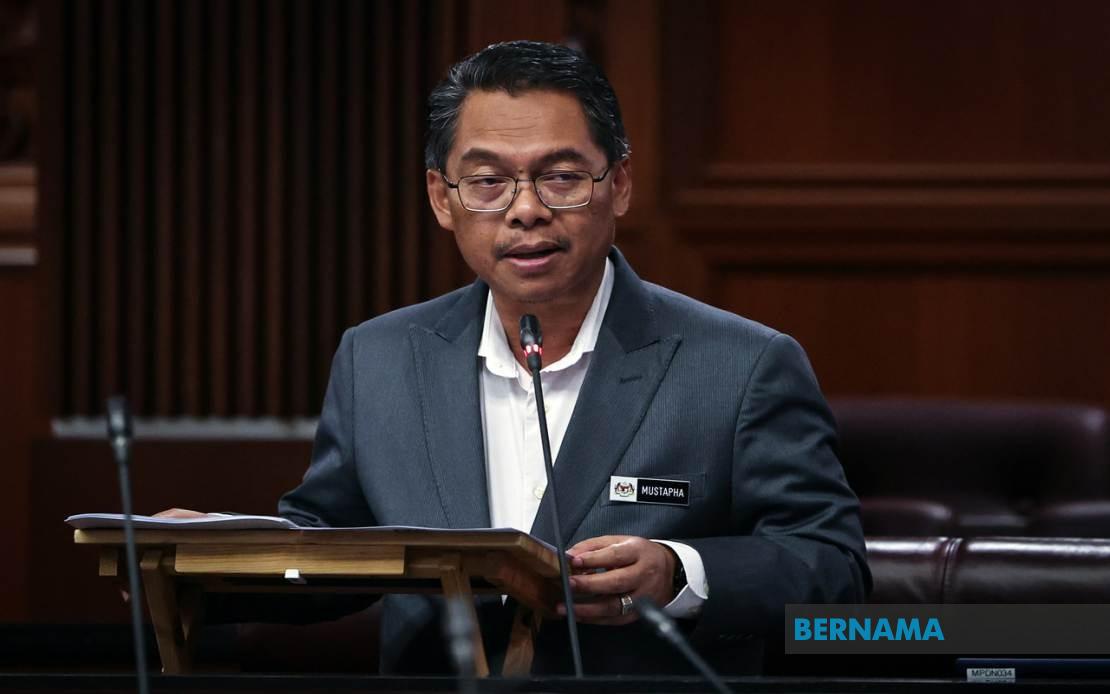
The Sarawak government has achieved a notable milestone in implementing the Borneonisation policy, surpassing its initial target for filling Federal public service positions with local talent. Speaking in the Dewan Negara on Tuesday, Minister in the Prime Minister's Department (Sabah and Sarawak Affairs) Datuk Mustapha Sakmud revealed that the state has secured 87.5 per cent of key Federal posts for Sarawak-born officers, exceeding the originally set benchmark of 80 per cent. This achievement represents a significant advancement in realising the constitutional commitments made under the Malaysia Agreement 1963, which continues to shape the relationship between the Federal Government and the two Borneo states.
In practical terms, Sarawak's performance translates to 28 out of 32 designated key positions now held by Sarawak-born personnel. The progress reflects the fruit of sustained diplomatic engagement through the Malaysia Agreement 1963 Implementation Action Council (MTPMA63), which has facilitated ongoing negotiations between the Federal Government and state authorities on employment and representation matters. The state's ability to exceed its target demonstrates both the availability of qualified local talent and the effectiveness of collaborative mechanisms designed specifically to address staffing concerns unique to the two East Malaysian states.
Sabah's trajectory, while not yet at Sarawak's achievement level, shows considerable momentum toward its own ambitious objective. The state currently stands at 69.7 per cent, with 23 of 33 key Federal positions held by Sabah-born officers. Given that Sabah has set a 90 per cent target, substantially higher than Sarawak's initial benchmark, the state has concrete work ahead to reach its full aspiration. Mustapha indicated that efforts remain firmly focused on narrowing this remaining gap, suggesting the Federal Government views this as an ongoing priority rather than a concluded matter.
The Borneonisation policy reflects the broader recognition that Sabah and Sarawak occupy a distinct constitutional position within Malaysia. Enshrined in the Malaysia Agreement 1963, these provisions acknowledge historical negotiations that granted the two states particular autonomy and representation guarantees when they joined the federation. Over decades, however, the implementation of these undertakings has been uneven, prompting periodic reviews and renewed commitments. The establishment of the MTPMA63 represents a formalised attempt to translate these constitutional principles into tangible personnel policies across Federal agencies operating within both states.
To oversee comprehensive and detailed implementation, the Federal Government established a dedicated working committee chaired by the Director-General of Public Service. The committee's membership encompasses the Public Service Department, representatives from both state governments, and relevant Federal ministries and departments. This multi-stakeholder structure is designed to address not merely the headline figures but the granular challenges of workforce succession planning, skill development, and institutional capacity in both states. The inclusion of state officials signals genuine collaborative intent rather than top-down imposition of hiring practices.
The Federal Government, through the Public Service Department, has committed to prioritising candidates from their respective home states for placements in key positions, provided they meet established qualifications, demonstrate merit, and satisfy service suitability requirements. This conditional approach balances local representation with professional standards, avoiding accusations of compromising public service standards in pursuit of demographic targets. The emphasis on merit and suitability suggests that both the Federal Government and the states themselves recognise that sustainable progress depends on maintaining institutional credibility and performance capacity.
Beyond these headline posts, the broader Federal civil service workforce in the two states reveals the scale of Borneon participation in the national bureaucracy. A total of 37,575 Federal civil servants originating from Sabah and Sarawak are currently employed across various sectors, with significant numbers stationed in Peninsular Malaysia. This distribution breaks down into 120 officers in senior management positions, 15,513 occupying management and professional roles, and 21,942 in implementation-level positions. These figures underscore that Borneons constitute a meaningful portion of Malaysia's Federal public service, though questions persist about whether their representation at senior management tiers fully reflects their population proportion.
The distinction between posts in the two states versus deployment nationally highlights an important dimension of the Borneonisation discussion. While the policy focuses on ensuring that Federal positions within Sabah and Sarawak are held by locals, the broader issue concerns career progression and representation in Federal institutions throughout Malaysia. The relatively modest number of Borneon officers in top management grades suggests potential barriers to advancement that extend beyond mere local recruitment for state-based positions. This observation may inform future policy refinements seeking to address not just hiring at entry or mid-levels, but sustained career pathways for East Malaysian talent.
For Malaysian readers and regional observers, these developments carry implications beyond bureaucratic administration. The Borneonisation policy serves as a test case for honouring federal agreements and addressing regional equity concerns within a multi-ethnic, multi-state federation. Sabah and Sarawak's experience informs discussions elsewhere about constitutional commitments, devolved governance, and the balance between national coherence and regional representation. The measurable progress—Sarawak's exceeded target and Sabah's steady advancement—suggests that sustained dialogue and structural mechanisms can yield results, though the remaining gaps also remind that legacy issues require sustained attention rather than one-time fixes.
Looking forward, the targets being achieved in Sarawak and approached in Sabah may reshape expectations and prompt further discussion about other dimensions of the Malaysia Agreement 1963. Questions may emerge regarding not just key posts in state capitals, but representation in Federal statutory bodies, boards of directors of Government-linked companies operating in the states, and university leadership positions. The success of the Borneonisation framework in personnel policy may create momentum for exploring its application in other institutional contexts where East Malaysian voice and participation remain underrepresented.
The institutional structure supporting these efforts, particularly the dedicated working committee and the MTPMA63 council, offers a model that policymakers in other federal or devolved systems may study. By creating forums that bring together Federal authorities and state governments as genuine partners rather than subordinates, Malaysia has developed a mechanism that allows for sustained negotiation and course correction. The quarterly or annual review implied in the ongoing progress reporting suggests this is not treated as a one-time achievement but as an evolving commitment requiring continuous oversight and refinement.

