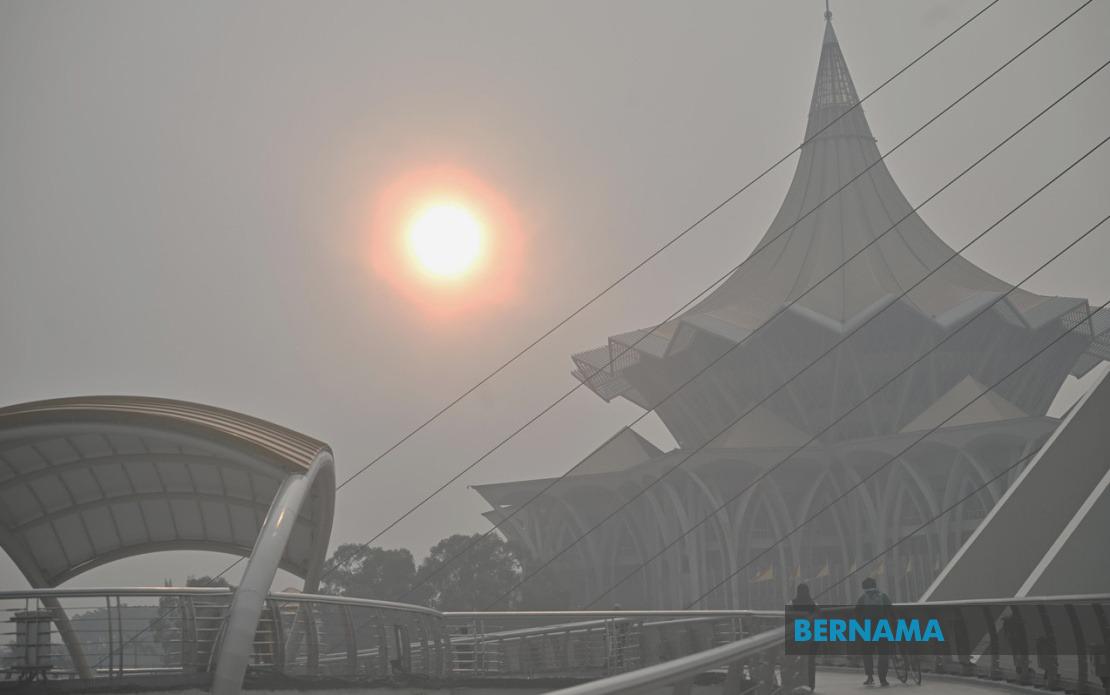
Childcare centres across Sarawak face mandatory closure once the Air Pollutant Index reaches 200, marking a significant step in the state's effort to safeguard young children during severe haze episodes. The decision, formally announced by Women, Family and Community Development Minister Datuk Seri Nancy Shukri, aligns with earlier directives issued by the Sarawak Disaster Management Committee and reflects growing concern over the health implications of transboundary air pollution in the region.
The threshold of 200 on the API scale defines conditions classified as very unhealthy, a designation that triggers immediate protective action under Malaysia's National Haze Action Plan. Nancy Shukri emphasised that young children represent a particularly vulnerable population, as their developing respiratory systems face heightened risk from prolonged exposure to particulate matter and other atmospheric pollutants. The minister stressed that preventing exposure to hazardous air quality constitutes a priority for protecting both child health and family stability.
The Sarawak Disaster Management Committee had previously signalled its intention to implement comprehensive closures affecting schools, kindergartens, and childcare facilities once the API crossed this critical threshold. Such measures fall under the administrative authority of the Sarawak Education Department director, ensuring that implementation occurs through established institutional channels rather than ad-hoc responses. This structured approach aims to provide clarity and consistency in how closures are communicated and executed across different districts and divisions within the state.
While the directive currently applies specifically to Sarawak, Nancy Shukri indicated that other Malaysian states would likely adopt comparable measures should haze conditions deteriorate and expand geographically. The potential for transboundary pollution—particularly during the haze season when wind patterns carry smoke and emissions across Southeast Asia—makes regional preparedness essential. However, she cautioned that any extensions to other states would depend on directives from respective state governments and relevant authorities, preserving the federal structure of Malaysia's disaster management framework.
The rationale for protecting children from haze exposure carries both immediate and long-term dimensions. Short-term exposure to very unhealthy air quality can trigger respiratory irritation, aggravate asthma, and cause discomfort for vulnerable young populations. Accumulating evidence from regional studies indicates that prolonged childhood exposure to degraded air quality may have lasting effects on lung development and function. For childcare operators and educators, the closure protocol offers a clear trigger point for action rather than leaving decisions to individual judgement.
Implementing such closures, however, creates cascading challenges for working parents and caregivers. The minister acknowledged this tension but indicated that managing the practical fallout from closures remains the responsibility of individual state governments. This division of responsibility—with the health-based closure decision resting at the state level while support measures for affected families remain discretionary—highlights the complexities of coordinating child protection with family welfare during environmental emergencies.
The broader context of haze management in Malaysia and Southeast Asia underscores why such precautions have become necessary. In recent years, the region has experienced recurring episodes of severe air pollution linked primarily to land-clearing and forest fires in Indonesia. These events disrupt daily life across multiple countries, forcing schools and businesses to close and prompting health advisories. Establishing predetermined closure thresholds for childcare facilities represents an attempt to move beyond reactive crisis management toward systematic protection protocols.
For Malaysia's childcare sector, the API 200 threshold provides operational certainty. Childcare centre operators can factor potential closure periods into planning and staffing arrangements, though the unpredictability of haze occurrence complicates longer-term management. The financial impact on childcare businesses during closures, along with the challenge of refunding fees or rescheduling care for parents already juggling work obligations, remains a secondary concern that state authorities would need to address through supplementary support mechanisms.
The decision also reflects evolving approaches to environmental health governance in Southeast Asia. Rather than treating air quality solely as a public health information issue, Malaysian authorities increasingly recognise that preventive institutional closures during dangerous conditions serve vulnerable populations more effectively than advisory systems alone. This model, if implemented consistently across all states, could establish regional best practices for protecting children during transboundary pollution events.
Looking forward, the effectiveness of Sarawak's API 200 closure protocol will depend heavily on advance warning systems and rapid dissemination of air quality data to schools and childcare operators. Real-time API monitoring must be accessible to facility managers so they can prepare parents and staff with minimal notice. Additionally, standardising the closure threshold across all Malaysian states would prevent confusion for families moving between states and ensure equitable protection for all Malaysian children regardless of location.
The measure also underscores the interconnected nature of environmental challenges in Southeast Asia, where individual nation-states cannot fully control air quality within their borders. While Malaysia's disaster management mechanisms address impacts within its jurisdiction, addressing root causes requires regional cooperation on fire management, land-use practices, and transboundary pollution accountability. Until such upstream interventions reduce the frequency and intensity of haze episodes, predetermined closure protocols for childcare facilities will remain an essential defensive measure protecting Malaysia's youngest citizens.

