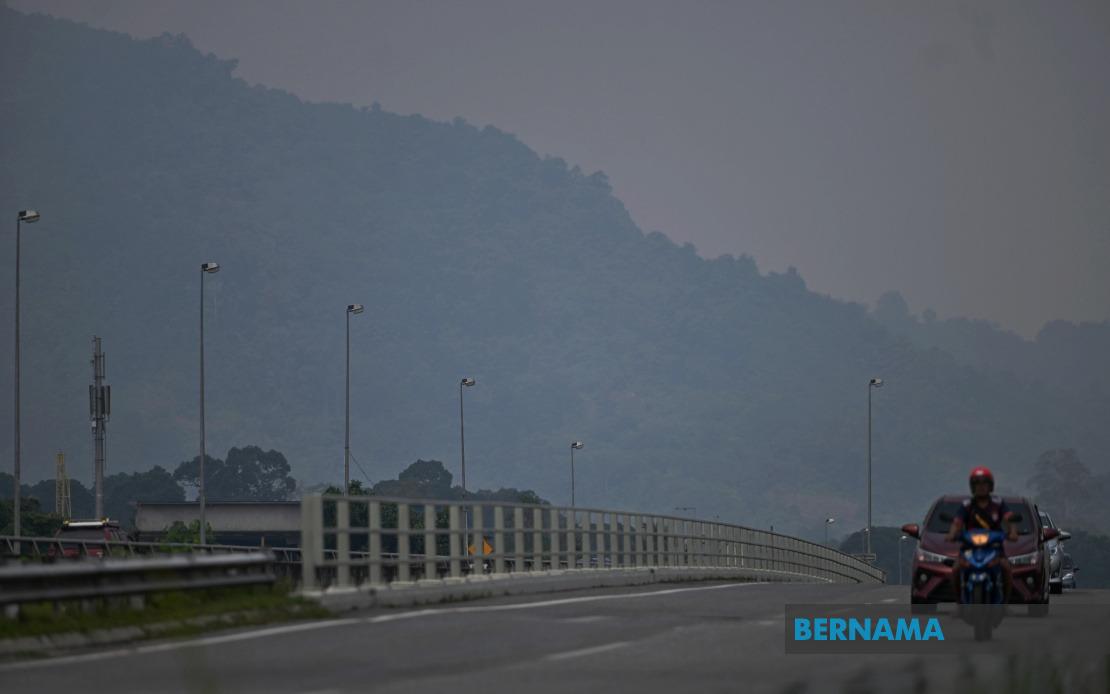
Air quality in Sarawak has reached critical levels, with the western district of Serian registering a 'very unhealthy' Air Pollution Index reading of 227 as midday approached on August 21. This alarming figure represents a significant jump from baseline standards and signals the intensification of a regional atmospheric crisis that threatens public health across the state. The Department of Environment reported that a further nine locations throughout Sarawak are currently experiencing unhealthy API readings, painting a concerning picture of widespread air contamination affecting millions of residents and visitors to the state.
Sri Aman emerged as the second-most affected location with an API reading of 187, while Kuching, the state capital and commercial hub, registered 176. The sprawl of degraded air quality extended across the populated west coast and into central regions, with Samarahan posting 175, Sarikei 174, and Sibu recording 157. More distant communities including Bintulu and Samalaju measured 154, whilst Kapit and Mukah in the interior both registered 130. This geographic distribution underscores the pervasive nature of the atmospheric degradation, affecting both densely populated urban centres and smaller towns simultaneously.
Deputy director-general of development at the Department of Environment, Azuri Azizah Saedon, attributed the rapid deterioration to haze advancing into Sarawak from multiple directions, with the primary source originating from across the international border in Indonesia. She reported that the ASEAN Specialised Meteorological Centre detected 288 distinct hotspots in Kalimantan as of August 20, alongside 53 additional fire sources in Sumatra. Within Malaysia itself, only two hotspots were identified—one each in Sarawak and Terengganu—indicating that the vast majority of pollution bearing down on the region originates from trans-boundary sources beyond Malaysian jurisdiction.
Meteorological analysis reveals a concerning atmospheric pattern favouring pollution transport toward Malaysian territory. The ASMC's Regional Haze Map indicated that most of southern Southeast Asia remains locked in dry weather conditions, creating ideal circumstances for smoke plume formation and persistence. The notable exceptions were the northeastern section of Borneo and northern Sumatra, which received rainfall that may have provided temporary air quality relief. However, the predominance of dry conditions across the broader region perpetuates the capacity for smoke to linger and accumulate, particularly when compressed against geographical barriers.
The movement of smoke plumes into Sarawak followed a predictable trajectory documented by meteorological monitoring. Moderate to dense transboundary smoke originating from West Kalimantan has been observed drifting northward directly into western Sarawak, where it encounters topography and prevailing wind patterns that concentrate the pollution. This directional flow explains why western districts like Serian and Sri Aman have been most severely impacted, whilst eastern districts register comparatively lower readings. The smoke essentially funnels into the state's western regions and becomes trapped by geographic and atmospheric conditions.
In response to the escalating crisis, Malaysian authorities have mobilised multi-agency coordination mechanisms designed specifically for haze emergencies. The Department of Environment has intensified enforcement activities and daily patrol operations in regions identified as having potential for open burning, recognising that secondary pollution sources within Malaysia could exacerbate the transboundary problem. Both the National Open Burning Action Plan and the National Haze Action Plan have been formally activated, signalling a government-wide mobilisation to address both domestic fire sources and the consequences of regional pollution inflow.
This activation represents a critical juncture in Malaysia's approach to the recurring haze phenomenon that periodically affects the nation. Rather than treating the crisis as an isolated event, the coordinated action plan framework enables synchronised responses across multiple government agencies, from environmental enforcement to public health authorities. The strategic depth of this approach reflects lessons learned from previous years when transboundary haze created public health emergencies and economic disruption across the region.
Public participation forms an essential component of the containment strategy. Environmental authorities have explicitly discouraged any open burning activities and established reporting mechanisms for citizens to alert authorities to suspected fire sources. The Fire and Rescue Department maintains an emergency hotline at 999, whilst the Department of Environment operates a dedicated haze and air quality reporting line at 1-800-88-2727. These accessibility measures recognise that early detection and rapid response to localised fire sources remain critical interventions, even when transboundary sources dominate the overall pollution burden.
The crisis in Sarawak carries broader implications for regional air quality governance and the limitations of purely domestic pollution control. Despite Malaysia's stringent enforcement against open burning within its borders, the nation remains vulnerable to atmospheric conditions determined by neighbouring countries' fire management practices and environmental conditions. This asymmetry underscores the necessity for enhanced bilateral and multilateral cooperation on transboundary haze, including capacity-building support for fire prevention and land management in source regions. The current situation exemplifies how sovereignty and air quality transcend national boundaries, requiring collective regional responses that extend beyond individual nation-state authority.
For Malaysian citizens and businesses, particularly those in affected areas, the practical implications demand immediate precautions. Air quality at 'very unhealthy' levels poses tangible health risks, especially for vulnerable populations including children, elderly residents, and those with respiratory conditions. Schools and outdoor activities face disruptions, whilst industries sensitive to air quality experience operational challenges. The economic costs of such air quality degradation—including healthcare expenses, lost productivity, and environmental remediation—accumulate rapidly, amplifying pressure on governments to adopt more aggressive regional pollution prevention strategies.

