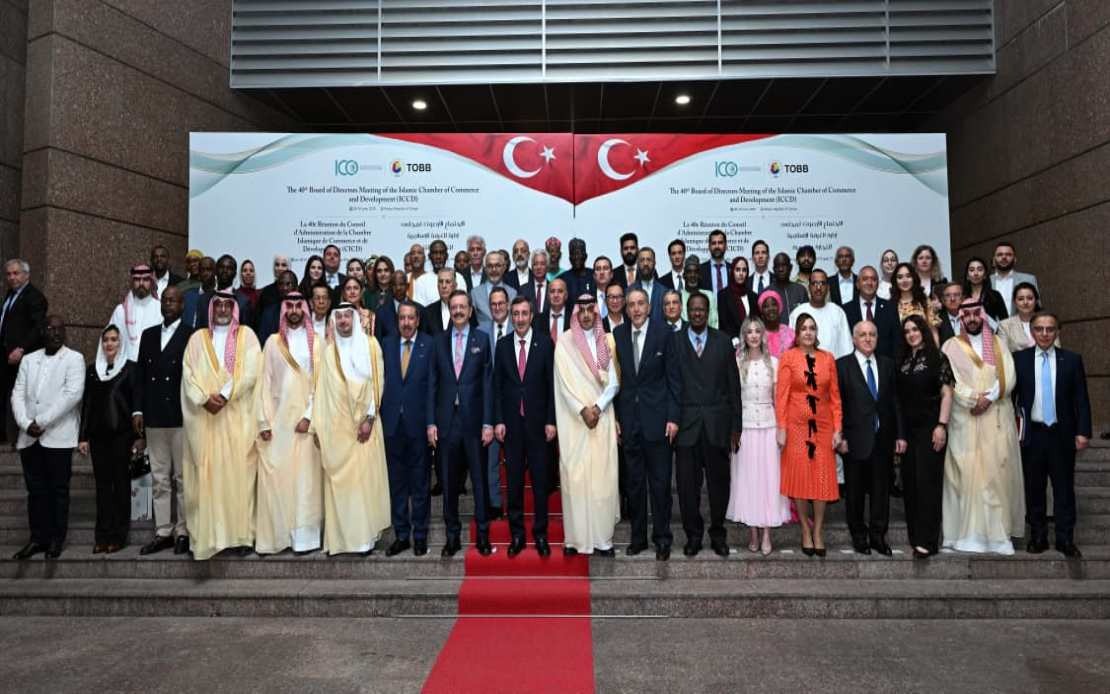
Saudi Arabia has renewed its push for intensified economic cooperation with Muslim-majority countries, with particular emphasis on Malaysia and Indonesia, during high-level discussions in Ankara. The appeal came from Abdullah Saleh Kamel, who chairs the Federation of Saudi Chambers and leads the Islamic Chamber of Commerce and Development, at the ICCD's 40th Board of Directors Meeting held in Turkiye's capital alongside the organisation's 72nd Finance Committee Meeting.
The timing of this renewed appeal underscores Saudi Arabia's strategic positioning within the broader Islamic economic bloc. Kamel framed the Kingdom's involvement not merely as participation but as a continuation of its established role as a principal backer of the ICCD since the chamber's inception. By positioning Saudi Arabia as a consistent supporter, he sought to reinforce the Kingdom's credentials as a natural convener and leader within structures designed to facilitate commerce among Islamic nations. This approach reflects a deliberate strategy to cement Saudi influence within multilateral Islamic institutions at a moment when economic diversification remains critical for the region.
The emphasis on Malaysia and Indonesia carries particular significance for Southeast Asia's economic landscape. Both nations represent substantial Muslim-majority economies with expanding middle classes, growing entrepreneurial ecosystems, and increasingly important roles in regional supply chains. Malaysia, in particular, has established itself as a financial hub for Islamic banking and Shariah-compliant investment products, making it an obvious partner for initiatives aimed at deepening intra-Islamic commerce. The recognition of these two countries suggests Saudi Arabia sees Southeast Asia not as a peripheral market but as a core component of its economic engagement strategy.
The ICCD leadership identified several thematic priorities that resonate directly with development challenges across Southeast Asia and the broader Muslim world. Youth entrepreneurship, food security, sustainable agriculture, and enhanced regional connectivity emerged as focal areas requiring collaborative attention. These themes reflect an understanding that economic integration must address practical concerns affecting millions of households. For Malaysia specifically, food security remains a persistent concern given the country's reliance on imports for essential commodities, making agricultural cooperation initiatives potentially valuable for policymakers.
The expansion of intra-Islamic trade and investment mechanisms represents an attempt to create an alternative economic framework that emphasises values-based commerce within the Muslim world. By channeling capital and business opportunities through ICCD-facilitated networks, proponents argue that participating economies can achieve greater resilience and self-sufficiency while simultaneously generating employment for younger generations. This rationale addresses a genuine concern across Southeast Asia, where youth unemployment and underemployment persist despite overall economic growth, creating social and political pressures that governments continue to navigate.
During the Ankara meetings, the ICCD Board addressed multiple dimensions of institutional development and programmatic implementation. Directors reviewed progress on initiatives designed to strengthen economic and development cooperation across Islamic countries, examining which projects had delivered tangible results and which required course corrections. This operational focus suggests the chamber is attempting to move beyond rhetorical commitments toward measurable outcomes that member states and private sectors can evaluate and build upon.
A particularly notable aspect of the discussions involved planning for the ICCD's golden jubilee celebration scheduled for 2027. This milestone offers the chamber an opportunity to reassess its effectiveness and recalibrate its mission for the subsequent decades. For Malaysia and other Southeast Asian members, the celebratory period could serve as a platform to showcase successful regional integration models and lobby for enhanced resource allocation toward projects addressing local priorities.
For Malaysian stakeholders, these developments carry implications across multiple sectors. The private sector, particularly companies involved in agriculture, food processing, financial services, and technology, could potentially access new markets and partnership opportunities through enhanced ICCD mechanisms. The emphasis on youth entrepreneurship suggests potential avenues for Malaysian startups and small enterprises to connect with venture capital and mentorship networks anchored in Gulf economies with substantial available investment capital.
The broader context involves Saudi Arabia's ongoing pivot toward economic diversification and regional leadership as oil revenues face long-term uncertainty. By actively promoting intra-Islamic economic cooperation, the Kingdom positions itself as an indispensable connector within a potentially vast market spanning North Africa, the Middle East, Central Asia, and Southeast Asia. For Malaysia, being named explicitly alongside Indonesia acknowledges its standing as a thought leader and economic force capable of shaping these multilateral frameworks.
The ICCD mechanism, despite its formal structure, has historically struggled to generate transformative trade flows among member states. Participants sometimes cite cultural affinities and religious commonalities as foundations for enhanced commerce, yet practical barriers including divergent regulatory environments, infrastructure limitations, and competition for similar markets have constrained outcomes. The current advocacy therefore reflects an acknowledgment that progress requires renewed commitment rather than assuming institutional frameworks automatically generate economic integration.
Looking forward, Malaysian policymakers face decisions about resource allocation toward ICCD initiatives relative to other bilateral and multilateral economic partnerships. The Southeast Asian regional architecture, including ASEAN frameworks and existing partnerships with developed economies, already commands substantial diplomatic and commercial attention. Determining how deeply to invest in Islamic economic cooperation mechanisms requires careful assessment of comparative advantages and realistic expectations regarding trade diversion versus creation.
The emphasis on sustainable agriculture and food security also aligns with Malaysia's own strategic priorities as the country grapples with environmental pressures, climate variability, and the need to enhance domestic production capacity. Collaborative research and technology transfer through Islamic chamber networks could potentially accelerate progress on these fronts. Similarly, the focus on regional connectivity speaks to Malaysia's natural advantages as a transportation and logistics hub positioned to facilitate broader Muslim-world commerce.
Ultimately, the Saudi leadership's renewed call for deeper cooperation reflects genuine recognition that Muslim-majority economies possess untapped potential for mutually beneficial trade and investment. However, realising this potential requires moving beyond aspirational declarations toward concrete mechanisms that address practical obstacles and generate demonstrable returns for participating nations and private sectors. Malaysia's response to these overtures will likely reflect pragmatic calculations about whether such partnerships genuinely advance national economic objectives or primarily serve geopolitical positioning among regional powers.

