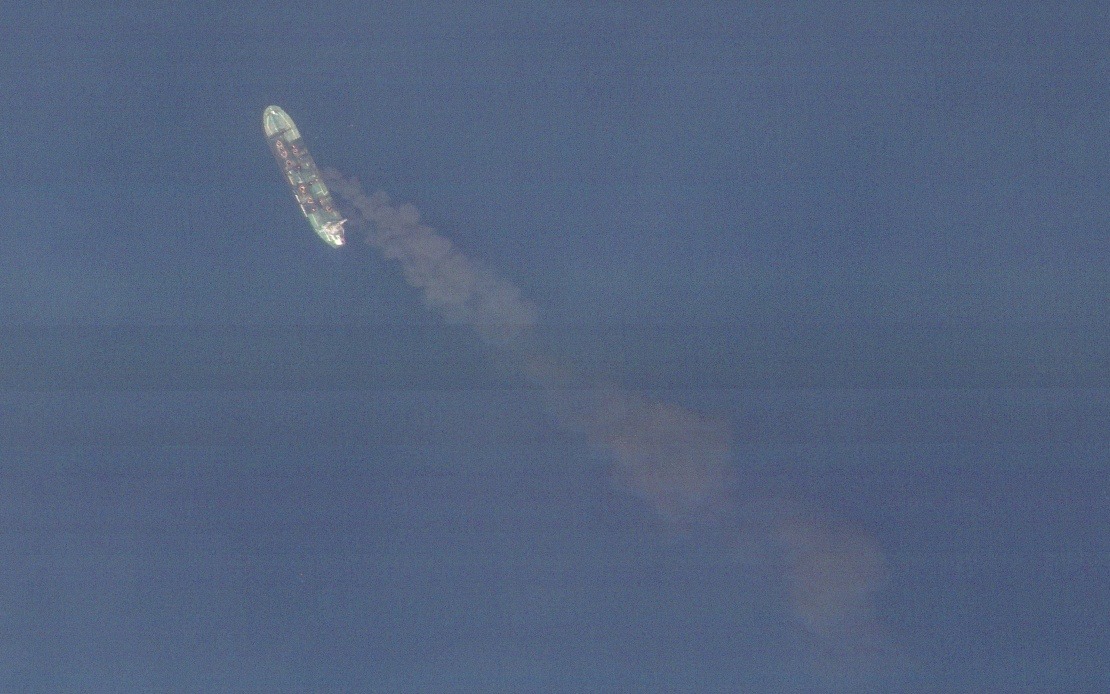
The Saudi-led military coalition overseeing operations in Yemen declared on Monday night that it would implement all necessary measures to safeguard its shipping interests in one of the world's most critical maritime chokepoints, following the Iranian-backed Houthi group's announcement of restrictions targeting Saudi commercial traffic. Coalition spokesperson Turki Al-Malki released a statement via social media asserting that the Joint Forces Command would deploy decisive operational responses consistent with international maritime law to ensure the safe passage of coalition-affiliated vessels through the Bab al-Mandab Strait, a vital waterway connecting the Red Sea to the Indian Ocean that handles approximately 12 percent of global trade.
The Houthi announcement, which the coalition immediately characterized as inflammatory rhetoric designed to escalate tensions, prompted sharp rebuttals from both military and diplomatic circles in Riyadh. Al-Malki countered the maritime ban by highlighting what he framed as evidence of humanitarian goodwill, noting that more than 300 commercial vessels carrying essential supplies including food and fuel had accessed ports controlled by the Houthi administration during the first half of the year. The Saudi Foreign Ministry separately issued a formal statement rejecting Houthi claims of blockade policies, insisting instead that the kingdom has invested substantially in development initiatives and financial support aimed at alleviating the Yemeni population's hardship.
The escalation carries particular significance for Southeast Asian maritime commerce, as numerous regional shipping routes and trade corridors depend upon unobstructed passage through the Red Sea and surrounding waterways. The Bab al-Mandab Strait serves as a critical juncture for Malaysian, Singaporean, and other ASEAN nations' vessels transporting goods to European and African markets. Any sustained disruption could elevate shipping insurance premiums, extend delivery timelines, and increase operational costs for regional traders and logistics companies reliant upon this passage.
The Houthis justified their maritime restrictions by invoking what they termed a "blockade for blockade" principle, positioning their action as a proportional response to what they characterized as a nearly twelve-year siege imposed by Saudi Arabia. This rhetorical framing reflects the group's consistent narrative that Saudi military and economic pressure has created humanitarian catastrophe within Yemen. The timing of the announcement suggests calculated political messaging designed to demonstrate resistance to Saudi dominance while appealing to regional sympathies regarding Yemen's prolonged suffering.
Underlying this latest flare-up was an incident involving Sanaa International Airport, where the Saudi-backed Yemeni government launched strikes intended to prevent an Iranian aircraft carrying senior Houthi delegates from landing. The Houthis responded with volleys of missiles and unmanned aerial systems directed toward Saudi territory, marking a tactical escalation beyond conventional political posturing. This cycle of action and counteraction exemplifies how localized incidents can rapidly catalyze broader confrontation within Yemen's fractured political landscape.
Yemen's civil war, which erupted in late 2014 when Houthi forces captured the capital Sanaa and consolidated control over densely populated northern territories, has created one of the world's most complex humanitarian emergencies. The subsequent Saudi-led military intervention beginning in 2015 was intended to restore the internationally recognized government but instead produced eight years of grinding conflict, economic collapse, and mass displacement. The humanitarian toll remains staggering, with millions facing food insecurity and inadequate access to medical services.
A critical concern emerging from Monday's developments involves the stability of the March 2022 United Nations-brokered truce agreement, which represented the most significant diplomatic achievement in Yemen's recent history. That ceasefire, though frequently tested and technically expired, had reduced large-scale military operations and created space for tentative humanitarian activities. Regional analysts now worry that renewed military posturing could unravel the delicate confidence-building mechanisms that have gradually accumulated since the truce's implementation, potentially triggering a return to intensive armed conflict.
For Malaysian policymakers and business interests, Yemen's instability carries direct implications through multiple channels. Malaysia's significant maritime trade volume and its reliance on stable Red Sea passage for accessing key markets mean that any prolonged shipping disruption would reverberate through Malaysian ports and trading communities. Additionally, Malaysia's role within ASEAN and its broader engagement with Middle Eastern stakeholders requires careful navigation of regional conflicts to maintain economic relationships while avoiding entanglement in sectarian tensions.
The Saudi coalition's explicit commitment to employing "necessary and decisive operational measures" represents language that historically has preceded military action in Yemen contexts. Whether such measures remain calibrated to protect shipping lanes or escalate toward broader combat operations remains uncertain. International maritime organizations and shipping insurers will likely reassess risk assessments for Red Sea transits, potentially increasing costs and complexity for trading nations dependent upon this corridor.
The intersection of Yemen's internal political fragmentation, Saudi-Iranian regional competition, and global maritime commerce creates a volatile configuration where localized confrontations can produce outsized consequences. Malaysia and other Southeast Asian trading nations possess no direct influence over Yemen's warring parties but must monitor developments closely given the potential for disruption to critical economic lifelines. The international community's ability to reinforce the 2022 truce framework and prevent further deterioration will significantly shape regional stability and global supply chain resilience in the coming months.

