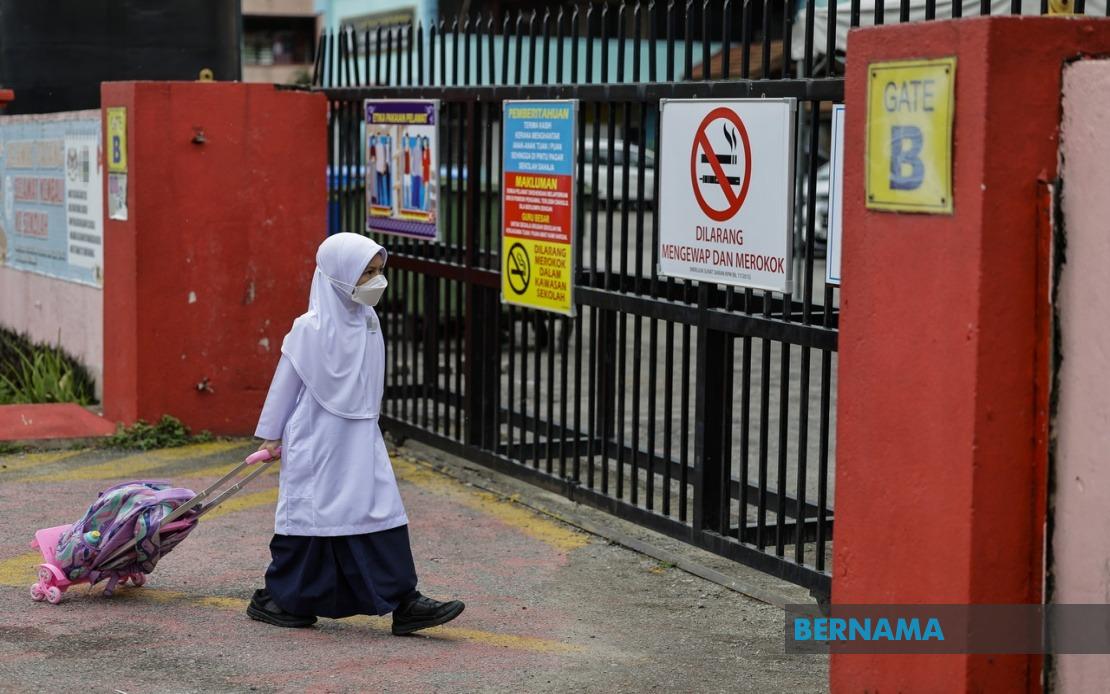
Deputy Education Minister Wong Kah Woh has clarified the framework governing school closures during severe haze episodes, confirming that principals and headmasters possess discretionary power to shut down educational institutions when Air Pollutant Index readings exceed 200. Speaking in Taiping on August 14, Wong outlined how this decision-making authority operates in consultation with State Education Departments and District Education Offices, establishing a decentralised approach that accounts for geographic variations in air quality across the country.
The Ministry of Education has long maintained formal guidance on managing haze-related disruptions to schooling, with Wong noting that successive circulars issued in 2016, 2019 and 2023 establish the institutional memory and procedural framework for these situations. This layering of policies across multiple years reflects the recurring nature of transboundary haze events affecting Malaysia, particularly during dry seasons when neighbouring regions engage in agricultural burning. The existence of these standing directives suggests the education system has moved beyond ad-hoc responses to develop systematic protocols that balance operational continuity with student welfare.
Under the established guidelines, the threshold for intervention begins well before complete school closures are contemplated. Once API readings climb to 100 or higher, schools must immediately suspend all outdoor activities and cancel public gatherings on campus. This intermediate step serves a critical protective function, preventing prolonged exposure to hazardous air without the disruption that full closure entails. Wong specifically highlighted that outdoor sports events and physical education sessions should be rescheduled or moved indoors, recognising that young people engaged in athletic exertion inhale significantly more polluted air than those engaged in sedentary activities.
The two-tiered system reflects epidemiological understanding of pollution impacts on vulnerable populations. Children's respiratory systems are still developing, making them particularly susceptible to damage from fine particulate matter and gaseous pollutants that constitute haze. The 100 API threshold represents the transition point where health authorities classify air quality as unhealthy for sensitive groups, whereas the 200 threshold signals hazardous conditions affecting the general population. By establishing these specific numerical triggers, the ministry removes ambiguity from decision-making and provides objective criteria that schools and parents can readily understand.
Responsibility for monitoring air quality and triggering these protocols remains distributed across multiple layers of the education bureaucracy. Education authorities at state and district levels bear responsibility for continuous surveillance of haze conditions and API readings specific to their jurisdictions. This devolved monitoring structure acknowledges that Malaysia's vast geographic area experiences significant variation in air quality, with some regions affected by haze far more severely than others during the same period. A reading of 200 in one district might warrant closure while conditions in another district remain manageable.
School principals and headmasters emerge as the critical decision-makers in this system, empowered to exercise judgment based on real-time conditions affecting their specific institution and student population. Rather than waiting for centralised directives that might lag behind rapidly changing conditions, school leaders can respond dynamically to local circumstances. Some schools might face severe haze while neighbouring institutions experience only moderate air quality degradation. This principal-led approach enables faster, more contextually appropriate responses than would be possible under rigid centralised mandates.
Wong's statements came during a period when multiple locations across Malaysia had registered unhealthy API readings, prompting questions about the adequacy of existing protocols and the government's responsiveness to air quality crises. His emphasis on continuous monitoring and multi-level oversight appeared designed to reassure stakeholders that the education ministry maintains vigilant supervision of conditions likely to affect students. The backdrop of recurring haze episodes, particularly during the dry season when atmospheric conditions trap pollutants, makes this an ongoing challenge requiring sustained institutional attention.
The coordination between MOE, State Education Departments, and District Education Offices creates a three-tier surveillance and decision-making structure. This arrangement ensures that highly localised information from district offices feeds into broader state-level coordination, while national education policy provides the overarching framework. However, the effectiveness of this system depends critically on reliable API data, rapid communication channels, and consistent application of protocols across diverse school settings with varying administrative capacity.
From a regional perspective, Malaysia's experience with haze-related school disruptions reflects broader Southeast Asian challenges posed by transboundary air pollution. Indonesia's peat fires and agricultural burning contribute substantially to haze affecting Malaysia, Singapore, and Brunei. The establishment of clear school closure protocols represents Malaysia's attempt to mitigate health impacts of pollution beyond its sovereign control, though it addresses symptoms rather than the underlying transnational environmental governance challenges. Students' repeated exposure to severely polluted air, even when schools close, reflects the limitations of local-level responses to regional environmental crises.
The emphasis on principal discretion rather than automatic closures at specific API thresholds introduces flexibility but also potential inconsistency. Principals might weigh operational considerations—examination schedules, curriculum progression, family employment disruptions—alongside health factors when deciding whether to close. This human element could produce varying responses across schools in similar air quality conditions. Whether this flexibility serves students well or introduces unequitable burden-sharing depending on school leadership quality remains an open question.
Education stakeholders in Malaysia—parents, teachers, student advocates—will interpret these clarifications against their experience during recent haze episodes. The specificity of Wong's statements, naming the API 100 and 200 thresholds and detailing the consultation process, suggests the ministry recognises that previous guidance created confusion or inconsistent implementation. Going forward, schools have clearer authority to act, though success ultimately depends on adequate air quality monitoring infrastructure and the willingness of school leaders to prioritise student health over scheduling pressures.

