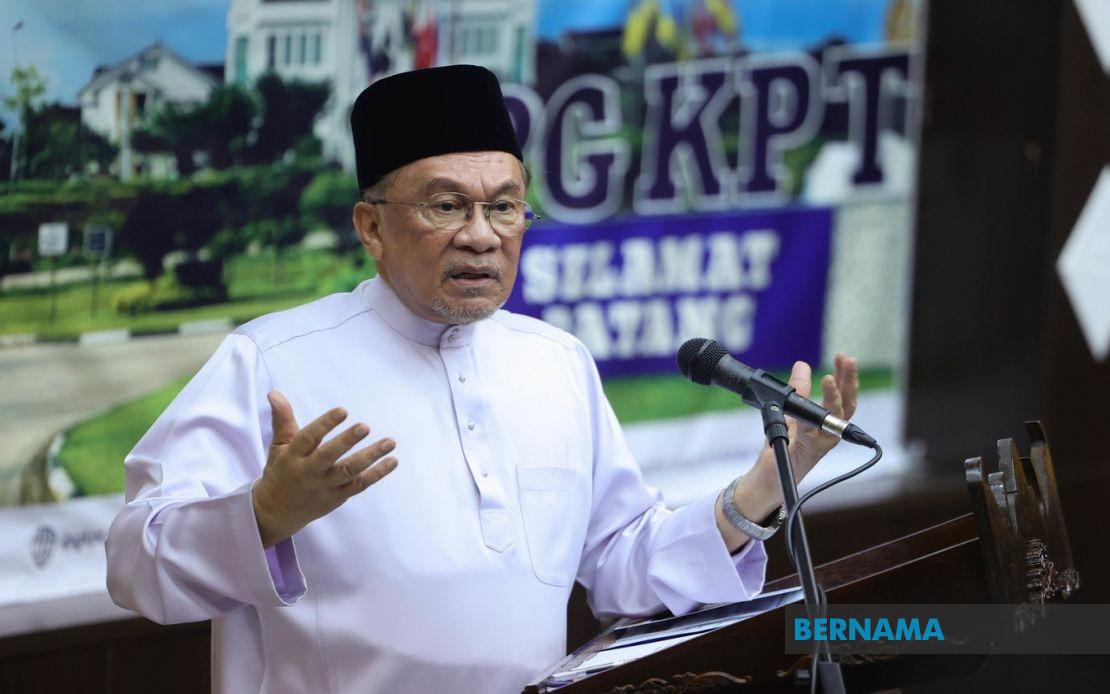
Prime Minister Datuk Seri Anwar Ibrahim has issued a direct warning to Malaysia's educational institutions: concealing bullying incidents to preserve institutional reputation is unacceptable and counterproductive to student welfare. Speaking in Nilai on July 17, Anwar stressed that schools must embrace transparency and act decisively when bullying comes to light, rejecting the notion that reporting such cases reflects poorly on institutional leadership. Education Minister Fadhlina Sidek attended the remarks, signalling government alignment on the matter.
Anwar's intervention reflects growing concern about how some schools handle disciplinary crises. While acknowledging that bullying is sometimes dismissed as a trivial schoolyard matter, he emphasized the devastating psychological and social consequences victims endure. His framing redefines how educational administrators should think about transparency: reporting bullying is not a failure of school management but evidence of responsible governance. Conversely, discovering that a principal or headteacher concealed known incidents—while maintaining a facade of institutional excellence—represents a genuine breach of duty.
The Prime Minister illustrated his point with a practical scenario: a school with 1,000 students that documents two bullying cases has no reason to fear reputational damage through disclosure. The real damage emerges when administrators suppress reports to project an image of perfection. This inversion of logic—where honesty becomes virtuous and silence becomes culpable—challenges a long-standing cultural tendency in Malaysian institutions to prioritize face-saving over substantive problem-solving. Schools that hide bullying fail both victims and the broader student community, leaving patterns of abuse unaddressed and potential predators unchecked.
Anwar extended his critique beyond procedural failings to examine deeper educational philosophy. He argued that Malaysia's schools have fallen short in embedding character development and moral instruction, despite unprecedented expansion of religious education programmes in recent decades. This observation carries particular weight in a Muslim-majority nation where Islamic values and ethics form a significant part of the curriculum. If bullying persists despite this theoretical emphasis on moral formation, Anwar suggested, the problem lies not with insufficient religious content but with how schools integrate values into daily practice and school culture.
The Prime Minister articulated a vision of education that transcends academic and technical achievement. He questioned the value of producing graduates with impressive credentials—whether as PhD holders, IT specialists, or proficient technocrats—if they lack empathy, social awareness, and respect for human dignity. This perspective challenges Malaysia's competitive education system, which often measures success through examination results and university placements. Anwar's intervention suggests a need to rebalance educational outcomes to privilege social-emotional competence and ethical reasoning alongside traditional metrics of academic performance.
Teachers emerge as central figures in Anwar's framework for combating bullying and promoting a more humane school environment. He identified educators as bearing substantial responsibility for transforming schools into spaces where learning encompasses not only intellectual growth but also spiritual depth, moral grounding, and compassion for others. This framing elevates the teaching profession beyond content delivery to encompass character mentorship—a demanding expectation that requires schools to provide teachers with adequate training, resources, and institutional support to address behavioural and interpersonal challenges effectively.
Acceptably, Anwar acknowledged that Malaysia's teaching workforce operates at a high standard and expressed confidence in continued improvement. This balanced assessment avoids demonizing educators while maintaining accountability for systemic shortcomings. Teachers themselves often manage competing demands: overcrowded classrooms, administrative burdens, inadequate support for students with behavioural or mental health challenges, and pressure to maintain disciplinary records that may inadvertently incentivize concealment rather than intervention. Without acknowledging these structural constraints, calls for greater transparency and active bullying prevention risk placing unrealistic expectations on already stretched educators.
The timing of Anwar's comments arrives amid broader regional and global awareness of bullying's documented harms. Research consistently shows that bullying victims experience elevated rates of anxiety, depression, school avoidance, and self-harm. Internationally, Singapore, Australia, and other developed economies have implemented comprehensive anti-bullying frameworks requiring schools to maintain transparent reporting systems and preventive programming. Malaysia, as a developing economy competing for global education excellence, faces pressure to adopt similarly rigorous approaches. Anwar's intervention suggests the government recognizes this gap and seeks to reorient school administration toward evidence-based practice.
The directive also reflects tensions within Malaysian school management between institutional autonomy and state accountability. Historically, many schools have operated with significant discretion in handling discipline matters, resulting in inconsistent approaches and occasional cover-ups. Anwar's statement, coupled with Education Minister Fadhlina Sidek's presence, signals that the government intends to establish clearer expectations and potentially implement oversight mechanisms. Schools may need to adopt standardized bullying reporting procedures, train staff in early intervention, and establish mechanisms for parents and students to lodge complaints with confidence in transparent follow-up.
For Malaysian parents and students, the Prime Minister's remarks offer cautious validation that bullying need not remain hidden within school walls. However, translating principle into practice requires sustained effort. Schools must move beyond public assurances to embed anti-bullying initiatives into daily operations: peer mentorship programmes, inclusive classroom practices, staff training in recognizing and responding to bullying, and counselling support for both victims and perpetrators. The credibility of government intentions depends on whether schools subsequently face consequences for concealment and rewards for transparent, proactive intervention.
Anwar's broader educational vision—prioritizing character and compassion alongside academic achievement—resonates with calls from educators and child development specialists for more holistic school systems. In an era of technological disruption and social fragmentation, schools shape not only individual trajectories but also the social fabric of communities. When bullying flourishes unchecked and institutions reward silence, they implicitly teach that status and reputation matter more than kindness and justice. Conversely, schools that openly address bullying, support affected students, and engage whole-school approaches to building respectful cultures model the values they purport to teach.
The practical implications extend beyond individual schools to the Ministry of Education's policy agenda. Anwar's intervention suggests potential forthcoming directives requiring schools to report bullying incidents through standardized channels, implement evidence-based prevention curricula, and establish independent complaint mechanisms. Such measures would represent a significant shift toward accountability and transparency in Malaysia's education sector. Whether schools embrace this mandate or revert to protective instincts—concealing problems to preserve institutional standing—will largely determine whether Anwar's warning translates into meaningful protection for vulnerable students.

