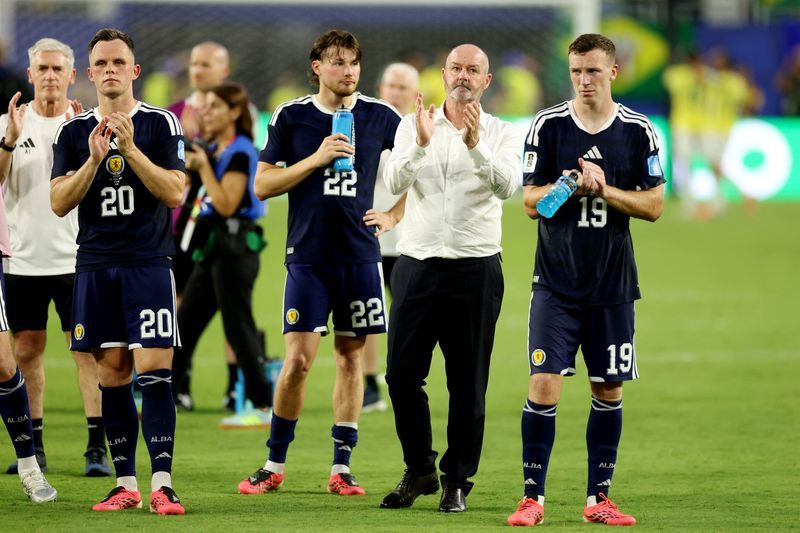
Scotland's return to the World Cup after a 28-year absence appears destined for a disappointing conclusion following their 3-0 capitulation against Brazil in Miami on Wednesday. With three points on the board from their Group C campaign, Steve Clarke's side technically remains in contention as one of eight qualifying third-placed teams, yet the Scotland manager harbours little illusion about their prospects. The mathematical possibility of advancing hinges on other group results favouring the Scots significantly, but Clarke's assessment suggests the damage inflicted during their encounter with the five-time champions has likely proven terminal.
The fundamental issue Clarke identified lay not with Brazil's superior talent—though that proved abundantly evident—but rather with how carelessly Scotland surrendered opportunities to the opposition. The first two goals were preventable; Scotland's defensive organisation crumbled when it mattered most, presenting Brazil with shooting chances they converted ruthlessly. The third goal followed a similar pattern of self-sabotage rather than being wrested from a well-drilled defence. This profligacy proved especially costly against a team of Brazil's calibre, where clinical finishing invariably punishes slack defending. Clarke's candour in acknowledging that his team essentially defeated themselves reflects the frustration of a coach watching preventable errors compound at the tournament's crucial moments.
Scotland's goalkeeper Angus Gunn did provide moments of respite, producing several important saves that prevented the scoreline from becoming even more lopsided. The Scots themselves fashioned limited opportunities at the other end, creating perhaps one or two chances without achieving the cleanliness of execution that defines World Cup success. This imbalance—gifting Brazil multiple clear opportunities whilst struggling to manufacture their own—encapsulates the gulf in class that emerged during their opening tournament matches. The performance served as a harsh illustration of the tournament's unforgiving nature, where marginal differences in execution at the elite level translate into decisive final scorelines.
Clarke's philosophy regarding accountability displayed notable nuance. Rather than directing frustration toward the players themselves, he expressed disappointment that the squad had underperformed relative to their demonstrated capabilities. The Scotland manager acknowledged that observers of this team over recent years understand the potential these players possess, and on Wednesday they fell substantially short of it. This distinction between criticising approach and condemning effort reflects Clarke's understanding that the players had delivered the qualification that brought Scotland to America in the first place—a genuine achievement after such a prolonged absence from the tournament.
Beyond the immediate match analysis, Clarke utilised the defeat as a catalyst for examining deeper structural deficiencies within Scottish football development. Witnessing the physicality, power, and technical proficiency exhibited by both Morocco and Brazil illuminated areas where Scottish youth development systems require reinforcement. The pathway from grassroots football through to producing players capable of performing at World Cup level demands urgent attention, Clarke suggested. This systemic observation transcends the immediate tournament disappointment, instead targeting the long-term competitiveness of Scottish football on the international stage.
The challenge of producing young Scottish players equipped to compete at football's highest echelon represents a multifaceted problem. Whilst Scottish football has a rich tradition and passionate fan base, the domestic league lacks the global financial resources and commercial reach of premier leagues in larger nations. This structural disadvantage means Scottish academies must work with different tools and resources than their English, Spanish, or German counterparts. Clarke's observation amounts to a clarion call for investment and innovative thinking about how Scotland can bridge this gap without accepting permanent inferiority.
The Scotland manager's appreciation for the contribution of the nation's travelling support remained evident, even as he delivered sobering news about their team's tournament prospects. The Tartan Army has indeed created memorable atmospheres throughout the competition, serving as excellent ambassadors for Scotland. However, Clarke stressed the importance of maintaining perspective: the players themselves had earned their supporters' right to be present. Without Scotland's qualification campaign—a genuine accomplishment in its own right—these fans would have remained at home watching the tournament on television, as has been the case for nearly three decades.
Clarke's final message carried implicit criticism of Scottish football's tendency toward complacency and acceptance of underachievement. The narrative of supporters watching from sofas rather than attending tournaments had defined the nation's football experience for too long. This squad, whatever their limitations when confronted by Brazil's excellence, had at least broken that cycle by qualifying. Clarke's insistence that supporters remember this context suggested he recognised the psychological importance of maintaining faith in the programme, despite what will likely be a group stage exit.
While Scotland's hopes of reaching the knockout stages depend on results elsewhere favourable to their goal differential—increasingly unlikely with their sixth-best record among third-placed teams and 20 group matches remaining—Clarke's pragmatism indicates he has already mentally moved toward reflection and reconstruction. The manager's balanced assessment, simultaneously accepting responsibility for tactical and personnel decisions whilst acknowledging his players' limitations when facing elite opposition, suggests a coach preparing for the post-tournament period. Whether Clarke himself survives in his position may depend on Scottish football authorities' appetite for sustained long-term development or their preference for wholesale change in pursuit of immediate improvement.

