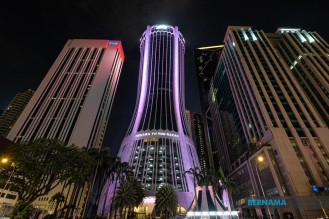
The government's decision to place Tabung Haji's fund management directly under Securities Commission Malaysia supervision represents a decisive institutional response to years of governance failures that devastated the savings of millions of Malaysian pilgrims. Dr Mohd Faisol Ibrahim, a senior lecturer in Islamic Economics and Banking at Universiti Sains Islam Malaysia, contends that this regulatory realignment is essential as TH navigates the complex terrain of generating competitive returns while safeguarding capital and maintaining the liquidity needed to execute its core haj mandate.
TH operates in a peculiar structural space within Malaysia's financial ecosystem. Unlike conventional banking institutions, it functions as a non-banking intermediary yet must satisfy depositor expectations for dividend returns comparable to mainstream financial products. This dual demand—balancing Islamic principles with commercial competitiveness—has historically created tension within the institution's decision-making framework. The shift toward SC oversight attempts to resolve this tension by imposing rigorous investment governance standards typically reserved for major regulated investment entities, thereby creating a level playing field where TH operates under transparent rules rather than ad-hoc administrative discretion.
The government's August announcement followed recommendations from a task force established to implement findings from the Royal Commission of Inquiry into TH. The RCI's 211-page report, released publicly on July 29, documented substantial institutional weaknesses spanning 2014 to 2020, revealing patterns of mismanagement and inadequate oversight that inflicted severe financial damage on TH's nine million depositors. This historical context cannot be overstated—the RCI's investigation represented Malaysia's willingness to conduct a transparent public examination of institutional failure, a prerequisite for meaningful reform.
Dr Faisol argues that the Securities Commission must move beyond passive monitoring to assume an active role within TH's investment committee, directly participating in deliberations where major capital allocation decisions occur. This involvement would serve as a bulwark against excessive risk-taking while ensuring that investment choices rest upon sound commercial reasoning rather than extraneous political or administrative considerations. The presence of SC representatives in real-time decision-making would fundamentally alter the incentive structure within TH, shifting accountability from diffused ministerial oversight to explicit regulatory accountability.
Crucially, TH's investment portfolio and decision-making processes should now conform to governance, risk-management and disclosure standards comparable to those binding SC-regulated institutions. This standardisation addresses a critical vulnerability in the previous framework—TH operated under bespoke rules that lacked the transparency benchmarks and accountability mechanisms characteristic of Malaysia's regulated investment sector. Tightening standards around solvency, reserves, investment parameters, and profit distribution represents a direct institutional response to preventing recurrence of the crisis that fundamentally shook depositor confidence.
Dr Faisol proposes a multi-layered checks-and-balances mechanism to insulate investment decisions from non-commercial pressures. Two specialised committees—one focused on investment merit and another dedicated to risk assessment—would function as sequential gateways before capital deployment. This dual-committee structure distributes decision-making authority across multiple stakeholders, preventing unilateral action by TH management while mandating collaborative review involving the Securities Commission, Bank Negara Malaysia, and the Ministry of Finance. Such institutional design embodies the principle that consequential financial decisions affecting millions of depositors warrant scrutiny from multiple regulatory angles.
Bank Negara Malaysia's role merits particular emphasis. As TH's principal financial adviser, BNM possesses statutory expertise in monetary policy, systemic financial stability, and strategic risk management. Strengthening BNM's advisory function creates a second institutional checkpoint alongside SC oversight, ensuring that investment strategies align with broader macroeconomic conditions and systemic stability considerations. This collaborative approach respects the specialised competencies of different regulatory bodies while preventing any single authority from dominating TH governance.
Financial restructuring constitutes the third pillar of institutional reform. TH must establish reserves positioned to sustain long-term asset-liability balance, particularly given macroeconomic volatility and ringgit fluctuations affecting haj costs denominated in foreign currency. Dr Faisol suggests that minimum savings requirements for intending pilgrims could be calibrated to strengthen institutional reserves while accounting for current ringgit strength and global economic headwinds. This approach permits reserve building without imposing disproportionate burden on individual depositors, embedding prudential considerations into the foundational structure of TH's deposit framework.
The RCI's broader recommendations extend beyond investment oversight to encompassing board governance transformation. The inquiry recommended prohibiting active politicians from serving as TH directors, establishing independent mechanisms for board appointments, and separating oversight responsibilities between Religious Affairs and Finance ministries. These measures address capture risks where political interests override fiduciary obligations to depositors. By depoliticising board composition, Malaysia signals commitment to removing the structural incentives that enabled previous mismanagement.
For Southeast Asian observers and policymakers overseeing sovereign wealth funds, pension schemes, and religiously-mandated financial institutions, TH's reform trajectory offers instructive lessons. Institutions serving specific demographic constituencies—whether faith-based or occupationally-defined populations—face acute governance risks when regulatory oversight remains fragmented across multiple government agencies. Malaysia's pivot toward concentrated SC supervision, supplemented by collaborative frameworks involving multiple regulators, demonstrates how consolidated authority can coexist with inter-agency coordination without sacrificing either transparency or professional expertise.
The timeline of reform itself warrants attention. The government announced the RCI investigation in 2021, appointed commission members in January 2022, received the report in August 2022, and announced implementation mechanisms in August 2024—a two-year implementation lag. While this interval reflects the complexity of institutional restructuring, it also highlights the sustained political commitment required to translate inquiry findings into operational reality. For Malaysian pilgrims and their families, this extended timeline represents both institutional opportunity and renewed vulnerability, underscoring why the Securities Commission's supervisory engagement must commence swiftly and comprehensively.
Moving forward, TH's credibility depends upon demonstrating that SC oversight produces tangible improvements in investment decision quality and dividend performance. Depositors require not merely institutional restructuring but observable returns justifying their continued confidence in an institution that previously inflicted substantial financial harm. The Securities Commission's challenge extends beyond monitoring compliance—it must validate institutional reform through performance metrics that convince nine million Malaysians that their haj savings remain protected within a governance framework prioritising their interests above competing considerations.

