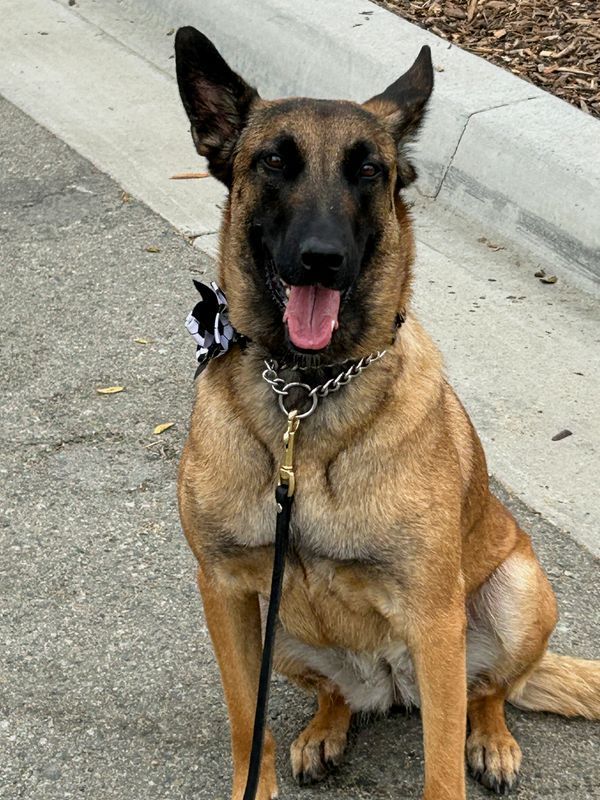
The 2026 FIFA World Cup, co-hosted across the United States, Canada and Mexico, presented unprecedented security challenges that culminated in an extraordinary mobilisation of detection dogs across the tournament. At Inglewood's stadium in California, Kali—a five-year-old Labrador Retriever—exemplified the quiet efficiency expected of security animals: she neither intimidates crowds nor permits contraband to pass through venue gates. Her presence at one of the stadium's entrance points formed part of a broader canine defence network protecting facilities across 16 North American cities from explosives, firearms, fireworks and other illicit items.
The geopolitical environment surrounding the tournament created distinct security imperatives. The co-hosting nations—particularly the United States—faced complex diplomatic circumstances, with Iran's national team competing in matches held on American soil despite broader bilateral tensions. This arrangement alone generated significant operational difficulties; Mexican cartel violence had erupted months before kickoff, and Iranian team matches in Los Angeles attracted substantial political demonstrations. These overlapping tensions transformed what might ordinarily be a sporting logistics exercise into a sophisticated threat-assessment operation requiring unprecedented coordination between federal, state, and municipal agencies.
Glen Kucera, President of Allied Universal Enhanced Protection Services, the largest private canine security provider in the United States, deployed roughly 300 of his company's 1,000 dog teams specifically for World Cup assignments. His observation that heightened threat levels emerged during politically sensitive matches revealed how security planners had to adjust real-time responses based on intelligence assessments and scheduled events. The sheer geographic scope of the tournament—spanning training facilities, hotels, transportation corridors and 16 stadium complexes across three nations—stretched canine resources to their operational limits, necessitating contributions from diverse governmental and private entities.
Federal agencies contributed specialised capabilities to this layered security approach. The Federal Bureau of Alcohol, Tobacco, Firearms and Explosives deployed trained explosive-detection dogs such as Kali, while the Los Angeles County Sheriff's Department positioned additional teams including Buck, handled by Anthony Meyers, near critical checkpoints. Private security contractors maintained vehicle-screening stations at perimeter checkpoints, with detection dogs assessing arriving automobiles before they approached stadium grounds. This distribution ensured that every spectator would encounter security dogs at multiple points during arrival and entry, creating what security professionals recognised as both a substantive safeguard and a visible deterrent.
The psychological dimensions of canine security received careful consideration by tournament organisers. Kucera articulated a crucial insight: roughly 95 percent of security dogs' value derives from their visible presence rather than actual detections, a reality that transformed breed selection into a strategic decision. Tournament planners deliberately chose Labrador Retrievers and similar friendly breeds over German Shepherds and more imposing varieties, recognising that international spectators from nations where dogs carry associations with state oppression or remain uncommon as domestic animals might experience genuine anxiety around intimidating animals. This sensitivity reflected understanding that security effectiveness depends partly on public cooperation and comfort; an overly aggressive security posture could undermine the inclusive atmosphere tournaments require.
Non-terrorism threats demanded equally rigorous attention. Supporters in many football cultures habitually celebrate goals and victories by igniting fireworks, and security personnel faced the difficult task of preventing such items from entering stadiums without dampening genuine fan enthusiasm. This distinction between illicit explosives and celebratory pyrotechnics required dogs trained to detect specific chemical signatures, distinguishing materials according to legal classifications rather than responding uniformly to all combustible substances. The operational complexity revealed how contemporary security transcends simple binary threat assessment.
Different North American jurisdictions implemented contextually appropriate canine strategies reflecting their particular circumstances. In Guadalajara, Mexico, robot dogs supplemented biological detection teams for explosive-threat screening, introducing technological alternatives where appropriate. Vancouver's Canadian security framework developed multi-layered approaches positioning detection dogs within comprehensive interdiction networks. These variations demonstrated that no single canine model suited all environments; instead, tournament organisers and security partners adapted methodologies to local conditions, available resources and specific threat assessments.
The Iran team's participation presented distinctive operational challenges that illustrated how political circumstances reshape security logistics. Iranian officials required the national team to remain based in Mexico, arriving shortly before each match and departing immediately afterwards—an arrangement that created fluid scheduling complications requiring constant adjustment. Beyond the Los Angeles stadium where crowds protested during Iran's group-stage matches against New Zealand and Belgium, security planners had to manage detection-dog deployments in Seattle for Iran's final fixture against Egypt. Each venue demanded fresh intelligence assessments and modified canine team compositions, preventing the standardised security templates that simpler tournaments might permit.
The scale of World Cup operations strains security infrastructure in ways that smaller competitions never approach. Traditional major-event security—Olympic Games, presidential inaugurations, large conferences—provides operational experience, yet the sprawling geography of a three-nation World Cup tournament distributes security demands across unprecedented distances and jurisdictional boundaries. Coordinating hundreds of detection-dog teams from disparate agencies, private contractors and international partners requires sophisticated logistics, clear communication protocols and unified command structures that security organisations had to construct essentially from scratch. The relative absence of significant incidents throughout the tournament suggested that despite these extraordinary complications, the security framework functioned effectively.
The question of how detection dogs themselves experienced the World Cup assignment remains unanswerable through conventional means, yet journalists noted that every security dog encountered during reporting willingly participated in photographing exercises. This anecdotal observation—perhaps modest in its implications—nonetheless captured something essential about professional security animals: their trained composure and discipline transform them into reliable instruments of public safety, functioning effectively across varied environments and circumstances. Whether stationed at Los Angeles, Vancouver or Guadalajara, these dogs performed their roles with the quiet competence that security operations demand, contributing substantially to an outcome in which international football spectators experienced both robust protection and welcoming stadium environments.

