The Sejahtera MADANI initiative in Perak has reached a significant milestone with RM2.3 million in assistance delivered to around 2,000 beneficiaries, marking a substantial step forward in the government's targeted welfare approach. Recognising the programme's traction among vulnerable groups, authorities have now greenlit an extra RM3 million to deepen its reach across the state, signalling confidence in the initiative's ability to drive meaningful socioeconomic change at the grassroots level.
Muhammad Kamil Abdul Munim, political secretary to the Finance Minister, outlined the rationale behind the additional investment during a roadshow in the Padang Rengas parliamentary constituency. The fresh allocation would prioritise three key segments: micro-entrepreneurs seeking to expand their enterprises, families struggling with insufficient household income, and academically accomplished students pursuing tertiary education. By tailoring assistance to these specific demographics, the government aims to create pathways for upward mobility rather than relying solely on passive income transfers.
The support structure extends well beyond simple cash handouts. According to Muhammad Kamil, the programme incorporates practical interventions designed to build long-term capacity and resilience. Small-scale business operators receive not just monetary grants but also access to tools and equipment that directly enhance operational efficiency and revenue-generating potential. For students, success at the Sijil Pelajaran Malaysia examination level is rewarded with laptops and other technology that reduces barriers to tertiary education—particularly important in regions where digital access remains uneven.
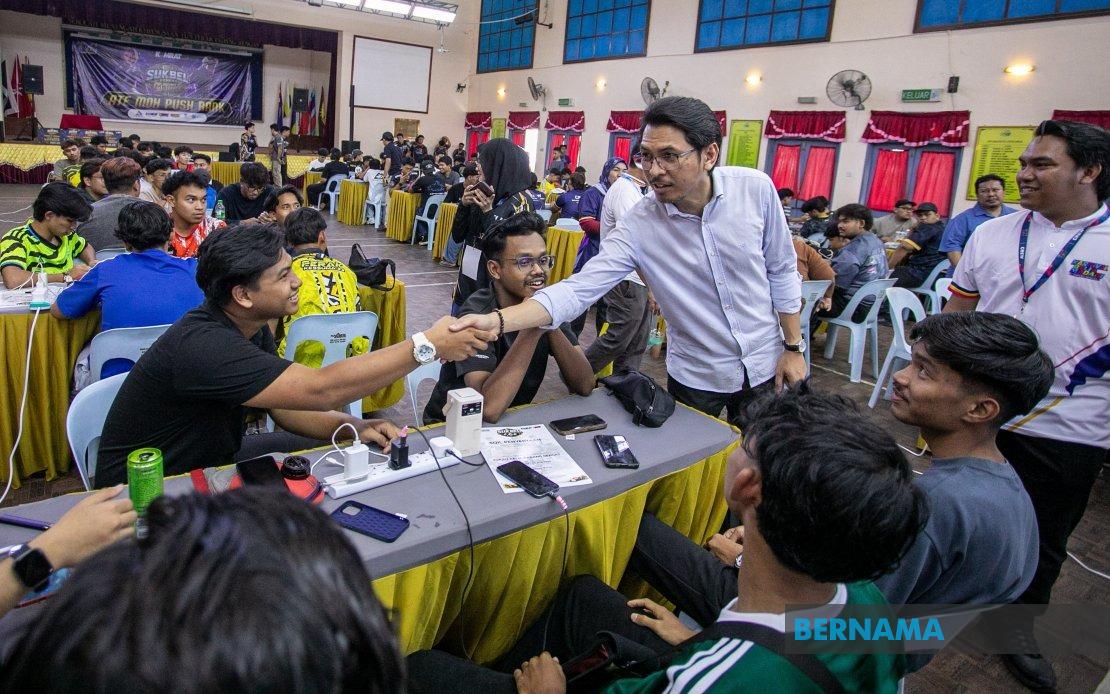
At the Lubok Merbau roadshow, these principles translated into concrete action. Thirteen high-performing SPM graduates preparing to enter universities received laptops to facilitate their studies, while five micro-entrepreneurs were presented with business equipment tailored to their specific ventures. This hands-on distribution approach demonstrates the programme's commitment to matching assistance with actual beneficiary needs rather than adopting a one-size-fits-all model that has historically characterised welfare schemes across the region.
The initiative reflects broader policy shifts within Malaysia's current administration, which has positioned itself as more discriminating in how public resources reach recipients. Rather than dispersing aid broadly across populations, the Sejahtera MADANI framework emphasises verification, targeting, and demonstrable impact metrics. This reflects lessons learned from earlier community-driven development programmes where decentralised decision-making sometimes resulted in poor outcomes and resource misallocation.
However, the programme's architects acknowledge that earlier phases exposed vulnerabilities requiring urgent correction. Muhammad Kamil candid conceded that while the original design granted local communities significant autonomy in defining project priorities, this flexibility came at the cost of oversight rigour. Several initiatives faltered during implementation, and inadequate monitoring created conditions where mismanagement and potential fraud could flourish undetected—problems that resonate across Southeast Asian governance contexts where capacity constraints often hinder project supervision.
The government's response has been to institute substantially tighter monitoring mechanisms. Officials now recognise that community empowerment and fiscal stewardship need not be mutually exclusive; instead, they require more robust institutional architecture to supervise fund utilisation at each implementation phase. This recalibration acknowledges that some degree of project failure is inevitable in complex social programmes, but systematic oversight can substantially reduce waste and leakage. The refinement suggests a maturing approach to development assistance that balances local participation with accountability frameworks.
For Malaysian policymakers and regional observers, the Sejahtera MADANI evolution holds instructive lessons about programme design in middle-income economies where public resources remain constrained relative to demand. The shift toward targeted assistance combined with enhanced supervision mirrors global best practices, particularly in countries grappling with similar governance challenges. Rather than retreating from community-based approaches, the government is instead layering additional safeguards to preserve the benefits of local engagement while mitigating implementation risks.
The Perak implementation assumes particular significance given the state's economic profile and demographic composition. As a region with substantial rural populations and traditional dependence on agricultural and extractive industries, Perak faces particular challenges in workforce transition as economic structures shift. The emphasis on supporting micro-entrepreneurs and student advancement directly addresses these structural constraints by encouraging diversification away from primary sectors toward services and knowledge-based activities. Enhanced digital access for students simultaneously reduces regional educational disparities that have historically limited upward mobility in less-urbanised areas.
The RM3 million expansion also signals that the government perceives sufficient evidence of effectiveness to justify continued investment in the model. Positive outcomes from the initial RM2.3 million disbursement—whether measured through beneficiary satisfaction, subsequent entrepreneurial outcomes, or student educational advancement—appear to have persuaded decision-makers that incremental scaling represents prudent policy. This approach contrasts with programmes that receive single tranches of funding and subsequently languish due to insufficient political will or bureaucratic momentum.
Looking forward, the Sejahtera MADANI framework's trajectory will merit continued monitoring. Success will ultimately depend on whether the enhanced supervision mechanisms prove effective without becoming so burdensome that they discourage community participation or slow disbursement timelines. Southeast Asian governance contexts have repeatedly demonstrated that programmes can deteriorate when bureaucratic requirements become excessive relative to beneficiary capacity to navigate them. Striking this balance—maintaining accountability while preserving accessibility—represents the central challenge as the initiative scales across Perak and potentially other states.
The expansion also reflects implicit acknowledgment that poverty alleviation in Malaysia cannot be addressed through conventional subsidies alone. By investing in entrepreneurial tools, educational infrastructure, and community-determined projects, the government signals a commitment to supporting productive engagement rather than fostering dependency. Whether this philosophy translates into sustained poverty reduction and improved living standards across Perak will substantially influence the credibility of the broader MADANI development agenda heading into the next electoral cycle.

