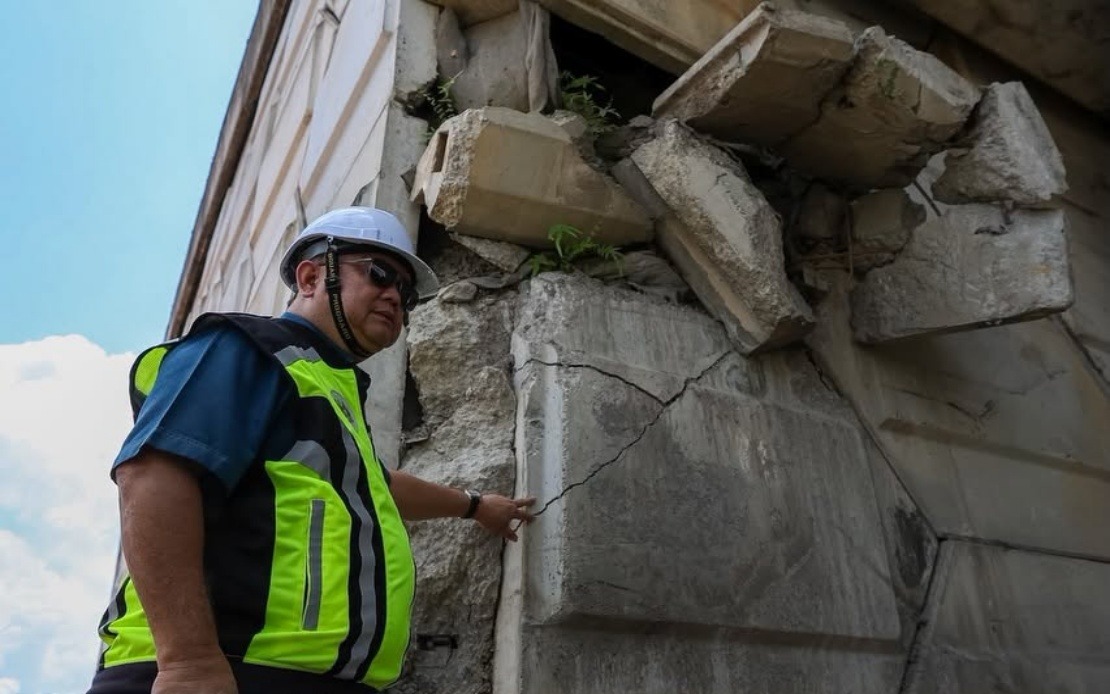
The Selangau-Mukah Interchange Flyover on the Pan Borneo Highway will gradually return to service as repair works progress, provided that rigorous safety assessments give the all-clear, according to Works Minister Datuk Seri Alexander Nanta Linggi. During a site visit to the damaged structure in Sibu on July 6, Nanta outlined a measured approach to restoring traffic flow while prioritising the safety of all road users traversing the critical Bintulu-Mukah-Sibu corridor.
The flyover's Ramp 1 was shuttered after a palm oil tanker struck the structure, compromising its integrity and causing visible damage to the supporting retaining wall. The collision prompted authorities to immediately suspend operations on the affected section, a decision Nanta defended as essential for preventing potential accidents and structural failure. Technical assessments conducted on-site revealed that the impact had weakened part of the load-bearing wall system, necessitating controlled structural interventions before normal traffic patterns could resume.
Nanta's announcement reflects a delicate balancing act between addressing legitimate public frustration over the closure and maintaining uncompromising safety standards. The minister acknowledged that the disruption has created substantial hardship for commuters who depend on the route, particularly those travelling between the three towns for work, commerce, and daily errands. However, he stressed that any premature reopening would expose road users to unacceptable risks, positioning the temporary inconvenience as a necessary safeguard against far more serious consequences.
The phased reopening strategy signals that not all sections of the interchange will remain closed indefinitely. Ramps and routes that have not been structurally compromised will be released back to traffic progressively, allowing partial restoration of connectivity even as targeted repairs continue on Ramp 1. This granular approach aims to minimise disruption while comprehensive remedial work proceeds on the damaged sections, potentially allowing some traffic relief within weeks rather than months.
Nanta emphasised that the repair timeline will be monitored closely to prevent unnecessary delays, reflecting political awareness that extended closures erode public confidence and damage regional economic activity. The Pan Borneo Highway represents a substantial infrastructure investment linking Sarawak's key towns, and prolonged disruptions threaten to undermine the strategic benefits of improved connectivity. By committing to expedited yet thorough repairs, the minister sought to signal competence and responsiveness to stakeholder concerns.
Community feedback, whether disseminated through conventional media channels or amplified across social media platforms, will inform decision-making around the reopening schedule, Nanta indicated. This recognition of public communication as a legitimate input into infrastructure management reflects evolving governance expectations in Malaysia, where transparency and stakeholder engagement increasingly carry political weight. The minister's openness to criticism and suggestions demonstrates an attempt to rebuild trust after the infrastructure failure and to present the closure as a temporary setback rather than administrative incompetence.
Three operational imperatives now structure the government's approach to the flyover crisis. First, road safety protocols must remain absolute, with no corner-cutting to appease impatient commuters. Second, the reconstruction schedule requires vigilant oversight to ensure contractors meet milestones without sacrificing quality or thoroughness. Third, public communications channels must remain active and informative, providing regular updates on alternative routes, specific closure zones, and projected reopening timelines to help commuters plan accordingly.
The structural damage inflicted by the tanker collision highlights broader concerns about protective measures along Malaysia's highways. Whether guardrails, impact barriers, or weight restrictions might have prevented or mitigated this incident remains an open question, though Nanta's statement does not address preventive infrastructure enhancements. The incident underscores vulnerabilities in existing safety systems and may prompt engineering reviews of similar vulnerable sections on the Pan Borneo Highway and comparable major arterials elsewhere in Sarawak and Peninsular Malaysia.
For businesses dependent on the Bintulu-Mukah-Sibu trade corridor, the extended closure threatens supply chains and customer access. Palm oil producers, retailers, and service providers across the region face operational complications and cost pressures from lengthened transit times and rerouting logistics. The economic impact, while secondary to safety considerations, nonetheless weighs on regional stakeholders and municipal authorities who may pressure government to accelerate repairs or find temporary workarounds.
Nanta's personal commitment to monitoring the reconstruction project signals ministerial ownership of the issue and aims to assure the public that the matter receives high-level attention rather than being relegated to lower bureaucratic levels. Such visibility also serves political purposes, allowing the minister to demonstrate responsiveness and competence in crisis management. Regular site inspections and public updates will frame the closure as a temporary anomaly rather than evidence of systemic infrastructure deficiency.
The flyover crisis ultimately reflects the ongoing challenge facing Malaysia in balancing rapid development and expansion of transport networks with maintenance of rigorous safety and quality standards. As infrastructure ages and traffic volumes increase, similar incidents may emerge elsewhere, requiring consistent application of safety-first principles even when doing so inconveniences the public. Nanta's handling of this situation will likely set expectations for how government responds to future infrastructure emergencies across the nation's growing transport network.

