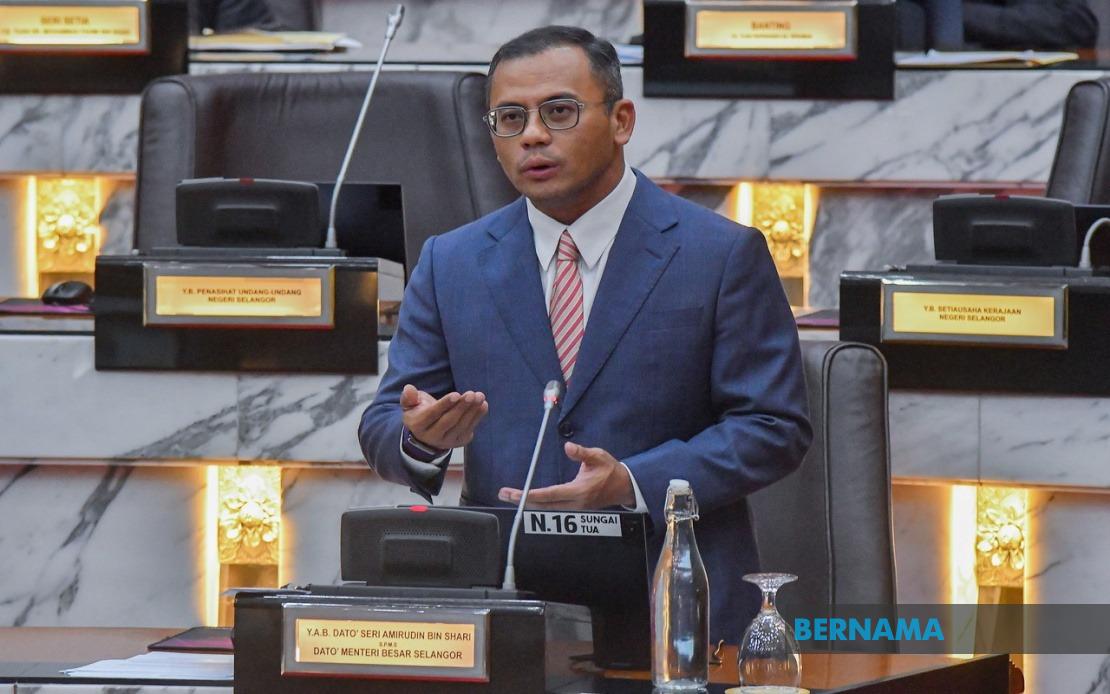
Selangor's top administrator has directed the state's local authorities to conduct a comprehensive review of how well public transport systems connect with surrounding neighbourhoods, addressing persistent complaints that have gained traction online. Menteri Besar Datuk Seri Amirudin Shari announced the initiative during a legislative session in Shah Alam on June 23, signalling heightened government attention to what have become recurring mobility challenges across the state's urban centres.
The directive comes in response to growing frustration among commuters and residents over inadequate pedestrian infrastructure linking transit hubs to residential areas, workplaces, and commercial districts. Issues around LRT3 accessibility have particularly dominated social media conversations in recent weeks, highlighting a critical gap between where trains stop and where people actually need to go. Rather than dismiss these online complaints as mere grumbling, the state government is framing connectivity as a strategic priority that affects economic competitiveness and quality of life.
Amirudin emphasised that the state cabinet stands ready to inject additional resources into improving pedestrian walkways and related infrastructure, but stressed that efficiency must guide spending decisions. He underscored that infrastructure investments should genuinely enable Selangorians to shift away from private vehicles toward public transit, rather than simply inflating project costs without delivering tangible benefits to users. This distinction reflects a growing recognition that throwing money at transport problems without addressing underlying operational shortcomings produces minimal behaviour change.
A notable aspect of the announcement is the Menteri Besar's implicit criticism of local authorities for being reactive rather than proactive. He expressed frustration that municipal bodies wait for complaints to circulate widely on social media platforms like X and Threads before taking action, suggesting a need for more robust internal feedback mechanisms. He called for these authorities to actively engage with elected council members and key stakeholders to identify problems before they become viral controversies, thereby improving governance responsiveness and public satisfaction.
The first-mile and last-mile connectivity problem represents one of Southeast Asia's most pressing transport challenges, particularly in rapidly urbanising areas like Selangor. Commuters often face the frustrating scenario where they can reach a train station easily but cannot safely or conveniently walk to their final destination, forcing them to rely on personal vehicles, ride-hailing services, or expensive taxis for short distances. This undermines the entire economic logic of mass rapid transit systems and defeats efforts to reduce congestion and emissions across the Klang Valley.
Investment, Trade and Mobility Committee chairman Ng Sze Han has been tasked with convening all public transport operators active in Selangor to develop comprehensive service mapping that identifies connectivity gaps and coverage deficiencies. This collaborative approach acknowledges that the state government alone cannot solve the problem; operators must align their schedules, routes, and service hours to create seamless transitions between different modes and ensure that frequency matches demand patterns. The mapping exercise represents a methodical first step toward rational service planning rather than ad-hoc responses to complaints.
Amirudin acknowledged that the state provides subsidies to transport operators, theoretically reducing their operating costs and potentially enabling broader service coverage and extended hours. However, he noted a critical disconnect: subsidies alone cannot fix poor service coordination or inadequate operating hours. If operators fail to adjust their business practices to address genuine access gaps, even generous financial support yields minimal public benefit. This candid observation suggests the government may be prepared to enforce performance expectations or conditions alongside future subsidy disbursements.
The underlying tension that Amirudin highlighted reflects a fundamental challenge in transport planning across Malaysia and the wider region. Commuters rationally choose private vehicles when transit alternatives prove inconvenient or unreliable, making it nearly impossible to achieve the policy objective of reducing vehicle dependency and congestion. Without visible, measurable improvements in the integration and convenience of public transport networks, even ambitious infrastructure investments fail to shift travel behaviour. The Selangor initiative implicitly recognises that connectivity is as important as capacity in determining whether transit systems succeed or stagnate.
For Malaysian policymakers and planners, Selangor's experience offers important lessons about the necessity of systematic, multi-stakeholder coordination in transport development. The state's approach suggests that addressing connectivity gaps requires sustained attention to service design, operator accountability, and infrastructure quality—not merely periodic government spending spurts. The challenge ahead involves translating high-level political commitment into concrete improvements that measurably ease commuters' journeys and demonstrate that public transit can genuinely compete with private vehicles in terms of convenience and accessibility.
The initiative also reflects evolving governance dynamics in Selangor, where social media amplification of local grievances increasingly forces political response and accountability. Rather than resist this trend, the Menteri Besar appears to be channelling popular pressure toward systematic problem-solving, transforming viral complaints into policy directives. Success will ultimately depend on whether local authorities and operators translate their mandates into operational reality, and whether commuters actually experience improved connectivity within reasonable timeframes.