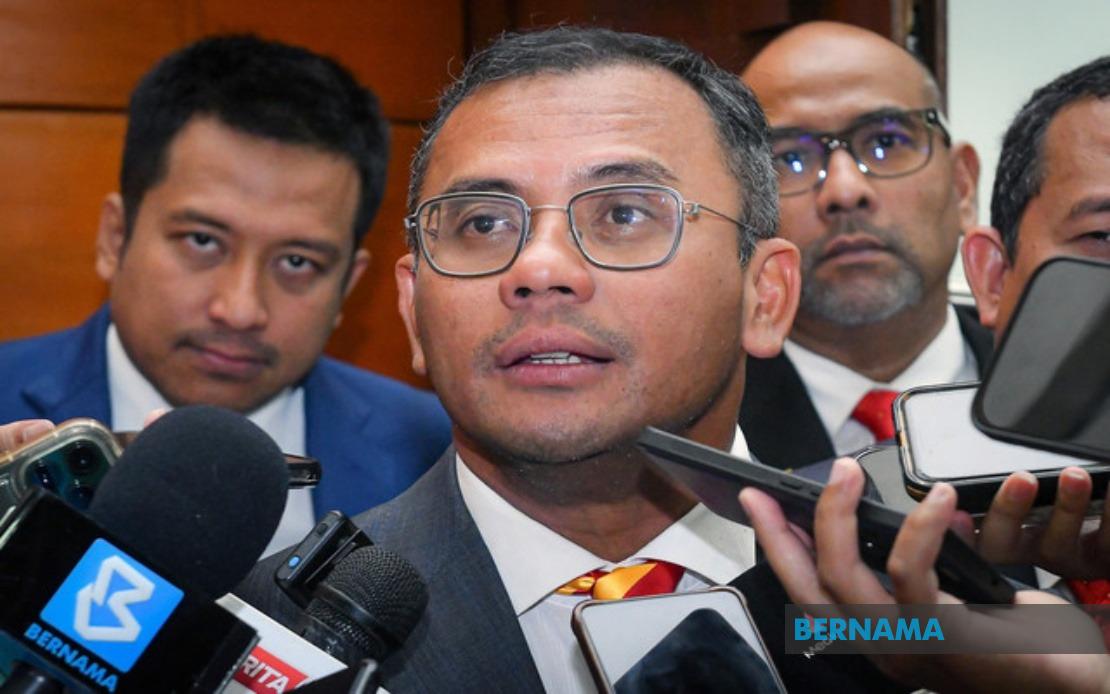
Selangor's government has unveiled an ambitious research initiative backed by RM3.5 million in funding, positioning higher education institutions as key drivers of the state's economic transformation agenda. Announced by Menteri Besar Datuk Seri Amirudin Shari at the state secretariat building in Shah Alam, the Selangor Development Grant (SELidik) 2026 represents an evolution from the previous Selangor Research Grant (GPNS) 2024, expanding scope and deepening integration with policy development across multiple sectors.
The programme fundamentally reimagines how research outputs connect to government policymaking and economic strategy. Rather than treating academic research as an isolated pursuit, SELidik embeds research projects directly into the state's overarching Second Selangor Plan (RS-2), a five-year economic blueprint unveiled on August 7 that targets RM600 billion in economic value from 2026 to 2030. This structural alignment ensures that scholarly investigations yield tangible applications—modules, prototypes, and digital tools—that feed directly into government departments tasked with implementing state policies.
The funding allocation reflects a tiered approach designed to build momentum. The state government has committed RM2.5 million specifically to Universiti Islam Selangor (UIS) and Universiti Selangor (UNISEL), the two state-owned universities positioned as primary research anchors in the initial phase. These institutions will shoulder the responsibility of generating research outputs aligned with RS-2's strategic priorities, establishing proof-of-concept for methodologies and findings that can later be adopted across the broader higher education landscape.
The programme's second phase extends opportunities beyond state-owned universities. An additional RM1 million has been earmarked for research proposals from other public universities operating throughout Selangor, effectively creating a competitive incentive structure that encourages institutions across the state's tertiary education ecosystem to contribute to the RS-2 agenda. This expansion strategy reflects recognition that innovation and intellectual capacity are distributed across multiple institutions, and channelling resources toward collaborative research strengthens the knowledge economy.
SELidik operates within clearly defined parameters that anchor research to policy needs. Amirudin outlined the fundamental requirement that every approved study must demonstrate direct linkage to one of six overarching missions embedded in the RS-2 framework. These missions span economic leadership, balanced regional development, liveable communities, inclusive human capital development, sustainable resilience, and responsive governance. By establishing these thematic boundaries, the state government transforms researchers from independent scholars into strategic partners in implementation, ensuring that academic rigour serves concrete development objectives.
The thematic scope is deliberately broad enough to accommodate diverse disciplinary approaches. Previous research initiatives under the GPNS framework demonstrated capacity across agriculture, innovation development, and applied sciences, creating an evidence base that SELidik will build upon. By positioning researchers as contributors to policy design and programme development, the scheme recognises that premature narrowing of research parameters risks missing unexpected insights and cross-disciplinary innovations that often drive breakthrough solutions.
Management through Yayasan Selangor, the state foundation, introduces institutional stability and accountability mechanisms separate from day-to-day government operations. This structural choice enables researchers to maintain academic independence while ensuring that funding allocations remain aligned with strategic priorities. The foundation's role as intermediary also facilitates engagement with multiple government departments, reducing bureaucratic friction in translating research findings into actionable policy recommendations.
The initiative incorporates forward-looking financial planning. Amirudin signalled openness to involving international universities if surplus funds materialise, creating pathways for collaboration with global research centres and establishing Selangor as a node within international academic networks. Such expansion would position the state as an intellectual hub capable of attracting transnational research partnerships and elevating the prestige of locally-hosted studies through association with international academic standards.
From an economic development perspective, SELidik functions as an investment rather than mere expenditure. The allocation is explicitly framed as generating returns through three mechanisms: economic development emerging from research commercialisation, academic excellence that strengthens institutional reputation, and human capital empowerment through researcher development and graduate training. This returns-focused framing distinguishes research funding from traditional government grants, embedding expectations of productivity and impact from the programme's inception.
The programme reflects broader regional trends in Asia-Pacific governance, where state governments increasingly recognise that competitive advantage flows from knowledge-intensive economic activity rather than traditional resource extraction or low-wage manufacturing. By anchoring research directly to economic development objectives, Selangor aligns with practices established in advanced regional economies while adapting mechanisms to local institutional contexts and development priorities.
For Malaysian higher education institutions beyond Selangor, this model offers both competitive challenge and operational insight. The successful integration of research funding with strategic planning demonstrates that universities can function as policy implementation partners rather than peripheral knowledge suppliers. As other states develop their own development plans, Selangor's SELidik framework provides a template for research-informed governance that could inspire similar initiatives across the country, potentially establishing stronger linkages between Malaysia's academic sector and national economic objectives.
The SELidik 2026 initiative ultimately signals that Selangor's government views research not as an incidental feature of a modern state but as essential infrastructure for evidence-based policy development and sustainable economic growth. By materialising this vision through concrete funding and institutional mechanisms, the state creates tangible incentives for researchers to engage with policy challenges while providing government departments with access to sophisticated analytical capacity. Success in this inaugural phase could establish a replicable model for research-informed governance across Southeast Asia.

