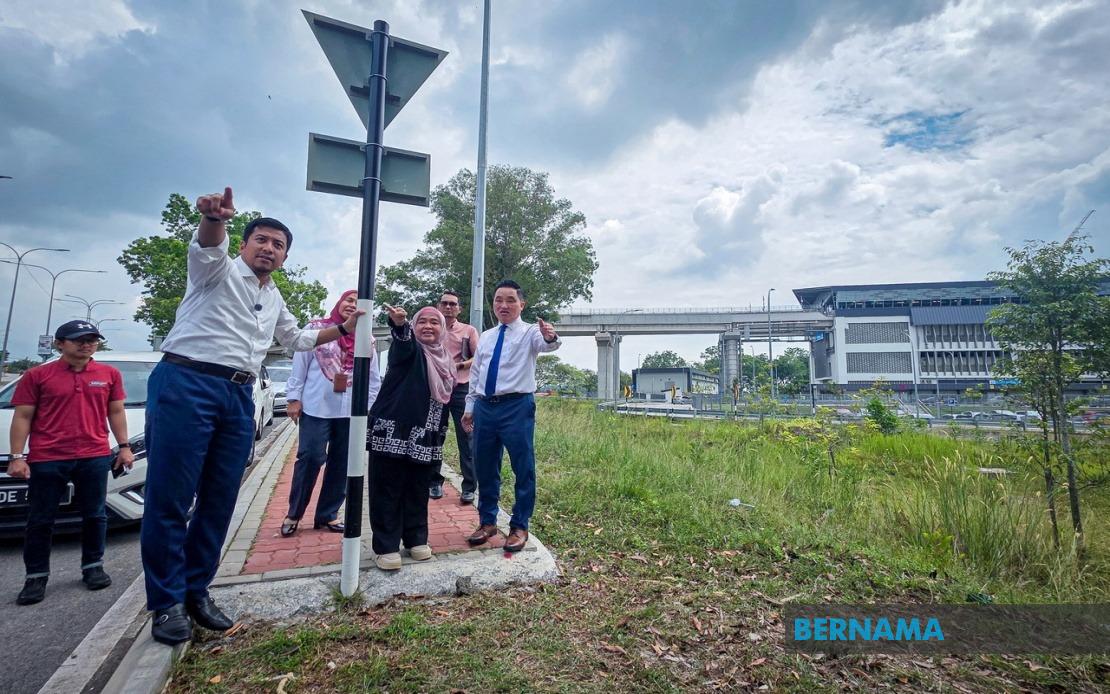
The Selangor State Government is moving quickly to address infrastructure gaps at Shah Alam Line LRT3 stations, recognising that essential connectivity facilities remain incomplete months after the public transport line began operations. State Local Government and Tourism Exco Datuk Ng Suee Lim acknowledged shortcomings in pedestrian access and crossing infrastructure at key stations and committed the government to oversight of rectification efforts across both private and public sector partners.
Two stations have been identified as priority areas requiring immediate intervention. Dato' Menteri Station needs completion of several facilities currently held up by administrative processes, while Shah Alam Stadium Station faces delays tied to nearby development projects. The government has set a two-month deadline for resolving issues at Dato' Menteri Station, where permit applications and licensing requirements have created bottlenecks. Datuk Ng indicated that transportation operator Prasarana, the state-owned company managing LRT operations, has been instructed to accelerate work on these critical access points.
The situation at Shah Alam Stadium Station presents a more complex challenge, as the required infrastructure improvements depend partly on private developers undertaking their own projects in adjacent areas. Rather than imposing arbitrary timelines on third parties, the government has elected to maintain monitoring oversight and facilitate communication between stakeholders to keep work progressing without unnecessary delays. Datuk Ng characterised this approach as accepting responsibility for post-launch deficiencies while working pragmatically with those who control the relevant land and development approvals.
The Shah Alam City Council will play a coordinated role in tracking progress on these improvements, holding regular meetings with developers to ensure momentum is maintained. This multi-agency approach reflects recognition that pedestrian safety and accessibility—whether zebra crossings, walkways, or other connectivity features—require cooperation between the state authority, local municipal governments, public transport operators, and private landholders. For the Royal Klang City Council and other local authorities with LRT3 stations within their districts, new directives will require systematic reviews of existing infrastructure to identify and document any remaining gaps.
Datuk Ng's candid admission that completed infrastructure projects often reveal unanticipated shortcomings once they enter operational use represents a realistic framing of the LRT3 situation. The line opened with some facilities not fully optimised for actual user flows and safety requirements, a condition discovered through practical experience rather than pre-launch testing alone. By acknowledging these real-world gaps and taking responsibility to address them, the state government signals willingness to prioritise user experience over defending initial project delivery.
The emphasis on coordination meetings with neighbouring developers reflects the integrated nature of modern urban rail infrastructure. LRT stations do not exist in isolation but are nodes within broader transport networks and urban environments shaped by multiple property owners and development interests. Ensuring good connectivity requires alignment across public agencies, private operators, and commercial interests—a coordination challenge that becomes apparent only after lines begin serving daily commuters.
The action also carries implications for future infrastructure projects in Selangor and neighbouring states. By taking ownership of post-launch deficiencies and allocating resources to systematic rectification, the government establishes expectations that projects will be monitored against actual performance rather than being considered complete at ribbon-cutting ceremonies. This approach may influence how developers and contractors approach finishing work on major infrastructure in the region.
For commuters using the Shah Alam Line, the commitment to rapid improvement addresses immediate frustrations with pedestrian access and crossing safety. These seemingly minor infrastructure elements significantly affect the user experience and public perception of whether the transport system is genuinely accessible and safe. Poor connectivity to stations can effectively reduce ridership and fail to deliver the congestion and emissions reduction benefits that public transport is intended to provide.
The broader context involves ensuring that Malaysia's expanding urban rail networks actually serve their intended purpose of connecting residents to employment, services, and leisure destinations through seamless, safe journeys. When pedestrian infrastructure remains incomplete, even an operational railway line fails to fulfil this function. The Selangor government's explicit focus on these connective tissues suggests growing recognition that the final-mile experience determines whether major transport investments deliver intended outcomes or remain underutilised by potential users who find access problematic.

