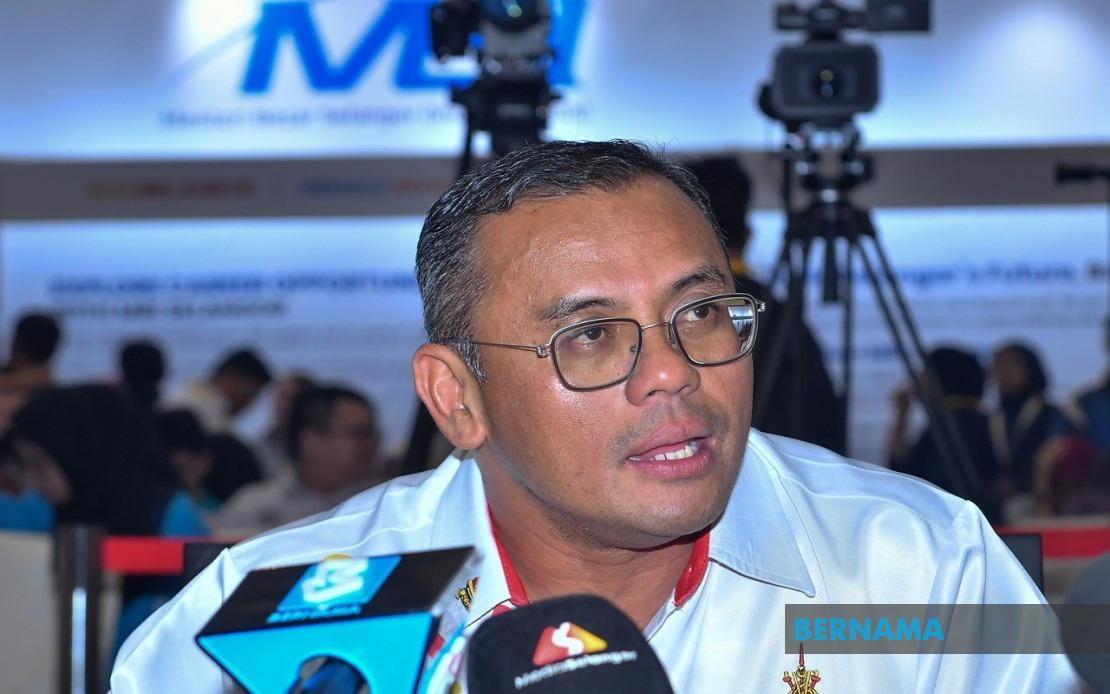
The Selangor state government is preparing to engage directly with workers facing displacement from Panasonic AVC Networks Kuala Lumpur Malaysia's shutdown of television manufacturing operations, with a series of intervention meetings scheduled to commence next week. Menteri Besar Datuk Seri Amirudin Shari indicated that the state's Human Resources and Poverty Alleviation committee, led by chairman V. Papparaidu, would facilitate these discussions alongside representatives from the Social Security Organisation (PERKESO) to better understand the workers' circumstances and identify viable solutions.
The closure represents a significant employment challenge for Selangor's manufacturing sector. Panasonic Malaysia Sdn Bhd announced yesterday that it would cease production operations for two product lines, resulting in approximately 400 job losses by the conclusion of March 2025. This development underscores the ongoing pressure facing Malaysia's electronics manufacturing industry, which continues to face competition from lower-cost regional alternatives and shifting global supply chains. The decision reflects broader challenges within the consumer electronics sector, where companies frequently consolidate operations to maintain competitiveness.
Menteri Besar Amirudin outlined a multi-layered response strategy designed to cushion the impact of retrenchment. The initial phase involves immediate relief measures, including the distribution of food assistance packages to affected households, demonstrating the government's recognition that displaced workers require urgent support while transitioning to new employment. However, state officials have positioned these emergency interventions as merely preliminary steps within a comprehensive support framework.
The cornerstone of the government's approach centers on facilitating rapid workforce redeployment through the state's existing job placement infrastructure. V. Papparaidu emphasized that beyond providing temporary financial relief, the priority remains connecting displaced Panasonic workers with alternative employment opportunities that would enable them to maintain their established livelihoods within Selangor. This emphasis on sustained employment represents a departure from purely palliative welfare approaches, reflecting recognition that job displacement causes long-term economic disruption within affected families and communities.
PERKESO's involvement introduces a federally-mandated social safety net dimension to the state's response. The organization operates a recently-enhanced retrenchment insurance scheme that provides graduated income support to displaced workers during unemployment periods. Under this mechanism, affected workers receive compensation equivalent to eighty percent of their previous salary during the first month of joblessness, declining to fifty percent in the second month, and subsequently stabilizing at thirty percent for the remainder of the benefit period. This structured support framework operates independently of state-level interventions, ensuring that eligible workers receive multiple layers of financial assistance while seeking alternative employment.
Papparaidu framed PERKESO's insurance component as a critical innovation that substantially improves the financial security available to retrenched Selangor workers. The program effectively functions as a wage subsidy during job transitions, reducing the desperation that often compels displaced workers to accept unsuitable positions at depressed wage levels. By providing predictable income support extending across several months, the scheme enables workers to conduct deliberate job searches aligned with their skills and experience rather than accepting the first available opportunity regardless of remuneration or working conditions.
The timing of the Panasonic closure coincides with the state government's broader employment initiatives. The Selangor Mega Jobcare 2026 programme, officially launched during the week of these meetings, aggregates recruitment opportunities across multiple sectors and employers. This career fair brings together one hundred forty-seven employers advertising in excess of eleven thousand available positions, with employers offering these positions across diverse industries and skill levels. Notably, more than sixty-two percent of advertised positions provide monthly compensation exceeding three thousand ringgit, suggesting quality employment rather than minimum-wage work. The fair, operating in collaboration with MYFutureJobs and targeting participants between eighteen and sixty years of age, is currently running at the Shah Alam Convention Centre through consecutive days from nine in the morning until five in the evening.
For Panasonic workers, the Selangor Mega Jobcare 2026 programme represents a practical resource within the broader support ecosystem. Workers possess manufacturing experience, technical capabilities, and established track records that should position them competitively within the labour market, particularly given the substantial proportion of vacancies offering above-minimum remuneration. The clustering of employment opportunities within the same timeframe as displacement proceedings creates logical alignment between job availability and worker availability, potentially accelerating reemployment timelines.
The state government's proactive engagement reflects broader policy recognition that manufacturing facility closures generate cascading economic consequences extending well beyond affected workers. Factory shutdowns reduce consumption within local retail and service sectors, diminish municipal tax revenues, and create concentrated unemployment within specific geographic communities. By implementing immediate intervention measures and connecting displaced workers with alternative employment rapidly, Selangor authorities seek to minimize secondary economic damage and prevent the emergence of persistent local unemployment clusters.
This coordinated approach involving state agencies, federal social security institutions, and private sector employers exemplifies the multi-stakeholder coordination increasingly necessary for managing industrial restructuring. As Malaysia's economy continues evolving away from traditional manufacturing toward higher-value activities, displacement events will likely become more frequent. The Panasonic situation provides a template for how state governments might respond comprehensively rather than reactively, combining immediate relief, structural retraining, and employment facilitation within unified frameworks.
For Selangor residents dependent on manufacturing employment, the state's intervention demonstrates commitment to active labour market policies rather than passive benefit provision. However, the ultimate effectiveness of these measures depends substantially on whether available positions genuinely match displaced workers' skills and compensation expectations, and whether the job-seeking allowance period extends sufficiently for successful employment transitions. The coming weeks will reveal whether this coordinated support architecture successfully facilitates workforce transitions or whether structural mismatches between available positions and worker qualifications create longer-term displacement challenges.

