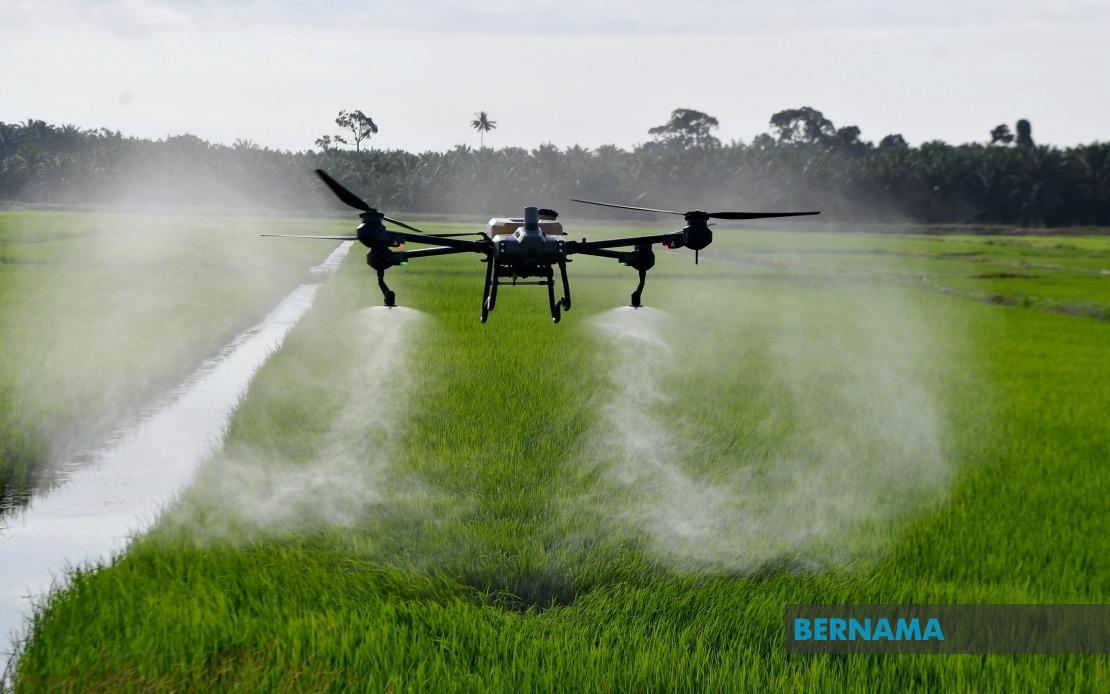
Selangor is accelerating its emergence as a regional drone technology hub with a substantial RM500,000 investment aimed at expanding the state's capabilities in unmanned aerial systems and related innovation ecosystems. The allocation, approved by the state government, represents a strategic push to position Selangor as a leader in drone development and integration across Southeast Asia, with ambitious targets for industry growth through 2027. Dr Mohammad Fahmi Ngah, chairman of the Selangor State Islamic Affairs and Innovation Culture Committee, unveiled the funding at the pre-launch ceremony of Droneport-1000 at Universiti Selangor, signalling the government's commitment to transforming the sector from a nascent industry into an economically significant pillar.
The financial commitment extends beyond facility construction, encompassing a comprehensive strategy that bridges academic research with commercial application. A considerable portion of the funds will go towards completing upgrading works at the Droneport-1000 facility, which sits on Malaysia's largest designated airspace zone spanning 24 square kilometres at altitudes up to 1,000 metres. The project is currently undergoing certification with the Civil Aviation Authority of Malaysia, a critical step that will unlock its full operational potential. This physical infrastructure serves as the foundation for a broader ecosystem encompassing software development, artificial intelligence applications, and semiconductor manufacturing—particularly the chip production operations being developed in Puchong.
Selangor's approach reflects a sophisticated understanding of drone industry dynamics. Rather than limiting investment to hardware manufacturing, state officials recognise that competitiveness requires vertical integration across the entire value chain. The involvement of local technology leaders like Aerodyne, combined with collaboration between the state subsidiary and Geospatial SmartSel, demonstrates a coordinated effort to attract private sector participation while maintaining strategic direction. This public-private partnership model mirrors successful technology clusters in more developed economies, where government provides infrastructure and initial capital while industry drives innovation and commercialisation.
The state government is preparing additional incentive mechanisms designed to magnetise both domestic and international investors. Matching grant schemes are under consideration, reducing investment risk for companies entering the drone sector. These incentives target not only established technology firms but also startups seeking to develop drone applications or supporting technologies. For Malaysian entrepreneurs and venture capitalists, this represents a genuine opportunity to establish operations in a state offering both financial support and access to dedicated airspace for testing and development—advantages few competitors can match.
The economic implications of Droneport-1000 extend far beyond the drone hardware market itself. Dr Mohammad Fahmi emphasised that the facility's potential returns are essentially unlimited, given the growing integration of drone technology across agriculture, logistics, infrastructure monitoring, and environmental management. The airspace covering area is approximately 10 times larger than Singapore's, providing vast scope for experimentation and deployment. This geographical advantage is particularly significant for Southeast Asian companies seeking operational space without the regulatory constraints and congestion affecting more densely developed areas.
Practical applications within Selangor demonstrate immediate governance benefits that justify continued investment. Drone surveillance equipped with artificial intelligence can monitor forest reserve encroachment, detect coastal erosion patterns, and identify bund breaches with precision impossible through manual inspection. These capabilities address persistent infrastructure and environmental management challenges faced throughout Malaysia. By reducing dependence on labour-intensive ground-based monitoring, drone technology promises cost savings alongside improved accuracy and response times—efficiency gains that municipal administrators across the region will inevitably scrutinise and potentially seek to replicate.
Universiti Selangor's central role in the Droneport-1000 project underscores the strategic importance of bridging the traditional divide between academic research and industrial commercialisation. Zannifa Azura Ahmad, chief executive of Selangor Aviation & Technology Innovation, articulated this vision explicitly: the facility aims to connect theoretical knowledge with practical applications, research findings with marketable products, and emerging talent with industry employment opportunities. This positioning addresses a persistent weakness in Malaysian innovation ecosystems, where research excellence often fails to translate into commercial success or job creation for graduates in emerging fields.
The timing of this investment within Selangor's broader economic development strategy reflects regional competitive pressures. Several Southeast Asian jurisdictions are developing drone capabilities, and early movers enjoy significant advantages in establishing supply chains, regulatory frameworks, and industry clustering. Selangor's proactive approach, backed by sustained government commitment and infrastructure investment, positions the state to capture a disproportionate share of regional drone industry growth. This matters for Malaysia's technology export ambitions and for attracting multinational corporations seeking Asian manufacturing and development bases.
However, the success of this initiative ultimately depends on execution quality and regulatory clarity. The ongoing certification process with Malaysia's aviation authority must proceed expeditiously, as delays risk undermining investor confidence and pushing international companies towards competing jurisdictions. Additionally, the state must maintain consistent policy frameworks and financial commitments across multiple political cycles to build the long-term ecosystem stability that attracts substantial private investment. Drone technology development requires patient capital and patient regulation—a combination not always evident in Southeast Asian governance contexts.
For Malaysian technology entrepreneurs and investors, Selangor's drone initiative represents one of the few coherent, well-funded sectoral development strategies currently available domestically. The combination of dedicated airspace, government funding, university partnerships, and supportive regulations creates conditions rarely encountered in Malaysia's innovation economy. Successful commercialisation at Droneport-1000 could establish a replicable model for other emerging technology sectors, demonstrating how state governments can catalyse high-value industry development through coordinated public investment and strategic partnership frameworks.

