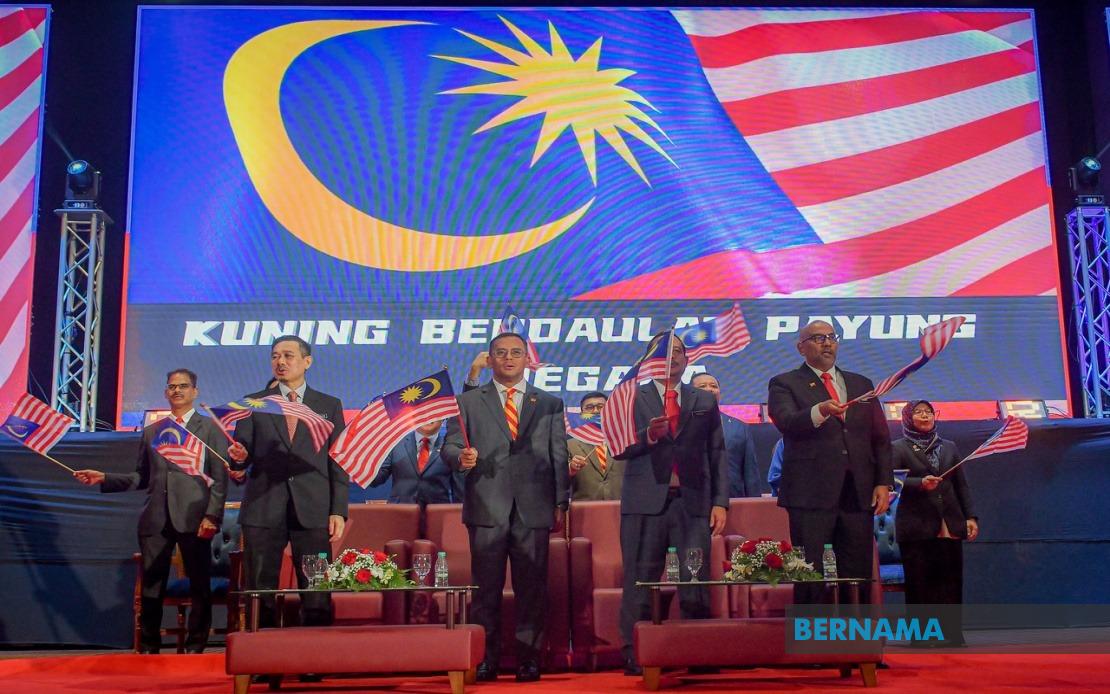
The Selangor state government is bracing for a significant political development, with Menteri Besar Datuk Seri Amirudin Shari indicating that the week ahead will bring clarity on an eligibility dispute affecting one of the state's legislative seats. Speaking in Shah Alam on August 3, Amirudin revealed that formal notification regarding the contested seat's status would arrive from the Selangor State Legislative Assembly Speaker, setting in motion a chain of constitutional procedures that could trigger a state by-election.
The sequence of events remains contingent on deliberations within the Speaker's office and the state legal adviser's assessment of the matter. Amirudin explained that the legal team is preparing a comprehensive note on the implications of the eligibility allegations, which will then be circulated to relevant authorities including the Election Commission. This procedural caution underscores the constitutional sensitivity surrounding questions of assemblyman eligibility, where technical legal interpretation often determines outcomes that carry substantial political consequences.
For Malaysian observers, the situation exemplifies how state-level electoral disputes can hinge on institutional gatekeepers rather than electoral processes themselves. The Speaker's determination of whether a seat has become vacant is a prerogative function distinct from partisan politics, though its exercise inevitably carries political weight. By framing the matter as the Speaker's constitutional responsibility, Amirudin appears to be positioning the state government as a passive participant awaiting judicial and administrative guidance rather than an interested party attempting to influence the outcome.
Once the Speaker renders a decision, responsibility shifts squarely to the Election Commission, which must determine whether the vacancy—if declared—necessitates a by-election under the relevant provisions of Malaysian electoral law. The EC's interpretation of these legal thresholds will determine whether voters in the affected constituency face an imminent polling day or whether the seat remains filled pending the next general election. Amirudin's commitment to accept whatever the EC decides carries significance primarily because state governments, particularly those with narrow majorities, sometimes face pressure to challenge such determinations or seek alternative remedies.
The underlying eligibility allegations against the unnamed assemblyman have not been publicly detailed in the available reporting, leaving Malaysian political observers speculating about the nature of the concerns. Such disputes typically involve questions about qualifications prescribed in state or federal constitutions—whether relating to citizenship, age, professional standing, or criminal convictions. The fact that the matter has reached this institutional stage suggests concerns serious enough that they could not be resolved through informal discussion between the state government and the affected member.
For Selangor, a state governed by a coalition that has experienced considerable electoral volatility in recent years, any by-election carries disproportionate significance. The state has become a barometer of national political sentiment, with its results frequently interpreted as indicative of broader electoral trends affecting Malaysia's federal political balance. Even a single seat can carry symbolic weight when discussing a government's parliamentary or state assembly strength, particularly if that government commands only a slim majority.
Beyond the procedural matter, Amirudin also addressed the controversial issue of stray dog management in Selangor, a topic that has generated substantial public debate involving animal welfare advocates and community safety concerns. The MB articulated what he framed as a delicate equilibrium between protecting public safety and ensuring humane treatment of animals, acknowledging that enforcement actions inevitably attract scrutiny from multiple constituencies with different priorities. He noted that local authorities should not be blamed merely for taking action, yet simultaneously emphasised that such action must be conducted within legal boundaries and with appropriate restraint.
The Tengku Permaisuri of Selangor, Tengku Permaisuri Norashikin, had previously expressed deep concern over recent incidents of animal cruelty that circulated widely on social media, reflecting the emotional resonance these issues hold for significant segments of the public. Amirudin's acknowledgment of the Tengku Permaisuri's position signals state government awareness that animal welfare concerns have ascended to royal attention, adding institutional weight to calls for more sensitive enforcement approaches. The Istana Alam Shah has additionally recommended that the Federal Government consider strengthening penalties under the Animal Welfare Act 2015, suggesting that current punishments may insufficiently deter offenders.
Amirudin's framing of the stray dog issue reveals the genuine complexity facing local authorities managing competing public interests. Community safety demands addressing roaming animals that may pose risks to residents, yet these same animals are often objects of compassion and concern to animal welfare advocates who view enforcement actions with suspicion. The MB suggested that certain critics selectively emphasise cruelty incidents while overlooking public safety incidents involving stray animals, implying that comprehensive policy discussion requires acknowledging the full range of concerns rather than privileging animal welfare considerations exclusively.
The emphasis on acting within legal bounds and with restraint indicates that the Selangor government recognises reputational risks associated with heavy-handed enforcement in an era of viral social media content. A single high-profile incident of perceived animal cruelty can damage a local authority's public image far more extensively than mundane but persistent stray dog problems. By stressing that enforcement has previously been raised by members of the State Legislative Assembly, Amirudin attempted to place the stray animal issue within the normal scope of government business rather than treating it as a novel response to recent viral incidents.
The convergence of these two issues—the eligibility dispute and animal welfare enforcement—within a single media engagement illustrates the multifaceted nature of state governance, where technical constitutional matters and social policy concerns compete for attention and resources. For Selangor residents, the coming week will clarify whether their state legislature will shortly conduct a by-election, while long-term questions about balancing community safety and animal protection remain subject to ongoing negotiation between the government, civil society advocates, and royal institutions.
As Amirudin emphasised his government's commitment to legal process and proper procedure in both matters, observers should note that institutional propriety alone does not resolve underlying policy tensions. The Speaker's ruling and the Election Commission's decision will settle the technical question of seat vacancy and by-election necessity, but the broader question of how Selangor manages animal welfare within a framework of public safety remains an open challenge requiring sustained dialogue between multiple stakeholders holding genuinely divergent values and priorities.

