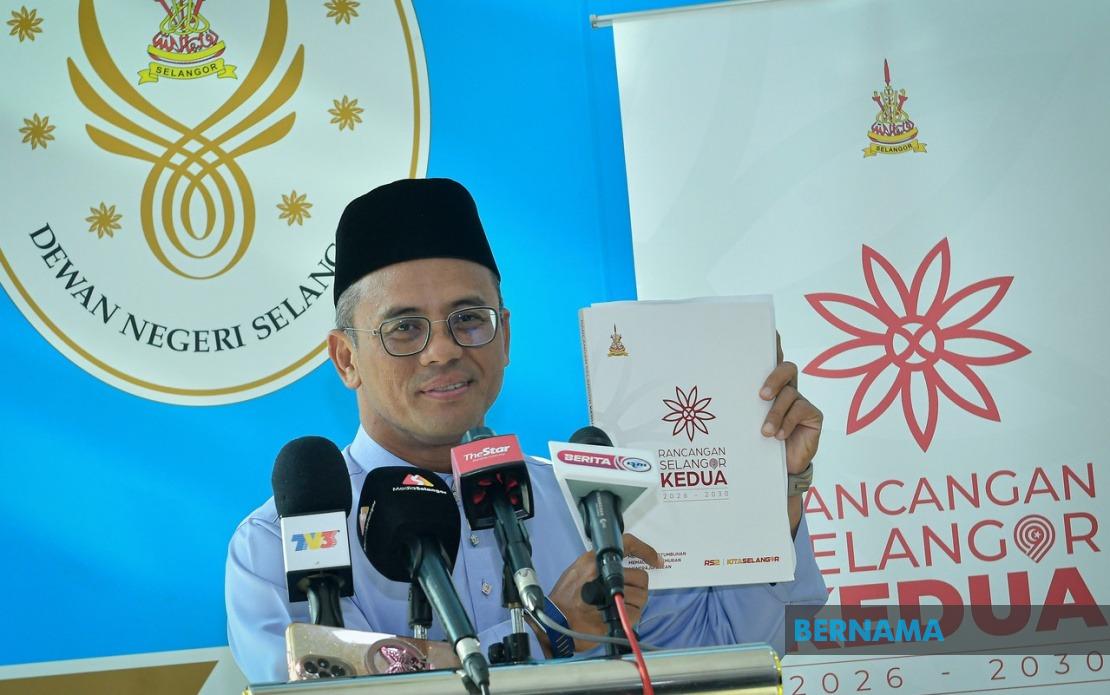
Selangor's local authorities face an ambitious but crucial mandate to elevate public service standards across the state, as outlined by Menteri Besar Datuk Seri Amirudin Shari during the tabling of the Second Selangor Plan (RS-2) at the State Legislative Assembly. The directive stipulates that all PBTs, or local authorities, must achieve and sustain a 95 per cent score under the PBT Star Rating System (SPB-PBT) by the end of the decade, marking a significant push toward equitable service delivery across Selangor's municipalities and district councils.
The establishment of this performance benchmark reflects a broader strategic vision within the RS-2 framework that aims to dismantle the notion of inconsistent service quality across the state. Rather than permitting excellence to exist in pockets of affluent or well-managed areas, the target ensures that citizens throughout Selangor—whether in urban centres or peripheral zones—experience comparable standards of municipal service, from waste management and licensing to planning approvals and community facilities. This universal approach to governance quality represents a departure from the traditional concentration of resources in high-revenue-generating localities.
Central to the Selangor administration's modernisation agenda is a commitment to digital transformation, with the state targeting 85 per cent coverage for End-to-End Digital Government Service Sharing by 2030. This initiative extends beyond mere online portals; it encompasses integrated data systems that allow seamless information flow between different government departments and agencies, reducing bureaucratic delays and enhancing citizen convenience. For residents and businesses in Selangor, the implication is straightforward: licence renewals, development permits, and service requests could theoretically be processed with minimal physical interaction and faster turnaround times. The digitalisation push also aligns with Southeast Asia's broader momentum toward digital governance, positioning Selangor as a competitive advantage among regional municipalities.
Amirudin emphasised that local authority leadership must treat service delivery as a non-negotiable priority, not a secondary consideration. This messaging carries weight because municipalities often struggle with competing pressures—maintaining infrastructure, pursuing development projects, managing budget constraints—that can inadvertently sideline citizen-centric service improvements. By making this commitment explicit in a formal state development plan, the administration signals that performance evaluation of PBT leadership will hinge significantly on these metrics. The requirement to respond systematically to complaints raised through social media, online platforms, or in-person channels introduces accountability mechanisms that modern citizens increasingly expect from government.
The revenue diversification strategy embedded within RS-2 addresses a structural vulnerability that could otherwise undermine these ambitious service targets. Selangor's current reliance on land premiums and land rents for approximately 75 per cent of state revenue creates pronounced exposure to property market cycles. When land values stagnate or when sales momentum declines—as occurred during economic downturns—the state's fiscal capacity to fund service improvements and infrastructure maintenance becomes severely constrained. By exploring innovative financing mechanisms and broadening revenue streams, Selangor can establish more predictable funding for long-term initiatives including local authority operations.
The proposed establishment of a fully integrated State Investment Holding Company represents a critical structural change that aims to optimise returns from state-linked enterprises and improve capital efficiency. Rather than allowing multiple government-linked companies to operate in silos with overlapping mandates and duplicative functions, consolidation under a unified holding structure enables better resource allocation, eliminates wasteful redundancies, and creates clearer accountability pathways. For Selangor citizens, this reorganisation should theoretically translate into improved service delivery because funding leakages through inefficient corporate structures are reduced, freeing capital for frontline services.
The strategic alignment of GLCs with state programmes also opens opportunities for innovation in service delivery models. Instead of restricting local authorities to traditional government funding, partnerships with state-owned enterprises could facilitate private-sector-style efficiency improvements, technology adoption, and customer service enhancements. This hybrid approach has proven successful in other jurisdictions where government agencies have collaborated with corporate entities to introduce modern management practices while maintaining public interest mandates. For Selangor, such partnerships might accelerate the digital transformation agenda and improve service responsiveness.
The timing of these ambitious targets carries regional significance as Selangor remains Southeast Asia's most economically vibrant state, hosting the federal capital region and the nation's largest concentration of multinational corporations. The quality of municipal governance directly influences business sentiment and investment decisions; companies evaluating relocation or expansion carefully assess the regulatory environment, approval timelines, and service reliability they can expect from local authorities. By committing to high performance standards, Selangor strengthens its competitive positioning against other regional hubs competing for investment and talent.
Implementing the 95 per cent rating target across all 30 PBTs will require substantial capacity building, particularly in smaller municipalities that historically struggle with resource constraints and technical expertise. The state administration must provide training programmes, shared service platforms, and financial support to enable lagging authorities to reach performance benchmarks. Without this foundational support, the universal target risks creating a two-tier system where wealthy, well-staffed municipalities easily achieve ratings while poorer councils fall further behind. Success hinges on the state government's willingness to invest in institutional strengthening rather than simply imposing performance targets.
The Second Selangor Plan represents a clear recalibration of governance priorities, moving beyond infrastructure-focused development toward citizen-centric service excellence and fiscal sustainability. The 95 per cent service rating target, combined with digitisation commitments and revenue diversification strategies, establishes a comprehensive framework for modernisation. However, translating these policy objectives into tangible improvements in citizen experience requires sustained political commitment, adequate resource allocation, and effective monitoring mechanisms. The next seven years will determine whether Selangor's local authorities can genuinely meet these benchmarks or whether the targets become aspirational rhetoric divorced from operational reality.

