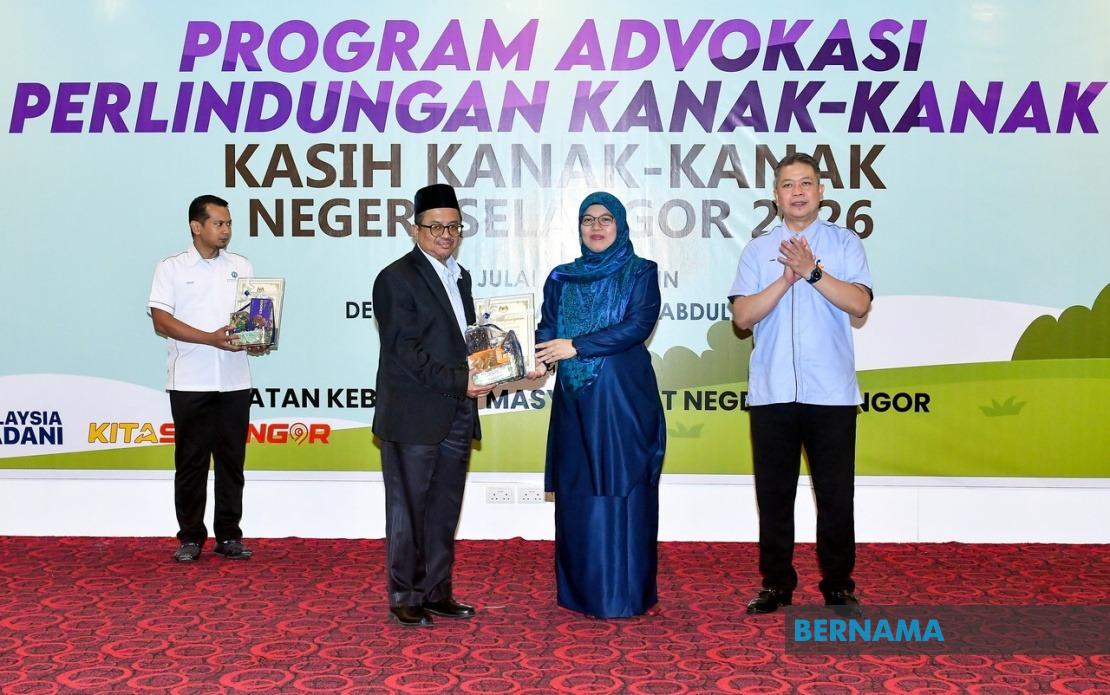
The Selangor state government is ramping up efforts to protect children through a comprehensive advocacy strategy that recognises the growing complexities of child welfare in Malaysia's most densely populated state. The initiative, unveiled in Shah Alam, underscores the administration's commitment to creating a safer environment for approximately 1.8 million young residents, a population whose needs reflect both the opportunities and challenges of the nation's most urbanised corridor.
Mentioning the drive at a recent launch event, Anfaal Saari, chairman of the Selangor Women Development and Social Welfare Committee, highlighted the urgency of the protection mandate. Her remarks came amid troubling statistics from the first six months of 2024, during which authorities recorded 2,306 child-related cases throughout the state. Breaking down this caseload, officers documented 1,877 instances involving care and protection concerns, 366 instances of criminal misconduct involving minors, and 63 cases categorised as children beyond control—a figure that captures the spectrum of vulnerabilities facing young people in the state.
The density and diversity of Selangor's population, which encompasses sprawling urban centres, industrial zones, and rapidly growing satellite towns, creates distinct protection challenges. Unlike more homogeneous regions, Selangor's child welfare landscape must accommodate the needs of migrant families, informal settlement residents, and disparate socioeconomic groups, each facing different risk profiles. This structural complexity explains why the state government has determined that reactive interventions following incidents are insufficient; instead, sustained preventive advocacy has become central to policy thinking.
The newly launched 'Program Advokasi Perlindungan Kanak-Kanak: Kasih Kanak-Kanak Selangor' represents the latest iteration of a longer institutional commitment. Built upon partnerships with Yayasan Islam Darul Ehsan (YIDE), the programme has operated continuously since 2004, accumulating practical experience across more than 100,000 students nationwide. This longitudinal engagement suggests that child protection in Selangor has moved beyond episodic campaigns toward embedded institutional practice, though the reinvigorated advocacy drive signals recognition that previous efforts require scaling or strategic refocusing.
The inaugural event gathered representatives from 52 educational and religious institutions, including government schools managed by the Selangor State Education Department (JPNS), Islamic religious schools supervised by the Selangor Islamic Religious Department (JAIS), and quranic memorisation centres administered through the Selangor Tahfiz Al-Quran Institutions Association (PITAS). This convening across three distinct institutional domains—secular public education, Islamic religious instruction, and specialist Quranic training—reflects an understanding that child protection cannot be compartmentalised. Instead, schools, religious authorities, and specialised centres must operate within a unified framework where protection protocols are consistently applied regardless of institutional setting.
Anfaal stressed that protection strategies must extend beyond criminal justice responses to encompassing continuous advocacy and systemic prevention. This conceptual shift moves beyond enforcement toward education, embedding protective awareness across communities before incidents occur. The state government's framing suggests that while law enforcement and case management remain necessary, they are insufficient without sustained public consciousness about child welfare rights and hazards.
The operational architecture supporting this programme involves an intricate coordination mechanism spanning multiple agencies. The Royal Malaysia Police (PDRM) provide law enforcement expertise and investigation capacity, while the Malaysian Communications and Multimedia Commission (MCMC) contributes regulatory oversight of digital environments—an increasingly significant frontier for child protection in an era of ubiquitous smartphone access and social media engagement among young people. Integration across JPNS, JAIS, PDRM, and MCMC ensures that protection extends across physical institutions, digital spaces, and investigative systems simultaneously.
A particular emphasis emerged regarding protection within care institutions and religious learning centres. These environments—encompassing government-managed foster facilities, privately operated children's homes, and tahfiz boarding schools—represent spaces where children spend concentrated time under non-parental supervision. The focus on these settings acknowledges that vulnerabilities cluster in such facilities, where isolation, authority imbalances, and limited external oversight can create conditions for neglect or abuse. By explicitly naming these institutions as requiring particular attention, authorities signal recognition that child protection cannot treat all environments as equivalent.
For Malaysia's broader social policy landscape, Selangor's approach offers implications extending beyond state borders. As the wealthiest and most economically productive state, Selangor's social initiatives frequently establish templates adopted or adapted by other jurisdictions. The integration of education authorities, religious institutions, law enforcement, and communications regulators within a unified child protection framework potentially indicates a model toward which other states might gravitate. The multi-agency coordination specifically addresses the fragmented institutional landscape that has historically characterised Malaysian governance, where child welfare responsibilities traditionally scatter across education ministries, welfare departments, and police forces operating with limited strategic integration.
The timing of this initiative also reflects Southeast Asian trends toward child protection mainstreaming. Across the region, rising urbanisation, digital connectivity, and social transition have elevated child welfare onto policy agendas with renewed urgency. Selangor's emphasis on systematic advocacy rather than case-by-case management aligns with international best practice frameworks that prioritise prevention and community consciousness over purely remedial intervention.
Moving forward, the success of Selangor's child protection strategy will depend substantially on institutional consistency and resource allocation. The framework outlined represents ambition in scope, spanning schools, religious institutions, law enforcement, and digital regulation. However, translating such coordination into consistent frontline practice—ensuring that teachers, religious instructors, and police officers operate according to unified protocols—requires sustained training, performance monitoring, and inter-agency accountability mechanisms. The scale of Selangor's child population and the complexity of its institutional landscape suggest that scaling advocacy and protection capacity will represent an ongoing challenge requiring sustained political commitment and budgetary support.

