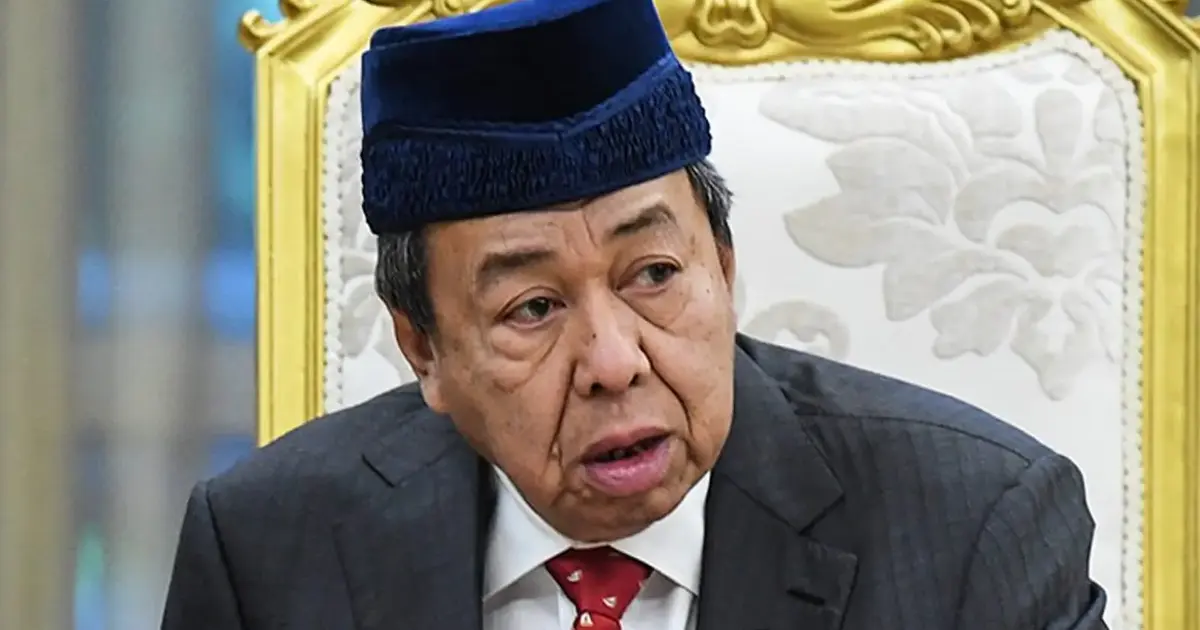
Sultan Sharafuddin of Selangor has offered a notably nuanced assessment of the Light Rail Transit Line 3 (LRT3) project, crediting both former Prime Minister Najib Razak and current Premier Anwar Ibrahim whilst directing pointed criticism at two prominent Democratic Action Party (DAP) figures. The Selangor ruler's remarks reflect the complex political history surrounding the major infrastructure initiative and underscore the regional divisions that have characterised its development and implementation across the state's growing urban corridors.
The sultan's acknowledgement of Najib Razak's role in advancing the LRT3 project highlights the infrastructure planning legacy inherited from the previous administration. The Light Rail Transit Line 3 represents a significant expansion of Selangor's public transportation network, designed to serve commuters across the Klang Valley region. The project gained initial momentum during Najib's tenure as Prime Minister, with planning and preliminary development stages undertaken under the Barisan Nasional government. By formally recognising this contribution, the Selangor ruler has sought to distinguish between partisan politics and objective recognition of developmental initiatives that transcend electoral cycles.
Simultaneously, Sultan Sharafuddin's commendation of Anwar Ibrahim acknowledges the current government's continued commitment to advancing and completing the LRT3 infrastructure. Since assuming office, the Pakatan Harapan administration has overseen critical phases of project development, securing funding approvals and managing construction timelines. The sultan's balanced approach in crediting both leaders suggests an expectation that major developmental projects require sustained political will across different administrations, emphasising continuity in infrastructure planning as essential to Selangor's long-term urban mobility strategy.
However, the Selangor ruler's specific criticism of DAP politicians Lim Guan Eng and Tony Pua introduces a more contentious dimension to his assessment. Lim, who previously served as Finance Minister under Pakatan Harapan, and Pua, the MP for Damansara, have both held significant portfolios affecting budget allocation and infrastructure planning. The sultan's criticism appears directed at their roles in either managing the project's financial aspects or their political positions regarding the LRT3 initiative. This selective criticism suggests potential disagreements over resource allocation, implementation timelines, or project governance that have characterised discussions surrounding the transport corridor expansion.
The LRT3 project itself represents one of Malaysia's most ambitious urban transportation initiatives, with implications extending far beyond Selangor's borders. The system is designed to connect critical nodes across the Klang Valley, including the state capital Kuala Lumpur, facilitating daily commute patterns for hundreds of thousands of residents. Enhanced public transportation infrastructure directly influences regional economic productivity, property development patterns, and environmental sustainability metrics. For Malaysian readers across the country, the LRT3's successful completion carries broader significance for demonstrating whether major cross-administrations projects can be executed effectively despite political transitions.
The sultan's public commentary on the project reflects the increasingly prominent role that Malaysia's constitutional monarchs have assumed in policy discussions. As Selangor's ruler and a prominent figure within the Conference of Rulers, Sultan Sharafuddin's pronouncements carry considerable weight in state-level politics. His intervention in the LRT3 narrative suggests that the issue extends beyond technical infrastructure management into the realm of state governance and royal concern for constituents' welfare. Such engagement reflects how Malaysian constitutional monarchy has evolved to encompass broader advocacy for development and public interest issues.
From a Southeast Asian perspective, the LRT3 project embodies challenges common to rapidly urbanising regions attempting to upgrade transportation infrastructure amid fiscal constraints and political transitions. Regional neighbours including Indonesia, Thailand, and Vietnam confront similar challenges in sustaining major urban transit projects across different administrations. Selangor's experience with the LRT3 therefore offers instructive lessons regarding project continuity, stakeholder management, and political consensus-building around essential infrastructure—particularly relevant as regional economies seek to accommodate accelerating urbanisation.
The criticism directed at DAP's Lim and Pua may reflect broader tensions within Pakatan Harapan regarding resource distribution and priority-setting for major projects. These internal coalition dynamics have periodically surfaced in Malaysian politics, where component parties advocate for their constituencies while managing national-level responsibilities. The sultan's selective criticism subtly acknowledges these internal political complexities whilst preserving the appearance of neutrality through simultaneous recognition of Najib's earlier contributions.
Looking forward, the completion of the LRT3 project will represent a litmus test for Malaysia's capacity to execute major infrastructure initiatives across political transitions. The system's efficiency, accessibility, and integration with existing public transport networks will influence public perceptions of government competence and political cooperation. For Selangor residents, the project's realisation promises tangible improvements in commute times, regional connectivity, and urban livability—benefits that transcend the partisan politics that inevitably surrounds such major undertakings.

