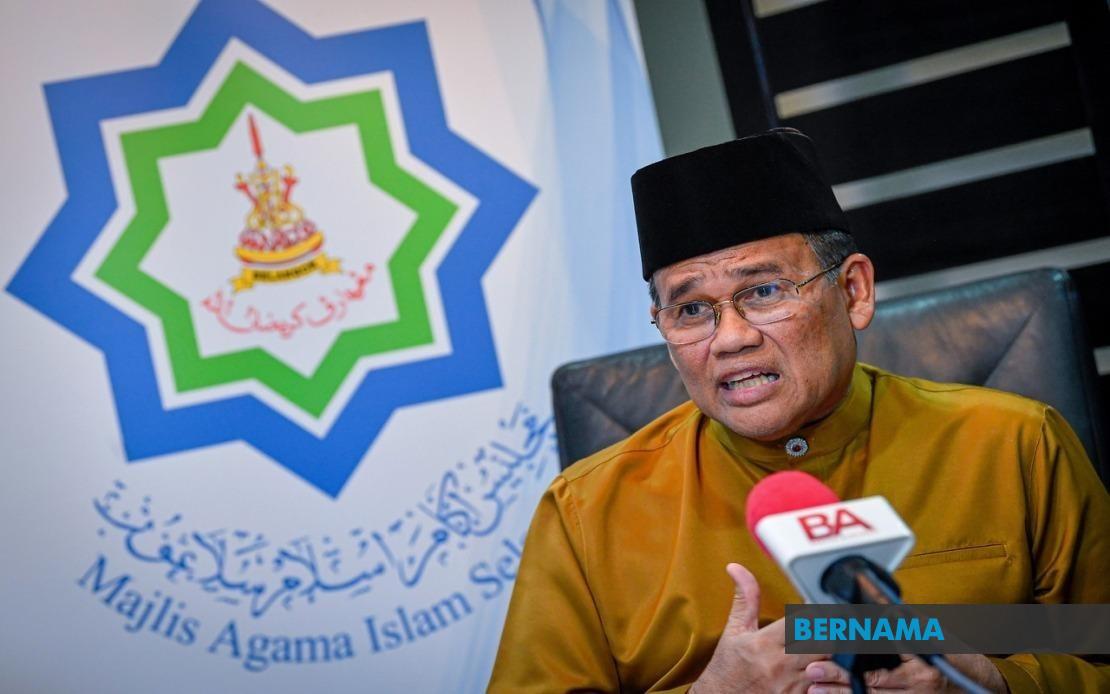
The Sultan of Selangor, Sultan Sharafuddin Idris Shah, has decided against granting approval for prayer facilities in shopping malls throughout the state to conduct Friday prayers, according to an announcement from the Selangor Islamic Religious Council (MAIS). The decision reflects broader concerns about maintaining the centrality of purpose-built mosques within Islamic practice and community worship structures across the state.
MAIS chairman Datuk Salehuddin Saidin explained that the withholding of consent stems from apprehension that permitting such arrangements would fundamentally compromise decades of effort to keep mosques as the primary hubs for Muslim religious observance. Beyond institutional considerations, the council worries that introducing prayer spaces in commercial settings would gradually erode attendance patterns at established places of worship, particularly those already formally authorised to host congregational Friday prayers.
The state's current infrastructure appears robust. Selangor maintains 448 mosques and 379 surau (prayer spaces) formally licensed to conduct Friday prayers, figures which MAIS leadership believes sufficiently address the religious needs of the state's Muslim population. This substantial existing capacity forms the practical foundation for the Sultan's position, suggesting that infrastructure expansion rather than venue diversification remains the appropriate path forward. Additionally, many shopping malls already sit in reasonable proximity to existing mosques and surau, potentially mitigating accessibility arguments for Friday prayer accommodation within retail environments.
Beyond the numerical argument, MAIS emphasises that the decision aligns with Islamic principles and values-based governance. Mosques and surau serve functions extending well beyond congregational prayer itself. They operate as educational institutions where religious knowledge circulates, as community gathering points where social cohesion strengthens, and as platforms for dakwah (Islamic outreach). Shopping malls, by contrast, exist primarily as commercial spaces, a distinction that MAIS considers fundamentally incompatible with these broader religious and social missions.
Administrative coherence presents another dimension to the council's reasoning. Managing Friday prayers in shopping mall facilities would require MAIS to appoint and oversee imams, call-to-prayer leaders, and support staff at each location. Without direct institutional control over personnel appointments, maintaining consistent sermon content—already prepared centrally by MAIS—and ensuring uniform compliance with council regulations becomes substantially more difficult. This operational concern reflects the practical challenges of decentralising religious administration across numerous commercial sites with varying management structures.
A single exception already exists within Selangor's framework. One shopping mall surau has received temporary authorisation to conduct Friday prayers, but this approval applies only because no mosque currently operates nearby. The council made explicit that this exceptional status remains contingent and temporary. Should a properly constituted mosque subsequently open in that locality and gain capacity to serve local worshippers, MAIS would withdraw the mall facility's special status. This conditional approval mechanism demonstrates the council's underlying philosophy: permanent structures dedicated to worship take precedence over temporary arrangements in secondary venues.
The constitutional dimension adds legal weight to MAIS's position. Under the Ninth Schedule of the Federal Constitution, matters concerning mosques, surau, and prayer facilities fall squarely within state jurisdiction rather than federal domain. In Selangor specifically, the Sultan holds religious prerogatives as Head of the Islamic Religion, empowering him to determine administrative questions regarding Islamic affairs. The Administration of the Religion of Islam (State of Selangor) Enactment 2003, particularly Section 97, explicitly requires any building's use as a mosque, surau, or prayer space to receive MAIS written approval beforehand. This legal architecture ensures state-level religious bodies maintain substantive control over worship infrastructure.
For Malaysian policymakers and religious administrators elsewhere, Selangor's stance carries implications. The state's rejection of shopping mall prayer facilities represents a deliberate choice to prioritise institutional continuity and spiritual authenticity over convenience-based expansion. As Malaysia's urban areas densify and shopping malls proliferate, similar pressures will likely emerge in other states. Selangor's decision essentially argues that uncritical accommodation of such requests risks fragmenting what remains fundamentally a communal religious practice.
MAIS has simultaneously acknowledged the federal government's interest in this matter. Minister in the Prime Minister's Department (Religious Affairs) Dr Zulkifli Hasan previously advanced a proposal for establishing authorised prayer facilities in shopping malls nationwide. However, MAIS's statement clarifies that this federal interest does not override state constitutional authority. Each state religious administration, through its respective sultanate, retains decisive power over such determinations within its borders. This federalist tension—between national policy coordination and state religious jurisdiction—will likely remain unresolved unless clearer constitutional guidance emerges.
The council's appeal to Muslim communities emphasises that maintaining vibrant, well-attended mosques and surau depends upon sustained congregational participation. MAIS framed its position not as resistance to modernity or accessibility but as stewardship of institutions integral to religious and social life. By discouraging Friday prayers in shopping malls, the council implicitly encourages Muslims to see mosque attendance as a deliberate religious commitment rather than an incidental convenience alongside secular shopping activities. This distinction, whilst subtle, reflects deeply held convictions about the proper place of worship within Muslim daily life.

