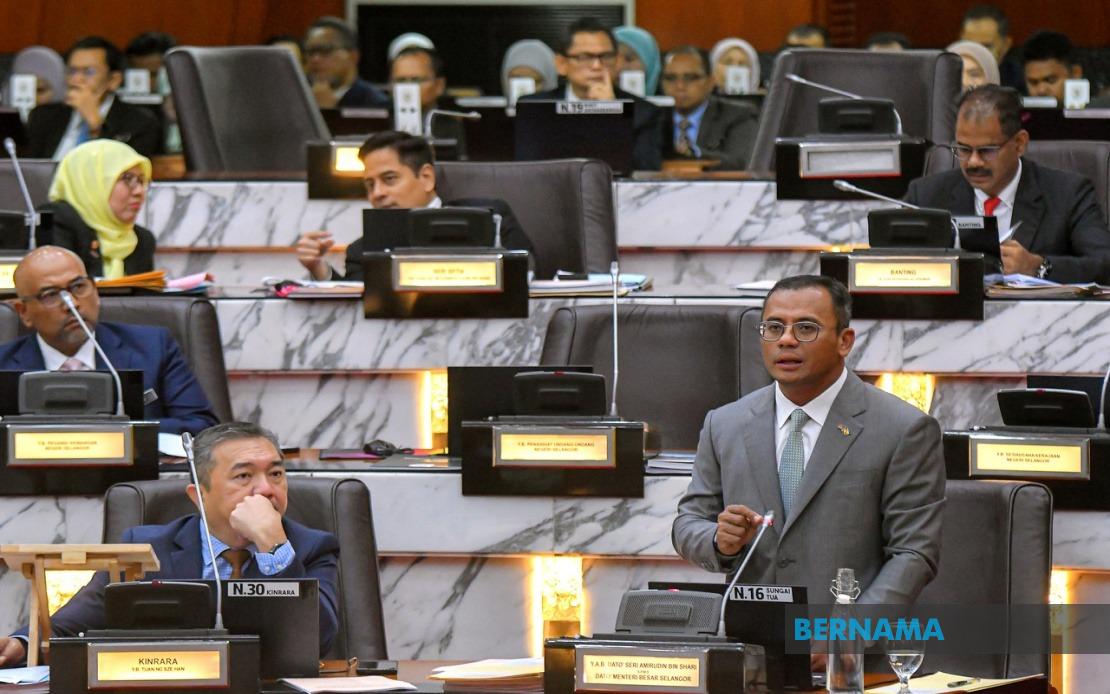
The Selangor government has committed to expanding its flagship higher education support scheme, planning to lift the number of beneficiaries from the current 3,000 to 5,000 recipients in the coming year. Menteri Besar Datuk Seri Amirudin Shari announced the expansion during the Selangor State Legislative Assembly sitting, signalling the state's determination to invest more deeply in student welfare as tertiary enrolment rises across the region.
The decision comes in response to exceptional appetite for the Higher Education Institution Study Incentive (HPIPT), which provides RM1,000 in annual financial support to Selangor students pursuing recognised qualifications. The scale of interest has surprised policymakers, with applications surpassing 5,000 in both 2025 and the current year—far exceeding the scheme's actual capacity. This persistent mismatch between demand and available places has forced the state to reassess its budget allocation and prioritisation strategy.
Amirudin acknowledged that the state government is currently evaluating Selangor's fiscal position to determine whether the expansion can stretch even further, potentially accommodating between 5,000 and 6,000 recipients. The cautious language reflects the tensions between political commitment to student welfare and prudent financial management. The Menteri Besar noted that the government had previously extended the scheme to 5,000 recipients, suggesting that returning to this level represents a restoration rather than an entirely new initiative, though doing so will require securing additional budget allocation in the 2027 fiscal year.
The HPIPT represents a critical piece of Selangor's social policy architecture, extending support across multiple qualification pathways. Recipients pursuing Level 4 Skills Certificates, diploma programmes, and bachelor's degrees at both public and private accredited institutions are eligible, broadening the scheme's reach beyond traditional university pathways. This inclusive approach acknowledges the diversifying landscape of Malaysian higher education and the growing role of vocational and technical qualifications in meeting labour market needs.
Beyond simply expanding participant numbers, the state government is undertaking a fundamental review of how the scheme operates administratively. Currently, the application window may leave students with insufficient time to apply after receiving university admission confirmations, creating a bottleneck that potentially excludes otherwise eligible candidates. By extending application periods and exploring the possibility of opening applications twice annually, Selangor aims to align the scheme's mechanics with the actual rhythm of higher education admissions.
The proposed shift toward biannual application cycles represents a pragmatic response to the reality that Malaysian students enter tertiary institutions at different points throughout the year. Allowing multiple submission windows would eliminate the current scenario where students missing a single annual deadline are locked out entirely, even if they subsequently gain admission to eligible institutions. For students from lower-income backgrounds, this flexibility could prove transformative, removing arbitrary timing barriers to accessing financial support.
The surge in HPIPT applications reflects broader demographic and economic currents across Selangor. As Malaysia's most developed and economically diverse state, Selangor continues attracting significant student populations pursuing higher education—both because of the concentration of universities and colleges there and because of migration patterns within the country. However, this growth in student numbers has not automatically translated into expanding state financial support, creating the current supply-demand imbalance.
From a regional perspective, Selangor's commitment to undergraduate support carries implications beyond state boundaries. As Southeast Asia's education economies become increasingly competitive, students from across Malaysia and the region are drawn to Selangor's institutions. The state's willingness to extend direct financial support signals an attempt to retain talent and ensure that qualified candidates are not deterred by financial constraints. This investment strategy potentially shapes migration patterns and workforce development across the broader Malaysian economy.
The financial commitment involved in doubling the HPIPT recipient pool is substantial, though the RM1,000 annual stipend per student remains modest relative to total tertiary education costs. For students from families earning between RM2,500 and RM5,000 monthly, however, this assistance can meaningfully reduce dependency on loans or forced withdrawal from studies. The scheme's real value lies not merely in the absolute amount but in its psychological and material reassurance that higher education remains accessible to Selangor residents regardless of family income.
The government's decision to review application timelines and frequency demonstrates sophisticated policy thinking about implementation barriers. Many support schemes fail not because of inadequate funding but because administrative processes exclude eligible beneficiaries through opaque deadlines, complex documentation requirements, or poor communication. By proactively addressing these friction points, Selangor's government is attempting to ensure that expanded funding capacity translates into actual expanded access rather than merely nominal improvement.
Looking forward, the 2027 Budget will be a critical test of whether Amirudin's expansion commitment materialises or faces fiscal constraints. The language of "assessing" and "reviewing" revenue position suggests ongoing uncertainty about affordability at the higher end of the proposed range. Nevertheless, restoring the scheme to its previous 5,000-recipient level appears likely, representing a symbolic and material commitment to student welfare during a period of broader economic uncertainty.
For Malaysian higher education policy more broadly, Selangor's initiative highlights the growing role of state-level support in supplementing federal student financing schemes. As federal budgets face competing pressures and targeted subsidies replace universal support, state governments increasingly serve as secondary safety nets for disadvantaged students. The success or failure of Selangor's expanded HPIPT will provide valuable evidence about whether such targeted state interventions effectively widen access or merely shuffle limited resources among competing constituencies.

