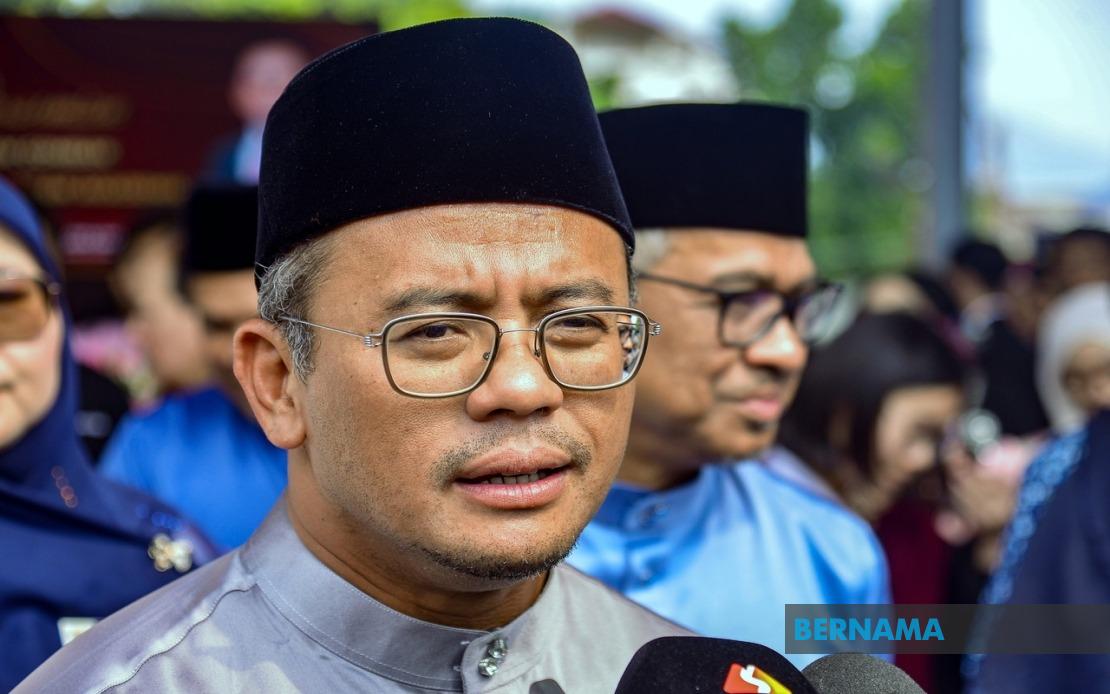
The Selangor government plans to make education a central pillar of its 2027 State Budget, with Menteri Besar Datuk Seri Amirudin Shari signalling a comprehensive push to strengthen the education support system while encouraging greater student engagement in Science, Technology, Engineering and Mathematics. Speaking after attending the opening ceremony of the Gombak Form Six College and 2026 Academic Excellence Awards ceremony, Amirudin outlined how the state intends to balance academic rigour with expanding vocational and technical pathways for its youth population.
The focus reflects growing recognition among Malaysian policymakers that educational excellence at the state level can generate significant ripple effects across the broader economy and society. With approximately one million students within Selangor's jurisdiction, any improvements in achievement rates or skills development can meaningfully shift the trajectory of not only individual careers but also the state's competitiveness in an increasingly knowledge-driven regional and global marketplace. Amirudin emphasised this multiplier effect, noting that enhanced academic outcomes across such a large cohort would yield substantial positive returns for both Selangor and the nation.
The budgetary allocation will address multiple dimensions of educational development simultaneously. Beyond maintaining high examination results, the state government intends to create structural incentives and practical support mechanisms that help students transition more seamlessly into higher education and professional sectors. This dual approach recognises that academic credentials alone are insufficient; students require exposure to applied skills and real-world problem-solving experiences that STEM disciplines inherently provide. The government's strategy thus targets both the traditional markers of educational success and the emerging competencies demanded by Malaysia's digital and innovation economy.
Critical to this push is the expansion of the Himpunan Pelajar Tingkatan Enam Selangor (HIPSTERS) programme, a relatively recent initiative designed to provide targeted support for Form Six students navigating the transition to tertiary education. Originally conceived as a support structure for university-bound learners, the programme has been adapted and scaled to encompass Form Six cohorts more comprehensively. Beyond academic guidance, HIPSTERS delivers tangible material support through book vouchers and complimentary internet data provision—recognition that financial constraints often impede disadvantaged students from fully capitalising on educational opportunities available to their more affluent peers.
The programme's evolution demonstrates how policymakers are attempting to address persistent equity gaps within Malaysia's education system. In 2026 alone, 10,000 Form Six students received book vouchers, representing a significant expansion of support compared with earlier iterations that focused exclusively on university students. This broadening of eligibility reflects implicit acknowledgment that intervention must occur at earlier stages in the educational pathway to be maximally effective. By targeting Form Six students—a critical juncture before university selection—the state aims to enhance their preparation and confidence precisely when choices about further study become concrete.
Amirudin indicated the state government's openness to further extending the HIPSTERS initiative to additional Form Six institutions across Selangor, contingent on ongoing assessments of demand and resource availability. This measured approach to programme expansion suggests fiscal prudence combined with genuine commitment to scalability. Rather than implementing wholesale changes that might stretch administrative capacity or budgetary resources, the government appears to be proceeding methodically, gathering evidence about which schools and student populations would benefit most from targeted intervention.
School infrastructure upgrades constitute another significant component of the education strategy, though timelines for finalisation remain fluid. Amirudin explained that the state government is currently in the information-gathering phase, conducting detailed surveys of infrastructure requirements across Selangor's educational institutions before committing to specific allocations. This groundwork, expected to conclude by September or October, will inform decisions about which schools require facility improvements, whether physical classroom expansion, laboratory modernisation, or digital learning infrastructure.
The infrastructure assessment process carries particular importance for STEM promotion. Quality science and technology facilities are prerequisite for delivering engaging, hands-on learning experiences that inspire student interest in these disciplines. Without adequately equipped laboratories, computer facilities, and workshop spaces, even well-designed curricula may fail to capture student imagination or provide practical grounding for theoretical concepts. Selangor's commitment to comprehensively evaluating infrastructure needs before budgetary allocation thus represents an evidence-based approach to educational investment.
The timing of these announcements within the broader context of Malaysia's education policy debates is noteworthy. Nationally, concerns about STEM participation persist despite years of policy emphasis on technology-driven economic transformation. Many states struggle to convert rhetorical commitment to STEM into measurable increases in student enrolments and achievement within science and mathematics subjects. Selangor's explicit budgetary prioritisation of STEM, coupled with complementary support mechanisms like HIPSTERS, suggests an attempt to move beyond general exhortation toward integrated, resourced implementation.
For Malaysian educators and parents, the implications extend across multiple dimensions. Students in Selangor may increasingly access enhanced support systems that recognise the particular challenges of transitioning through secondary and pre-tertiary education. The combination of targeted financial assistance, infrastructure improvements, and explicit curriculum emphasis on STEM could materially alter outcomes for students who might otherwise lack exposure to or encouragement toward these fields. Conversely, the success or otherwise of these initiatives will likely attract attention from other state governments considering comparable policies.
The Selangor government's education strategy also reflects deeper economic logic. Malaysia's aspiration to become a high-income nation fundamentally depends on cultivating a workforce capable of engaging with advanced technologies and innovation-driven sectors. By concentrating resources on STEM and educational infrastructure in a state containing substantial urban and semi-urban population centres, policymakers are effectively investing in the pipeline of talent available to knowledge-intensive industries. The multiplier effects extend beyond individual students to encompass employment patterns, sectoral development, and ultimately state competitiveness.
Looking forward, the successful implementation of these education initiatives will require sustained commitment and effective coordination across multiple government agencies and educational institutions. The September-October timeline for finalising infrastructure allocations suggests action should commence before the 2027 budget year, allowing for practical planning and execution. How thoroughly the state government executes this education agenda will significantly influence whether rhetorical emphasis on educational excellence translates into tangible improvements in student outcomes and enhanced preparation for a technology-driven future. For Malaysia's broader regional positioning in Southeast Asia, Selangor's educational performance increasingly matters.

