Residents of Selangor have been advised to exercise extreme caution regarding text messages and online communications purporting to relate to the KitaSelangor Voucher scheme, as the state government moves to combat fraudulent activity surrounding the assistance initiative. The Selangor State Secretary's Office issued the warning to shield the public from falling prey to sophisticated phishing schemes and online scams that capitalise on legitimate government programmes.
The alert comes at a critical juncture, as the state government prepares to roll out the KitaSelangor Voucher Programme to eligible beneficiaries beginning June 23. Crucially, the state authorities emphasise that formal applications from the public have not yet commenced, meaning any unsolicited communication requesting personal information or directing people to click links should be treated with immediate suspicion. Scammers frequently exploit public anticipation surrounding new welfare initiatives to harvest sensitive data or compromise personal finances.
The state government has established a single, authoritative source for all legitimate information about the programme. Residents are explicitly instructed to disregard unverified messages and instead rely exclusively on official announcements through Selangor State Government channels. This guidance reflects growing concerns about the vulnerability of social protection programmes to criminal exploitation, particularly when recipients are economically disadvantaged and may be less equipped to identify sophisticated fraud attempts.
Under the scheme framework, eligible recipients will receive formal notification through official SMS channels in staged batches commencing June 23. These authorised messages will guide beneficiaries through verification procedures and direct them to the dedicated KitaSelangor Voucher Portal, where they can submit applications accompanied by necessary supporting documents. The state has emphasised that this structured, phased approach allows authorities to maintain control over communications and protect participant data throughout the distribution process.
The state government has scheduled June 22 for a major public announcement providing comprehensive programme details. Citizens are advised to await this official briefing before undertaking any actions related to the initiative. This timing provides a clear demarcation between legitimate government communications and fraudulent messages that may circulate beforehand, allowing residents to distinguish between authorised and unauthorised contact attempts.
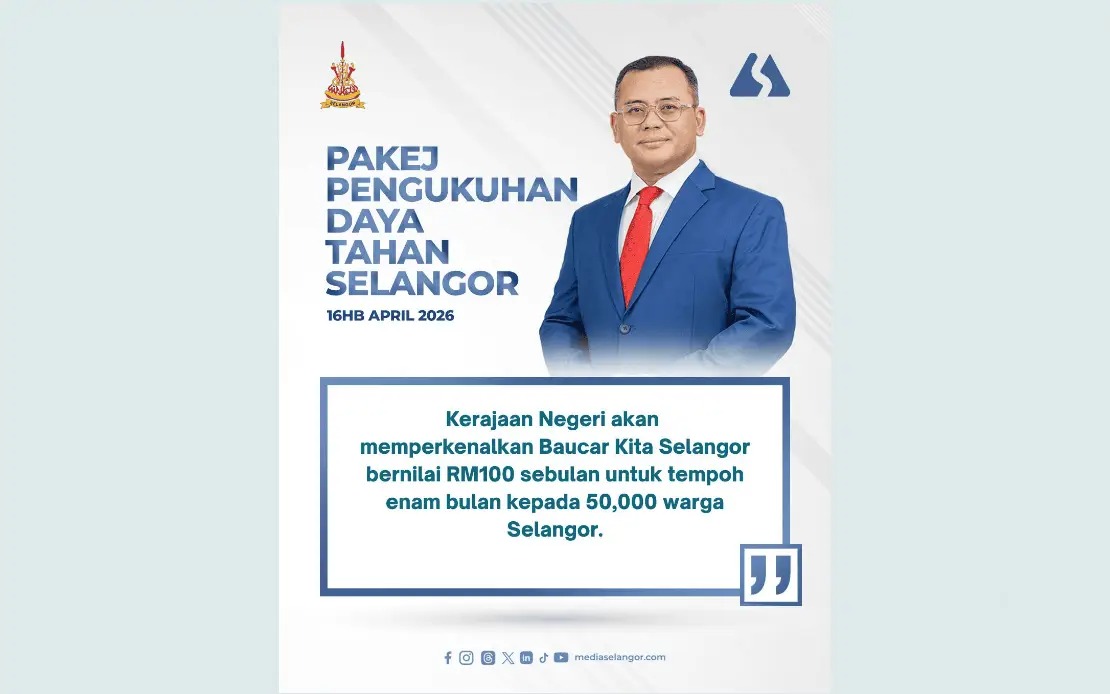
The KitaSelangor Voucher Programme represents a substantial commitment to vulnerable populations, with Menteri Besar Datuk Seri Amirudin Shari confirming that approximately 50,000 low-income households will receive monthly cash assistance of RM100 over a six-month period. This initiative forms part of the broader RM140 million Selangor Resilience Strengthening Package Phase 1, which was formally launched on April 16 to address the compounding pressures of economic uncertainty, escalating living expenses, and international supply chain disruptions affecting Malaysian households.
Beneficiary identification follows a rigorous, data-driven methodology incorporating multiple government agencies and established vulnerability registries. The targeted recipient pool encompasses households classified as poor within the eKasih database, workers displaced from employment, individuals registered with the Social Welfare Department as vulnerable population members, and single mothers satisfying specific eligibility criteria. This layered targeting approach ensures resources reach those facing the most acute financial hardship, though it also creates opportunities for fraudsters to impersonate legitimate officials seeking to verify eligibility information.
The June 30 programme commencement date positions the KitaSelangor Voucher as a timely intervention addressing immediate cash flow challenges for struggling families. The six-month distribution window provides meaningful relief during a critical period, though the temporary nature of the assistance underscores the importance of complementary longer-term policy responses to underlying structural economic challenges affecting lower-income households in Malaysia's most developed state.
For Malaysian residents and particularly Selangor households, this alert carries practical implications for everyday digital security practices. The fraud warning demonstrates how legitimate government benefits become vectors for criminal activity, highlighting the necessity for citizens to maintain healthy scepticism toward unsolicited digital communications, regardless of source attribution. Even messages claiming to originate from trusted government bodies warrant verification through independent channels before any personal information is disclosed or links are activated.
The state government's proactive communication strategy represents sound crisis management, establishing clear boundaries between authentic programme communications and fraudulent imitations before widespread scamming can occur. This preventive approach proves more effective than reactive measures attempting to contain fraud after victimisation occurs. Nonetheless, the warning itself signals that sophisticated threat actors are already monitoring the programme, suggesting that vigilance will remain essential throughout the implementation phase.
Residents encountering suspicious KitaSelangor-related messages should refrain from engaging with such communications and instead report them to relevant authorities. The state government has implicitly encouraged citizens to contact official channels to verify programme information, establishing mechanisms for public feedback about potential fraud attempts. This collaborative approach to cybersecurity, enlisting residents as frontline fraud detectors, amplifies detection capabilities beyond what government systems alone could achieve.