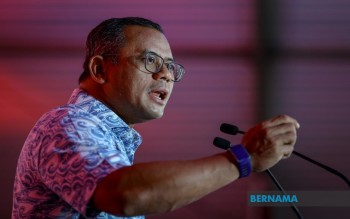
Selangor has cemented its position as Malaysia's economic powerhouse, recording gross domestic product of RM460.1 billion in 2025—a substantial increase of RM28 billion from the previous year. This expansion underscores the state's commanding influence over the nation's economic trajectory, with Menteri Besar Datuk Seri Amirudin Shari emphasizing that the growth magnitude exceeds that of any other state in the country by a significant margin.
The state's contribution to Malaysia's overall GDP has risen to 26.5 per cent, up from 26.2 per cent previously, further consolidating Selangor's role as the principal engine of national economic development. This expanded share reflects not merely the state's existing industrial base but a deliberate economic restructuring that has broadened its productive capacity across multiple sectors. In comparative terms, Selangor's economy now stretches to more than 1.7 times the size of Kuala Lumpur's RM265.1 billion economy and 2.7 times that of Johor, the nation's second-largest state economy, illustrating the vast gap between Malaysia's largest economic hub and its peers.
The 6.3 per cent growth rate achieved by Selangor significantly outperformed Malaysia's national economic growth rate of 5.2 per cent, demonstrating that the state's economic momentum extends beyond its sheer size to encompass faster expansion than the broader economy. According to data released by the Department of Statistics Malaysia, this performance exceeded even the optimistic projections produced through collaboration between Universiti Putra Malaysia and the Selangor Research Institute, which had forecasted growth to approximately RM455.3 billion. The fact that actual outcomes surpassed expert predictions suggests underlying economic resilience and perhaps untapped potential within the state's business environment.
Three sectors provided the principal drivers of Selangor's economic expansion. The services sector contributed RM15.9 billion to the growth, reflecting the state's deepening role in knowledge-intensive and tertiary industries. Manufacturing contributed RM5.3 billion, demonstrating the continued vitality of the state's traditional economic backbone despite regional competition and global supply chain shifts. Construction activity added RM3.7 billion, signifying robust investment in infrastructure and real estate development that typically serves as both a leading economic indicator and catalyst for broader economic stimulus.
Selangor's sectoral dominance within Malaysia's national economy warrants particular attention from policymakers and investors. The state now accounts for 35.9 per cent of all construction activity conducted across Malaysia—more than one-third of the nation's building and infrastructure investment. Its manufacturing sector share has climbed to 32.8 per cent of the national total, while services contributions have expanded to 27.1 per cent. These proportions reveal Selangor's outsized influence over multiple pillars of the Malaysian economy simultaneously, creating both opportunities and dependencies for businesses throughout the country.
The state government attributes this economic trajectory to the First Selangor Plan (RS-1), a comprehensive five-year socioeconomic development blueprint that operated from 2021 through 2025. Over this planning period, Selangor's economy expanded by 33.94 per cent in absolute terms, an increase equivalent to RM116.6 billion. The state's economic base grew from RM343.5 billion at the plan's outset to the current RM460.1 billion, representing a transformation of nearly one-third. This rate of expansion suggests that deliberate strategic planning, when combined with favorable market conditions and business execution, can meaningfully reshape a state's economic fundamentals within a five-year horizon.
Menteri Besar Amirudin has framed the achievement as a collective accomplishment, crediting civil servants, industry participants, and residents of Selangor for sustained commitment and contribution to the state's economic success. However, he has simultaneously cautioned against complacency, positioning the next phase of development around an ambitious target: making Selangor Malaysia's first state to achieve a RM500 billion economy. This threshold, approximately RM40 billion beyond current levels, represents both a psychological milestone and a practical benchmark that would further entrench the state's economic dominance while potentially generating sufficient wealth creation to address persistent quality-of-life challenges among residents.
Invest Selangor, the state's investment promotion agency, has highlighted the momentum captured in recent years. The progression from RM406.1 billion in 2023 to RM460.1 billion in 2025 represents sustained, double-digit annual growth. Notably, Selangor achieved the distinction of becoming Malaysia's first state to surpass the RM400 billion GDP mark for consecutive years, a threshold that only recently seemed aspirational. This sequential achievement signals confidence among investors and businesses operating within the state regarding its capacity for sustained expansion.
For Malaysian policymakers and Southeast Asian observers, Selangor's economic performance carries several implications. The state's enlarged contribution to national GDP—now exceeding one-quarter of the total—means that state-level policy decisions in Selangor increasingly influence macroeconomic outcomes across Malaysia. Conversely, the state's economy remains dependent on national-level infrastructure, regulatory frameworks, and security conditions, creating interdependencies that require coordinated governance between federal and state authorities. The concentration of economic activity in Selangor also raises questions about regional balance and economic development in less-developed states.
The incoming phase of development will test whether Selangor can sustain its momentum while simultaneously improving living standards for ordinary residents. Amirudin has committed the state administration to prioritizing quality-of-life improvements alongside continued economic expansion, recognizing that rapid GDP growth does not automatically translate into widely distributed prosperity. This commitment suggests awareness that economic metrics, while important, ultimately matter to citizens only insofar as they translate into tangible improvements in employment, incomes, housing, education, and public services.
The RM500 billion target now emerging as the next strategic objective for Selangor represents an approximately 8.7 per cent increase from current levels. Achieving this within a reasonable timeframe would require maintaining growth rates near current levels while managing inflationary pressures and external economic headwinds. The state's track record across the RS-1 period provides a foundation for optimism, though external factors—regional economic conditions, global trade patterns, and geopolitical developments—will ultimately shape feasibility.

