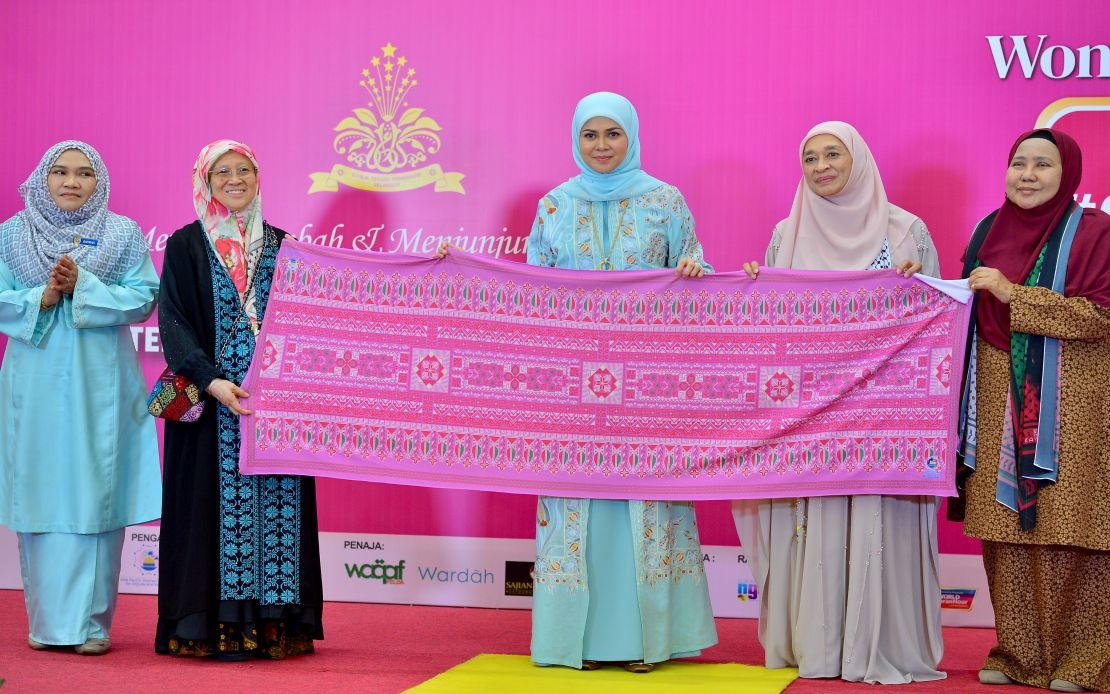
Tengku Permaisuri Norashikin of Selangor officially opened the Women Summit & Women #QuranHour 2026 programme at Dahlia Auditorium in Sultan Salahuddin Abdul Aziz Shah Mosque, Shah Alam, on June 24, marking a significant initiative aimed at developing female resilience through religious education and community engagement. The royal patronage underscores the state's commitment to women-centred spiritual development in an era marked by increasingly complex social and personal challenges affecting Malaysian women across diverse backgrounds.
Approximately 400 women participated in the inaugural summit, representing a cross-section not only of Selangor's diverse communities but also participants from neighbouring Singapore and Indonesia, reflecting the programme's regional dimension and appeal. This geographical reach suggests growing interest in faith-based women's empowerment initiatives throughout Southeast Asia, where similar movements are gaining traction amid heightened awareness of mental health, family cohesion and spiritual wellbeing as interconnected concerns.
The initiative was jointly conceived and executed by Yayasan Warisan Ummah Ikhlas (WUIF) and the Asia Pacific Women's Coalition for Al-Quds and Palestine (ApWCQP), two organisations working at the intersection of religious scholarship and women's advocacy. WUIF chief executive officer Marhaini Yusoff and ApWCQP president Dr Fauziah Mohd Hasan received the royal guest, signalling institutional alignment between grassroots women's movements and formal governance structures in promoting social resilience.
Central to the programme's messaging was its overarching theme, "Women of Grit," deliberately constructed to draw inspiration from the lived experiences of Palestinian women, particularly those enduring the ongoing humanitarian crisis in Gaza. By anchoring the initiative in real-world adversity—encompassing bereavement, displacement, property loss and systemic trauma—organisers sought to move beyond abstract spiritual concepts toward actionable frameworks for coping with authentic hardship. This thematic choice reflects a deliberate attempt to internationalise women's struggles while maintaining local relevance for Malaysian participants navigating their own economic pressures, family expectations and social transitions.
Programme director Gharizah Hashim articulated a nuanced vision extending beyond conventional understandings of strength or resilience. Rather than equating resilience with stoicism or emotional suppression, the framework emphasises cultivating inner calm, exercising sound judgment and maintaining forward momentum whilst drawing guidance from sacred text. This psychological dimension is particularly significant for Malaysian audiences increasingly confronting mental health challenges alongside traditional stressors, positioning Quranic study not merely as religious obligation but as a validated wellness modality.
The gathering included several prominent figures in Islamic scholarship and mental health. Tirmizi Ali, a 2014 International Quran Recitation Champion, brought technical expertise in Quranic recitation and memorisation, while Associate Professor Dr Nora Mat Zin from the International Islamic University Malaysia's Department of Psychiatry contributed evidence-based perspectives on psychological wellbeing and trauma recovery. This intentional mixture of religious authorities with academic mental health professionals signals an emerging convergence between traditional Islamic knowledge systems and contemporary behavioural science within Malaysian institutional contexts.
Marhaini outlined an ambitious expansion strategy whereby the Women Summit initiative would extend vertically through the Rumah Ngaji network, a nationwide grassroots educational infrastructure providing free Quranic instruction anchored within local communities. Rather than relying solely on centralised programming or government apparatus, this approach harnesses volunteer-led neighbourhood learning circles sponsored by community members, creating scalable pathways for women's participation regardless of economic capacity. The presence of Rumah Ngaji representatives from multiple states at the Shah Alam summit functioned as both a demonstration of existing networks and a recruitment mechanism for broader institutional participation.
The strategic deployment of the Rumah Ngaji model reflects broader shifts within Malaysian Islamic pedagogy toward decentralised, community-embedded learning rather than exclusively mosque-centric or formal institutional frameworks. By positioning women's Quranic education within intimate neighbourhood settings, organisers hope to reduce barriers related to transportation, scheduling and social comfort whilst strengthening localised female networks and knowledge-sharing. This approach carries particular significance for working mothers, caregivers and those managing mobility constraints.
Gharizah further emphasised that the initiative targets foundational character development alongside knowledge acquisition, aiming to produce women with crystallised life purpose, expansive compassion and demonstrated resilience. This aligns with contemporary Malaysian discourse around holistic human capital development, recognising that economic participation and social stability depend partly on psychological fortitude and moral anchoring. The explicit focus on benefiting "the ummah"—the broader global Muslim community—situates individual women's development within transnational solidarity frameworks, potentially encouraging participants to view their personal growth as contributing to collective wellbeing.
The programme's timing in 2026 suggests multi-year implementation with built-in milestones for evaluation and refinement. Early emphasis on establishing state-level operations through Rumah Ngaji networks indicates awareness that sustainable impact requires distributed infrastructure rather than episodic events. For Malaysian policymakers and civil society observers, the initiative exemplifies how religious institutions and grassroots organisations can collaborate on social development priorities without requiring extensive government budgetary commitment, whilst maintaining local cultural authenticity and community ownership.
Looking forward, the Women #QuranHour 2026 programme positions itself at an intersection of profound contemporary concern—female mental health and spiritual crisis in conflict zones and diaspora communities—and concrete institutional capacity for scaled delivery through existing networks. As Malaysia navigates demographic shifts, rising female workforce participation and evolving family structures, such initiatives may prove increasingly valuable in providing culturally congruent frameworks for addressing psychological wellbeing and social belonging, particularly among women who find mainstream mental health services linguistically, culturally or theologically alienating.

