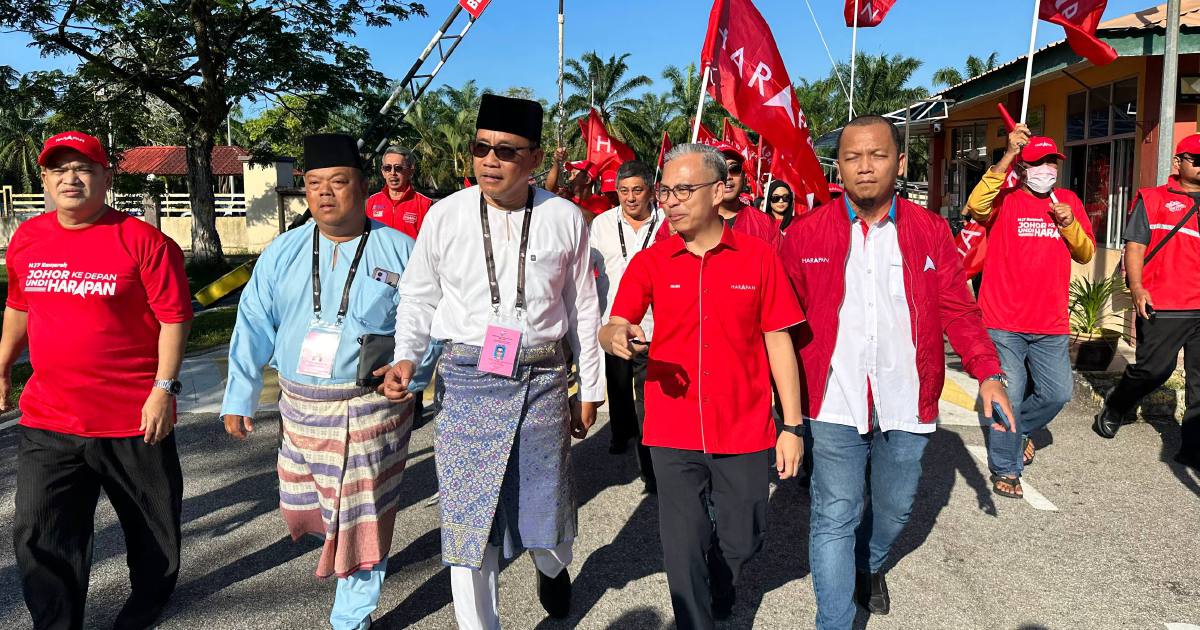
The nomination proceedings for the Semerah state seat in Johor unfolded amid visible enthusiasm from supporters gathered at Dewan Mahkota, Maktab Rendah Sains Mara in Batu Pahat, with the atmosphere charged by repeated chants of "Reformasi" and Islamic invocations. The tone set during the filing of candidatures suggests an energetic contest is taking shape in what promises to be a significant battleground within the larger Johor electoral contest.
Semerah has emerged as a constituency of considerable importance in the broader political landscape of Johor, a state that remains strategically vital for any coalition seeking to consolidate power in peninsular Malaysia. The state election represents an opportunity for both major coalitions to test their support among voters and adjust their positioning ahead of the next general election cycle. The apparent rematch dynamic suggests that both Barisan Nasional and Pakatan Harapan view the seat as defensible territory worth contesting with established candidates.
The presence of vocal supporter groups at the nomination venue indicates high engagement from grassroots party members and community backers. This level of mobilisation during the formal nomination process often reflects the competitive intensity expected in the actual polling phase. Constituencies where both major coalitions field strong candidates tend to see higher voter turnout, as the clear choice between established political entities motivates participation across different demographic groups.
Barisan Nasional's presence in Johor continues to be substantial, though the coalition has faced challenges in recent electoral cycles across Malaysia. The party machine in Johor retains organisational depth and traditional support networks, particularly in rural and semi-urban areas. However, Pakatan Harapan has made significant inroads in urban constituencies and among younger voters, creating a more competitive environment than existed in previous state elections. The Semerah contest reflects this broader realignment of electoral preferences across different voter segments.
The Reformasi chants heard during nomination day carry symbolic weight, linking back to the political awakening and reform movements that have reshaped Malaysian politics over the past two decades. This messaging is particularly significant for Pakatan Harapan's campaign strategy, as appeals to reform, transparency, and political renewal resonate most strongly with voters dissatisfied with the status quo. For Barisan Nasional, the challenge involves demonstrating that it represents stability and delivery of development projects while also addressing concerns about governance.
Semerah's socioeconomic composition makes it a telling microcosm of contemporary Johor political preferences. The constituency encompasses both rural communities with traditional support bases and developing urban areas where voter preferences are more fluid. Candidates who can bridge both constituencies and address localized concerns regarding education, employment, and infrastructure maintenance typically perform well. The nomination of candidates with proven track records or strong community connections often signals how competitive a particular seat might become.
The electoral dynamics in Johor carry implications beyond the state itself. As one of Malaysia's most populous states and a traditional source of strong support for either coalition, Johor's election results serve as an early indicator of broader national political sentiment. Strong showings in constituencies like Semerah can provide momentum for either coalition's national messaging and fund-raising efforts. Conversely, unexpected losses in seemingly secure seats can prompt post-election analysis and strategic recalibration.
The nomination day procedures represent a formal and ceremonial phase in the electoral process, yet the enthusiasm displayed by supporters serves practical campaign purposes. Campaign machinery must be in motion by this point, with voter canvassing, volunteer recruitment, and message coordination already underway. The visible energy at Dewan Mahkota suggests that both camps have committed resources and personnel to securing victory in Semerah. Ground operations will determine whether this early enthusiasm translates into actual votes on polling day.
Local issues will likely feature prominently in Semerah campaign messaging. These might include infrastructure development timelines, local government responsiveness, education facility improvements, and economic opportunities for youth. Candidates from both coalitions will position themselves as better equipped to deliver on these priorities. The track record of outgoing representatives and their performance in channelling development funds often becomes a central campaign narrative, particularly in constituencies where voters have accumulated grievances over delayed projects or unmet promises.
The competitive nature of the Semerah contest reflects broader patterns visible across Johor's electoral map. Rather than being dominated by a single coalition, the state has become genuinely contested, with results varying significantly by constituency. This fragmentation of support, while democratically healthy, means that individual seats assume greater importance, as coalition-level outcomes depend heavily on accumulating victories across multiple marginal constituencies. Semerah fits this pattern, being neither a safe seat for either side nor entirely unpredictable.
For Malaysian observers tracking political trends, Semerah serves as a useful case study in how established coalitions compete when neither holds overwhelming advantage. The campaign approaches adopted by both Barisan Nasional and Pakatan Harapan candidates will reveal which issues they believe resonate most strongly with voters. The eventual result will indicate whether traditional support structures remain robust or whether newer political currents have substantially shifted voter behaviour in this particular constituency.

