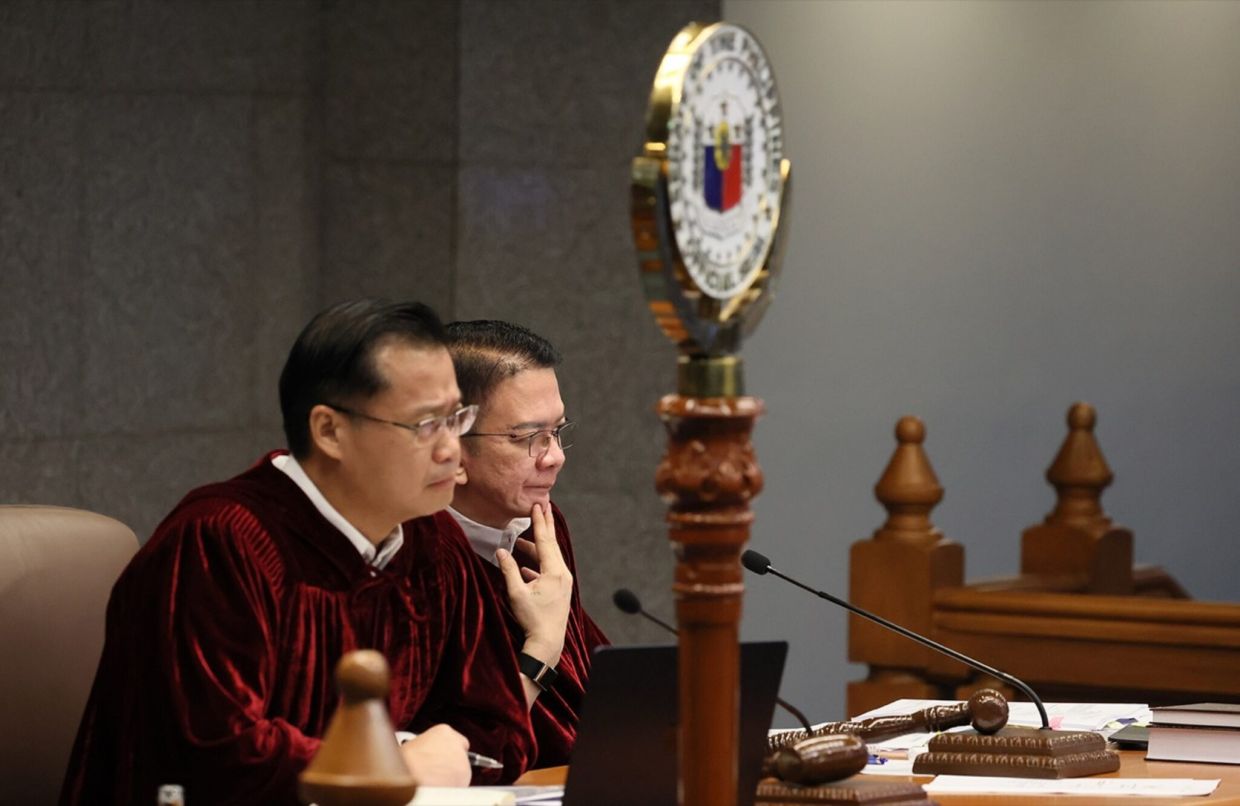
The Philippine Senate impeachment court faces a consequential procedural decision this week as it prepares to vote on whether to compel Vice President Sara Duterte to disclose her financial records. House prosecutors have signalled confidence that senator-judges will approve the subpoena request, which targets bank accounts, tax documents and records from the Anti-Money Laundering Council across a two-decade span. The decision arrives at a critical juncture in the impeachment trial, now in its seventh day, with prosecutors contending that access to these materials is indispensable for establishing whether Duterte accumulated wealth disproportionate to her declared income while holding public office.
The prosecution's case rests fundamentally on the argument that financial transparency is inseparable from accountability in impeachment proceedings. Prosecutor Chel Diokno has emphasized that the Senate, functioning as an impeachment court, derives direct constitutional authority to compel disclosure of otherwise confidential records. He cited the explicit impeachment exception embedded in the bank secrecy law, arguing that Republic Act No. 1405 expressly permits banks to release information when demanded by an impeachment tribunal. This legal foundation echoes precedent from the 2012 impeachment trial of former Chief Justice Renato Corona, when the Senate successfully obtained bank records despite confidentiality protections. Prosecutors further argue that the Data Privacy Act accommodates disclosure under valid subpoena, creating multiple legal pathways for compulsory production of the documents.
Diokno presented an Anti-Money Laundering Council report indicating that Duterte's financial activity surpassed three billion Philippine pesos between 2007 and 2013, a figure prosecutors claim warrants scrutiny given her declared sources of income during those years. The temporal scope of the subpoena—reaching back to her tenure as Davao City vice mayor and later as mayor—reflects prosecution strategy to establish a pattern of wealth accumulation across her career in public service. This approach mirrors the Corona precedent, where the Senate admitted bank records predating the former chief justice's appointment to demonstrate patterns of financial activity relevant to impeachment allegations. The prosecution characterizes the financial records as foundational evidence rather than supplementary material, essential to substantiating core allegations under Article II of the articles of impeachment.
The defense, led by senior counsel Michael Poa, has mounted a sophisticated constitutional challenge centring on due process and the scope of permissible subpoena authority. Poa argues that while the Senate possesses subpoena power, wielding that authority to breach confidential financial information requires satisfaction of stricter constitutional guardrails than prosecutors acknowledge. He characterizes the request as an impermissible fishing expedition, noting that prosecutors sought financial evidence only after impeachment complaints had been formally filed, suggesting reactive rather than foundational investigative motivation. The defense further contends that the subpoena overreaches by encompassing records spanning nearly two decades, including periods when Duterte held the Davao vice mayor position—a role the defense argues falls outside impeachable offices under a 2025 Supreme Court ruling establishing that impeachable offences must occur while occupying impeachable positions.
A significant asymmetry underpins the defense argument: prosecutors seek inclusion of bank and AMLC records for Manases Carpio, Duterte's husband, despite him holding no public office subject to impeachment. The defense maintains that while the bank secrecy law recognizes an impeachment exception, neither the Anti-Money Laundering Act nor the National Internal Revenue Code contain equivalent provisions. This distinction, Poa argues, demonstrates that disclosure is not automatically mandated and must satisfy additional due process requirements beyond the mere invocation of impeachment proceedings. The constitutional tension Poa articulates reflects a genuine clash between two competing principles: the public's interest in scrutinizing the financial conduct of high officials, and the protection of privacy and confidentiality rights even in impeachment contexts.
Civil society organizations have intervened in the debate with stark reminders of political history. The August Twenty-One Movement warned against repeating the controversial "second envelope" vote during former President Joseph Estrada's 2001 impeachment trial, when the Senate deadlocked on evidence disclosure, ultimately triggering public outrage that contributed to Estrada's downfall. This historical invocation carries particular weight in Philippine political memory, functioning as cautionary tale about the consequences of withholding evidence in high-profile impeachment proceedings. Atom has urged senator-judges to vote affirmatively on the subpoena, suggesting that such transparency either vindicates Duterte by clearing her name or confirms public suspicions about improper wealth accumulation. The implicit argument frames evidence disclosure as ultimately beneficial to the accused if genuinely innocent, shifting the burden of confidence toward transparency.
Faith-based groups including Kingdom Keepers, led by activist priest Fr. Robert Reyes and social anthropologist Dr Melba Padilla Maggay, have similarly advocated for compulsory disclosure. Their framing emphasizes that public officials occupy a distinct category of accountability, one that supersedes ordinary privacy protections when financial integrity is questioned. The coalition's rhetorical question—why should Duterte fear revealing the truth if she legitimately accumulated no ill-gotten wealth—inverts the presumption of confidentiality, suggesting that resistance to disclosure itself implies consciousness of impropriety. This perspective reflects a broader civil society position that high office entails waiver of ordinary financial privacy claims, particularly when allegations of unexplained wealth have been formally advanced.
The impeachment trial encompasses four substantive articles charging Duterte with misusing confidential funds, accumulating unexplained wealth, and threatening President Ferdinand Marcos, First Lady Liza Araneta-Marcos, and former Speaker Martin Romualdez. Conviction on any article would result in her immediate removal from office and permanent constitutional disqualification from holding any future public position. This enormous stakes dimension explains why the Senate's procedural rulings assume such significance; decisions governing evidence admissibility and subpoena authority effectively determine the evidentiary terrain upon which conviction or acquittal will ultimately rest.
The upcoming vote will likely reveal strategic fractures within the Senate, as senator-judges must choose between competing conceptions of impeachment authority and constitutional protections. Some may prioritize the prosecution's argument that impeachment constitutes a unique constitutional proceeding justifying ordinary confidentiality breaches. Others may align with the defense position that due process and privacy protections retain force even in impeachment contexts, requiring more restrictive interpretation of subpoena scope. The outcome will establish important precedent for future impeachment trials in the Philippines, shaping how broadly Senate courts may compel disclosure of confidential financial information in impeachment proceedings.
Beyond the immediate trial dynamics, the subpoena decision carries implications for Malaysian and Southeast Asian politics more broadly. The case exemplifies regional tensions between strengthening accountability mechanisms for high officials and protecting privacy rights against potentially politicized disclosure demands. The precedent established by the Philippine Senate will influence how other Southeast Asian legislatures approach evidence gathering in impeachment and removal proceedings against senior officials. For Malaysia particularly, where constitutional frameworks similarly emphasize both government accountability and protection of confidentiality, the Philippine Senate's reasoning may inform future disputes over evidence disclosure in high-profile removal proceedings.
Meanwhile, prosecution spokesperson Benjamin Tolosa Jr. indicated that National Bureau of Investigation Director Melvin Matibag is anticipated to testify shortly regarding the agency's investigation into Duterte's alleged threats against the President. According to Tolosa, Matibag's testimony will address NBI findings that the remarks in question were not spontaneous utterances but components of a deliberate plan. This prospective testimony suggests the prosecution intends to establish premeditation regarding the threats charge, moving beyond allegations of mere inflammatory rhetoric toward demonstrating calculated hostile intent. The convergence of financial disclosure arguments and threat allegations creates multiple evidentiary fronts that the Senate must navigate simultaneously, with the subpoena decision potentially unlocking additional documentary pathways for prosecution.

